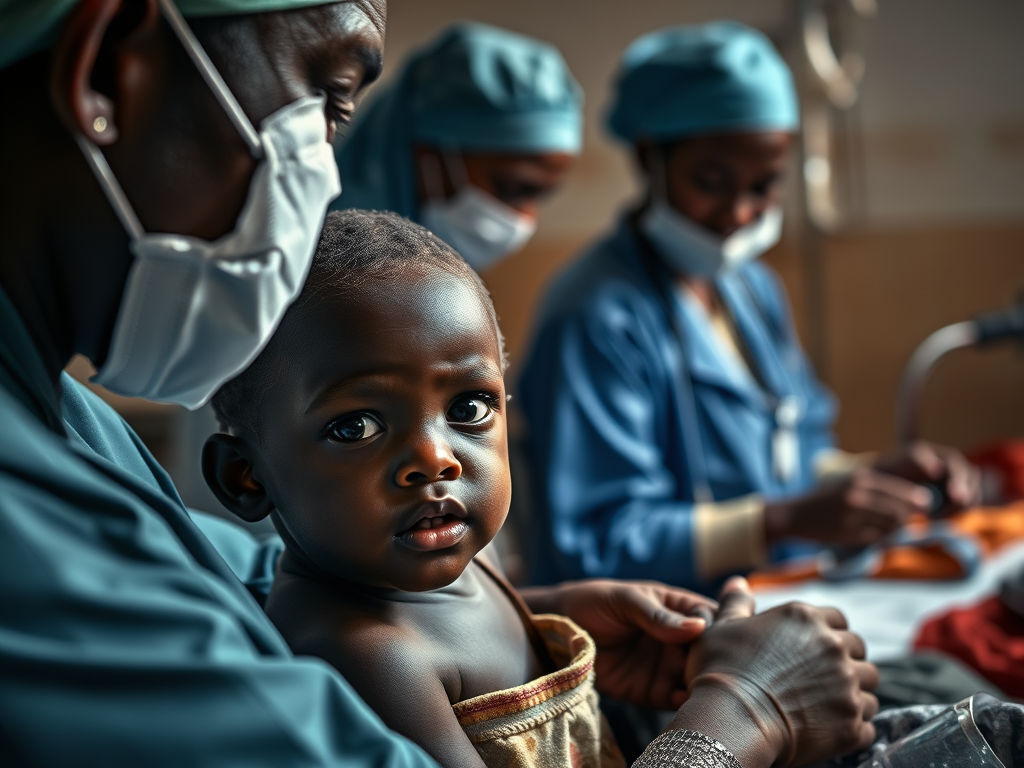
A new study led by researchers at the Ineos Oxford Institute for antimicrobial research (IOI) has found that antimicrobial resistant bacteria is spreading rapidly among children being treated for severe malnutrition in a hospital facility in Niger. The findings have been published today (1 August) in Nature Communications
Globally 45 million children under the age of five are estimated to be severely malnourished. These children are also at a higher risk of developing life-threatening infections such as tuberculosis or sepsis due to their weakened immune systems.
Working with Médecins Sans Frontières (Doctors Without Borders), researchers analysed over 3,000 rectal swabs from 1,371 children under the age of five being treated for severe malnutrition between 2016 and 2017.

Their findings showed that:
- Over three-quarters (76%) of children carried bacteria with extended-spectrum β-lactamase (ESBL) genes, which can break down many commonly-used antibiotics.
- One in four children (25%) carried bacteria with carbapenemase genes like blaNDM, which confer resistance to some of the most powerful and last line antibiotics.
- More than two-thirds (69%) of children who did not carry carbapenem-resistant bacteria upon admission were found to carry them at discharge. Carbapenems are a class of last-resort antibiotics used when other antibiotics have failed to treat an infection.
- 11% of children were carrying E. coli ST167 strains with the blaNDM gene, which is of major concern because it limits treatment options for infections caused by these bacteria.
Antibiotics are life-saving medicines that are becoming ineffective due to antimicrobial resistance (AMR)- a process in which bacteria, fungi and parasites have developed the ability to resist the action of medicines.
If antibiotic-resistant bacteria remain in the gut, these children could be at risk of developing infections such as pneumonia, sepsis, diarrhoea and urinary tract infections in the future that do not respond to antibiotic treatment.
Dr Kirsty Sands, Scientific Lead, Ineos Oxford Institute for antimicrobial research and lead author said: “These are some of the most vulnerable children in the world, and we’re seeing them pick up bacteria that don’t respond to life-saving antibiotics.
“While our study was focused in one treatment facility in Niger, this situation is likely mirrored in many more hospitals around the world. As AMR continues to increase globally, concurrent humanitarian crises such as wars and climate change are exacerbating malnutrition, leading to overcrowded treatment centres.”
Dr Céline Langendorf, Lab Coordinator, Epicentre, MSF and co-author of the study, said: “Our latest findings highlight the urgent need to prioritise infection prevention and control measures in hospitals to protect the most vulnerable patients. In crowded hospitals with limited resources, these bacteria can spread easily from child to child. Without urgent action, more children could die from infections that used to be easy to treat.”
Professor Owen B. Spiller, Head of Medical Microbiology at Cardiff University and co-author of the study, said: “This research provides stark evidence that humanitarian crises amplify the silent pandemic of antimicrobial resistance. Without coordinated international action, combining antimicrobial stewardship, surveillance, and improved hygiene infrastructure, resistant bacteria will continue to spread unchecked. We urgently need global investment to safeguard antibiotics for children facing severe malnutrition in resource-limited settings.”
Researchers used genome sequencing to track the spread of these resistant bacteria. Most E. coli carrying blaNDM-5 were genetically very similar, suggesting likely transmission within the hospital setting. The resistance genes were carried on plasmids—mobile pieces of DNA that can jump between bacteria—making spread between species even more likely.




Leave a Reply