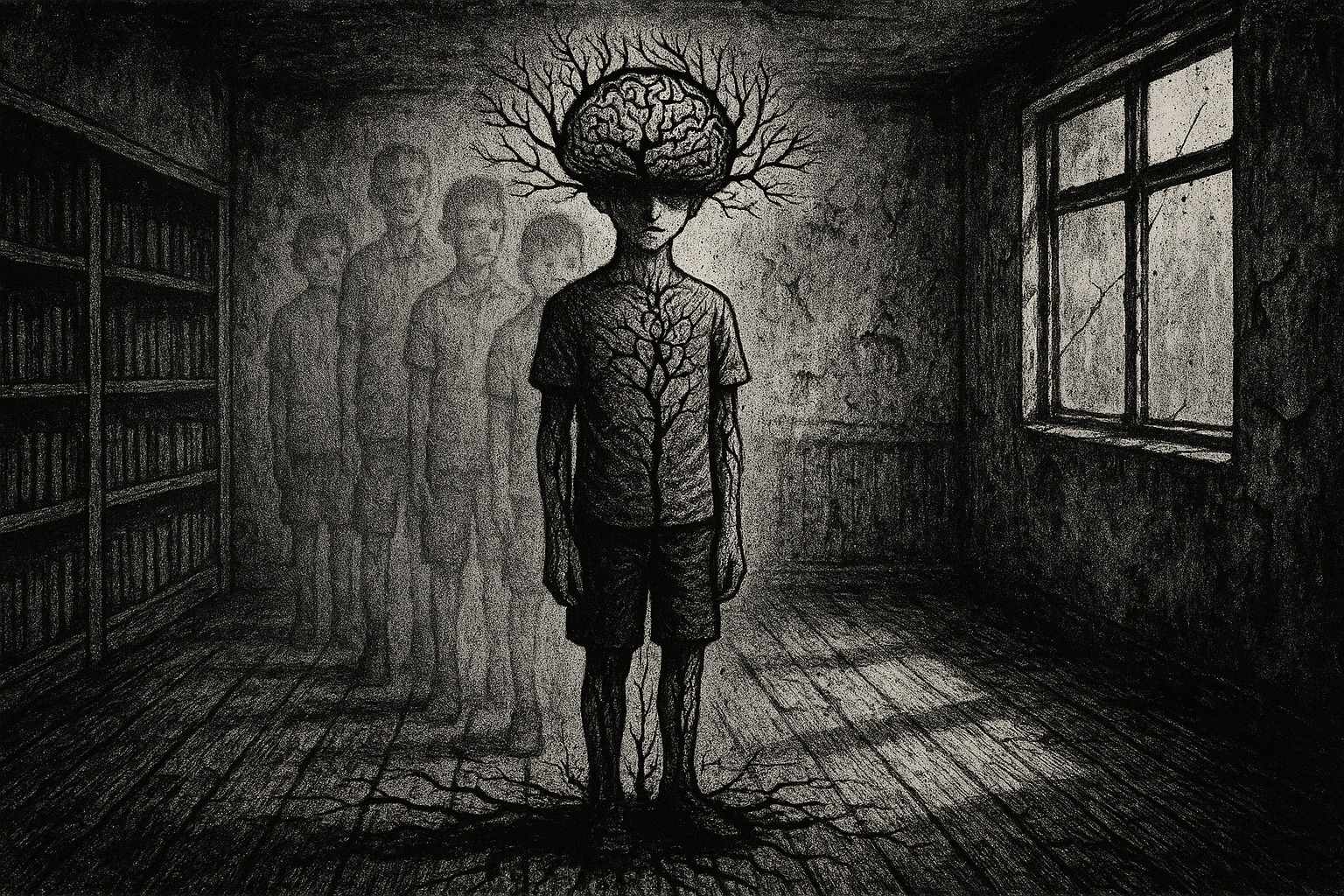
The Bildungsroman, or coming-of-age novel, has long captured our fascination with the transformation from youth to adulthood. From Goethe’s Wilhelm Meister’s Apprenticeship to contemporary works like The Perks of Being a Wallflower, these narratives chronicle profound personal growth through formative experiences.
What makes this literary form particularly compelling is how closely it mirrors what neuroscience now reveals about brain development—specifically, the remarkable capacity for neuroplasticity that defines adolescence and young adulthood.
Neuroplasticity, the brain’s ability to reorganize itself by forming new neural connections throughout life, reaches peak activity during the very years that Bildungsroman protagonists navigate their most transformative experiences. This convergence is not coincidental; rather, it suggests that great coming-of-age literature has intuited fundamental truths about how the human brain develops, learns, and adapts to new experiences.
As neuroscientist Iroise Dumontheil observes, “adolescence is seen as a period of continued structural changes in association areas, which allow for a prolonged development of cognitive abilities such as social cognition and cognitive control.”

The Neuroscience of Adolescent Brain Development
Modern neuroscience reveals that the adolescent brain undergoes dramatic reorganization, particularly in the prefrontal cortex—the region responsible for executive function, decision-making, and impulse control. This area doesn’t fully mature until around age 25, creating a unique period of heightened plasticity where experiences have profound and lasting effects on neural architecture.
As Sarah-Jayne Blakemore notes in her groundbreaking research, “the prefrontal cortex is one of the last brain regions to mature,” contributing to the particular volatility and learning potential that characterizes adolescence.
During this critical developmental window, the brain undergoes two essential processes: synaptic pruning, where unused neural connections are systematically eliminated, and myelination, where frequently used pathways become more efficient through the development of protective sheaths around nerve fibers.
This biological reality creates what neuroscientist David Yeager terms “sensitive periods”—windows when environmental influences can dramatically reshape neural networks with lasting consequences. The brain literally rewires itself based on experience, with emotional and social encounters leaving particularly deep impressions.
Research by Dumontheil demonstrates that “delayed or greater changes in cortical thickness in the PFC during adolescence have been associated with higher IQ and verbal working memory,” highlighting the profound relationship between experience and neural development.
This neurological flexibility provides a scientific foundation for understanding why adolescence feels so intense and why experiences during this period often feel more vivid and meaningful than those encountered in later life. The teenage brain’s heightened sensitivity to novelty, reward, and social feedback creates the perfect neurobiological conditions for the kind of profound transformation that defines the Bildungsroman tradition.
Contemporary studies reveal adolescent-specific peaks in striatal and amygdala activity when exposed to emotional or rewarding stimuli, reinforcing the idea that these experiences leave lasting neural imprints that shape personality and behavior well into adulthood.
Neuroplasticity, the brain’s ability to reorganize itself by forming new neural connections throughout life, reaches peak activity during the very years that Bildungsroman protagonists navigate their most transformative experiences.
Literary Intuitions of Neural Development
Long before neuroscientists could map adolescent brain development with sophisticated imaging techniques, writers seemed to understand instinctively that youth represents a period of extraordinary malleability. The Bildungsroman tradition consistently portrays protagonists whose personalities, values, and worldviews shift dramatically through encounter and experience—a literary representation that remarkably parallels what we now understand about neuroplastic processes.
Consider Charlotte Brontë’s Jane Eyre (1847), where the protagonist’s moral and emotional development unfolds through a carefully orchestrated series of formative environments: the oppressive Reed household, the harsh Lowood School, the passionate relationship at Thornfield, and the spiritual awakening with the Rivers family.
Each setting serves as a crucible that literally reshapes Jane’s developing neural pathways, as traumatic and positive experiences alike leave lasting imprints on her evolving psyche. This literary structure aligns perfectly with Dumontheil’s research showing that “adolescent-specific patterns of brain activation are thought to lead to a greater influence of the social, emotional and reward context on decision-making.”
The novel’s episodic structure mirrors the way environmental contexts shape neural development during critical periods. Jane’s transformation from a rebellious, angry child to a self-possessed woman reflects the gradual maturation of prefrontal regulatory systems, while her consistent moral core suggests the preservation of essential neural pathways through the pruning process.
Brontë’s intuitive understanding of how environment shapes character anticipated modern findings about the adolescent brain’s particular susceptibility to contextual influences.
Similarly, J.D. Salinger’s The Catcher in the Rye (1951) presents Holden Caulfield’s weekend in New York as a concentrated period of neural reorganization compressed into narrative time. Holden’s stream-of-consciousness narration reflects the adolescent brain’s heightened emotional reactivity and developing capacity for abstract thought. His obsession with “phoniness” represents the developing prefrontal cortex’s emerging ability to engage in complex moral reasoning, while his emotional volatility mirrors the still-maturing connection between the limbic system and rational thought centers.
Blakemore’s research confirms that adolescence is characterized by a temporary imbalance between subcortical emotion and reward centers and the slower-developing regulatory cortex, creating the exact psychological conditions that Salinger captures so vividly in Holden’s internal monologue.
Brontë’s intuitive understanding of how environment shapes character anticipated modern findings about the adolescent brain’s particular susceptibility to contextual influences.
The Role of Trauma and Resilience
Neuroscience has revealed that traumatic experiences during adolescence have particularly profound effects due to the brain’s heightened plasticity during this critical developmental period. However, this same neuroplasticity also enables remarkable resilience and recovery, creating a double-edged sword that makes adolescence both vulnerable and remarkably adaptive. This dual nature of adolescent neuroplasticity—vulnerability to harm coupled with extraordinary capacity for healing—appears repeatedly throughout coming-of-age literature.
Toni Morrison’s The Bluest Eye (1970) demonstrates this principle through Pecola Breedlove’s tragic trajectory. The novel shows with devastating clarity how repeated trauma can literally reshape a developing brain, as Pecola’s experiences of abuse, rejection, and racial hatred create neural pathways that reinforce feelings of worthlessness and self-hatred.
Morrison’s portrayal of psychological damage aligns precisely with contemporary understanding of how adverse childhood experiences alter brain structure and function.
Research by Tomáš Paus and colleagues explains that many psychiatric disorders emerge during adolescence, a period when “subcortical structures such as the amygdala are particularly sensitive to environmental stressors,” making traumatic experiences during this window especially damaging to long-term mental health.
Conversely, Maya Angelou’s I Know Why the Caged Bird Sings (1969) illustrates the brain’s remarkable capacity for resilience and recovery. Despite experiencing severe trauma including sexual abuse and selective mutism, the protagonist’s gradual recovery demonstrates neuroplasticity’s healing potential in action. The memoir shows how positive relationships—particularly with her grandmother and the transformative figure of Mrs. Flowers—create new neural pathways that can override and restructure earlier damage.
Angelou’s emphasis on the transformative power of literature and language reflects how cognitive engagement and meaningful relationships can literally rewire the brain toward health and integration. This literary insight is supported by studies demonstrating that literacy and reflective thought increase connectivity in the prefrontal cortex and other regulatory brain regions, providing biological mechanisms for recovery and growth.
Neuroscience has revealed that traumatic experiences during adolescence have particularly profound effects due to the brain’s heightened plasticity during this critical developmental period.
Social Learning and Mirror Neurons
Recent discoveries about mirror neurons—specialized brain cells that fire both when performing an action and when observing others perform the same action—provide fascinating new insights into how Bildungsroman protagonists learn through observation and imitation. These remarkable neurons, concentrated in areas associated with empathy and social understanding, show particularly high activity during adolescence, providing a neurobiological explanation for why young people are so extraordinarily susceptible to social influence and modeling.
Harper Lee’s To Kill a Mockingbird (1960) brilliantly illustrates this neurological process through Scout Finch’s moral development. Scout’s growing understanding of justice, prejudice, and human complexity occurs primarily through observing her father Atticus and other adult figures navigating moral challenges. Her mirror neurons are constantly firing as she watches and gradually internalizes adult behaviors, values, and decision-making processes.
The novel’s sophisticated narrative structure—Scout as an adult narrator revisiting and reinterpreting her childhood experiences—even mirrors how memory consolidation works in the developing brain, with experiences being continually reprocessed and reinterpreted as cognitive capabilities mature.
EEG studies confirm that adolescent brains display ongoing development in coherence patterns that support social cognition and empathy, providing the neurological foundation for Scout’s gradual moral awakening.
Charles Dickens’ Great Expectations (1861) similarly demonstrates how social learning and neural adaptation shape character development through environmental influence. Pip’s encounters with different social classes literally rewire his brain’s understanding of worth, identity, and social relationships.
The novel’s famous opening scene, where young Pip meets the convict Magwitch in the graveyard, represents what neuroscientists would recognize as a “critical period experience”—an encounter so emotionally intense and socially significant that it creates lasting neural pathways influencing all subsequent development.
According to Dumontheil’s research, “critical social experiences during adolescence are encoded with high emotional salience and long-term memory consolidation,” explaining why this early encounter continues to shape Pip’s character throughout the novel.
Scout’s growing understanding of justice, prejudice, and human complexity occurs primarily through observing her father Atticus and other adult figures navigating moral challenges.
Language, Literacy, and Cognitive Development
Neuroscience reveals that language acquisition and literacy development create some of the most profound and lasting changes in brain structure and function. Learning to read literally rewires visual processing areas, creating new neural pathways that connect written symbols to meaning, while exposure to complex literature enhances neural networks associated with empathy, abstract reasoning, emotional regulation, and theory of mind—the ability to understand others’ mental states.
The Bildungsroman tradition often emphasizes the protagonist’s evolving relationship with books, education, and intellectual development—a thematic focus that aligns perfectly with neuroscientific understanding of how literacy fundamentally shapes the developing brain. In Jane Eyre, reading serves simultaneously as escape and education, creating neural pathways that enable Jane to transcend her circumstances through imagination and critical thinking.
When she tells Rochester, “I am not talking to you now through the medium of custom, conventionalities, nor even of mortal flesh,” she’s articulating a capacity for abstract thought and self-reflection that her literary education has literally wired into her developing brain.
Research by Christian Tamnes and colleagues demonstrates that verbal working memory and literacy skills are directly linked with structural maturation in both the prefrontal and parietal cortices, providing the biological foundation for Jane’s intellectual and emotional independence.
This connection between literacy and neural development helps explain why so many Bildungsroman protagonists are depicted as voracious readers whose intellectual growth parallels their emotional and moral development. The act of reading complex literature doesn’t just provide content; it actively shapes the neural architecture that enables sophisticated thinking, emotional regulation, and social understanding.
Memory Consolidation and Identity Formation
One of the most fascinating aspects of adolescent brain development involves how memory systems reorganize and mature during this critical period. The hippocampus, crucial for memory formation and retrieval, undergoes significant structural and functional development during adolescence, while the prefrontal cortex simultaneously develops the sophisticated capacity to organize, monitor, and reinterpret memories in service of identity formation and self-understanding.
This neurological process provides a scientific foundation for understanding why coming-of-age narratives so often involve protagonists revisiting and reinterpreting past experiences in light of new understanding. Marcel Proust’s In Search of Lost Time, though not strictly a Bildungsroman, demonstrates this process with extraordinary sophistication. The famous madeleine scene illustrates how sensory memories can trigger profound recollection and reinterpretation—a phenomenon we now understand as memory reconsolidation, where recalled memories become temporarily malleable and can be updated with new information and perspectives.
Dumontheil’s research confirms that “increased ability to organize and monitor memory representations and retrieval” represents a hallmark of later adolescent development, supporting the gradual construction of coherent identity and self-understanding.
This scientific insight illuminates why the retrospective narrative structure appears so frequently in coming-of-age literature. The adult narrator looking back on adolescent experiences mirrors the brain’s natural process of memory consolidation and reinterpretation, creating narrative coherence from the initially fragmentary experiences of youth.
Dumontheil’s research confirms that “increased ability to organize and monitor memory representations and retrieval” represents a hallmark of later adolescent development…
Contemporary Implications and Educational Applications
Understanding the neuroscience underlying coming-of-age narratives carries significant practical implications for how we approach adolescent development, education, and mental health support. If the Bildungsroman tradition accurately reflects how young brains develop—through meaningful encounter, appropriate challenge, and gradual adaptation—then our educational and social systems should provide more opportunities for the kind of transformative experiences these novels celebrate and document.
The concerning prevalence of mental health challenges among contemporary adolescents might partly reflect environments that fail to provide appropriate neural stimulation and meaningful social connection during this critical period of plasticity. Reading and discussing coming-of-age literature could itself serve as a form of beneficial neural exercise, providing vicarious experiences that help shape developing brains in positive directions while building empathy, emotional regulation, and critical thinking skills. As Dumontheil suggests, adolescence may represent a “particularly sensitive period for training interventions,” where carefully designed experiences can foster social cognition, emotional regulation, and resilience.
This insight suggests that literature education should be understood not merely as academic content delivery but as a form of guided neural development, helping young people navigate the challenges of brain maturation through engagement with carefully crafted narratives that model healthy development and adaptation.
The remarkable convergence between contemporary neuroplasticity research and the enduring Bildungsroman tradition suggests that great literature has always intuited fundamental truths about human development that science is only now beginning to understand and document. Writers like Brontë, Dickens, Salinger, and Morrison may not have known about synaptic pruning, mirror neurons, or prefrontal cortex maturation, but their acute observations of human nature and development led them to create narratives that capture with startling accuracy how young brains develop, adapt, and transform through experience.
This convergence validates both scientific and literary approaches to understanding human development, suggesting they are complementary rather than competing ways of knowing. Neuroscience provides the biological foundation for what literature has long celebrated: the profound capacity for transformation that defines youth and makes human development so remarkable. Meanwhile, literature offers rich, nuanced portraits of how this transformation actually feels and unfolds in individual lives, providing the subjective dimension that pure science cannot capture.
Turns out, the coming-of-age story isn’t just good literature—it’s good neuroscience.
WORDS: SCINQ Staff


Leave a Reply