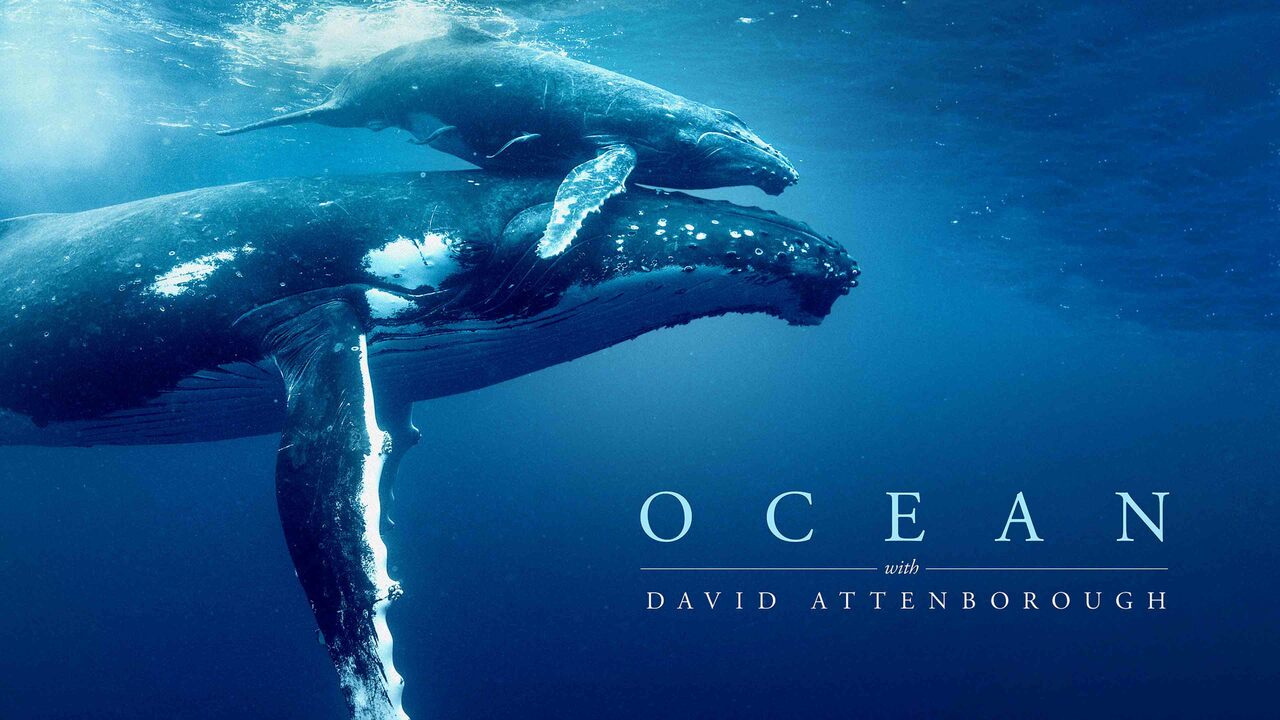
In Ocean with David Attenborough, the world’s most trusted voice in natural history turns his gaze—and his legacy—toward the sea. Premiering June 7 on National Geographic and streaming globally on Disney+ and Hulu on World Oceans Day, the landmark documentary marks the first collaboration between Attenborough and National Geographic. Produced by Silverback Films and Open Planet Studios, Ocean is more than a cinematic exploration of Earth’s most mysterious and vital ecosystem—it’s a call to action.
Drawing on over 70 years of experience, Sir David Attenborough delivers what he considers the most important message of his life: the ocean is not only in peril, but it also holds the key to our planet’s recovery—if we act now. Through stunning visuals, immersive storytelling, and deeply researched science—guided in part by Dr. Enric Sala of National Geographic Pristine Seas—the film reveals both the devastating impacts of destructive fishing practices and the remarkable potential for ocean regeneration. In this Q&A, we speak with director Toby Nowlan and scientist Enric Sala about the making of the film, the urgency of its message, and the hope they see for our blue planet.
Let’s jump right in. Starting with the title of the film, Ocean with David Attenborough—why is now the right time to share what he’s described as one of the most important messages of his life?
Toby Nowlin: Well, from Sir David Attenborough’s perspective, this is a man who has shown us the natural world for nearly a century. There’s no one who has seen or revealed more of it than him. He’s the most trusted name when it comes to truth, story, passion, and presence. And with David, it’s never about him—it’s always about the subject. In this case, the subject is the ocean.
I’ve been working on Attenborough productions for about 16 years now—Planet Earth II, A Perfect Planet, Our Planet. I’ve been lucky to work on some landmark shows. The usual goal is to capture new natural behaviors never filmed before or portray familiar ones in completely new ways. But this was different. This was David’s love letter to the world. It’s his most personal and authored piece, the most important story he’s ever told: a call to save the ocean. His message is clear—if we save the sea, we save our world. It’s been a privilege to direct and produce this film with him, released on his 99th birthday, during what we’re calling “the year of the ocean,” just ahead of the UN Ocean Summit in Nice this June.
The film strikes a powerful balance. It’s stark and urgent in one half, and then hopeful and even beautiful in the latter half. How did you decide on that tonal approach—to show both the crisis and the potential for renewal?
Toby Nowlin: Honestly, it came quite naturally. Fortunately, the science—as provided by brilliant scientists like Enric Sala—is incredibly clear. From the moment I began working on the film, I realized we had this extraordinary opportunity: the greatest figure in natural history filmmaking telling the story of how, over the last century—his lifetime—we’ve come to understand the ocean in ways that completely change how we see the planet and our place on it.
At the same time, we had the chance to reveal one of the biggest, most urgent, and most solvable problems in the ocean—destructive industrial fishing methods, especially bottom trawling, even inside marine protected areas. That gave us a mission: to capture that destruction visually for the first time.
And then comes the hopeful part. There’s an extraordinary solution, one that’s surprisingly unfamiliar to many—even conservationists. It’s this: if you protect the ocean, it rebounds faster and more spectacularly than we ever imagined. Unlike on land, where recovery is often slow, the ocean’s life spreads outward like ripples, regenerating vast areas.
So from the start, I knew we needed the story to be crystal clear and emotionally resonant. It was tempting to touch on every issue facing the ocean, but we wanted to focus on one essential, actionable truth. That focus allowed us to make something that really lands.
That leads perfectly to my next question. What was the collaboration like between the production team and the scientific community? How did you ensure everything was scientifically accurate and well represented?
Enric Sala: The science part was actually quite straightforward. We have an overwhelming amount of research showing the impacts of destructive fishing practices, and we also have hundreds of studies demonstrating the benefits of marine protected areas.
The hard part wasn’t deciding what science to include—it was choosing what to leave out. There are so many success stories, especially in the Global South, where small protected areas have yielded major benefits. We just couldn’t fit them all in.
But working with Toby and the creative team was a dream. It was the easiest collaboration I’ve ever had. We had the science, and Toby had the magic touch to translate that into an emotional, accessible narrative. The challenge in science communication is often that we try to show too much. Toby knew how to keep it focused and impactful. It was the perfect marriage of science and storytelling.
I agree—focus is crucial. One of the most striking scenes in the film is the bottom trawling footage. From a conservation perspective, why is that practice so damaging, and why is it important to expose it now?
Enric Sala: Bottom trawling is one of the most destructive and indiscriminate forms of fishing. For those who haven’t seen the film yet, imagine clear-cutting the Amazon just to catch a few birds. That’s what it’s like. Giant nets, often weighted with chains or beams, scrape across the seafloor, capturing target species like shrimp or bottom fish—but they also destroy everything else in their path.
Most of what they catch that isn’t commercially valuable is thrown away, dead or dying. The seafloor is left a muddy wasteland. We’ve known bottom trawling is harmful for centuries—fishermen in England were complaining about it in the 14th century—but what we haven’t had until now is visual proof on this scale. For the first time, people can actually see the damage, and that changes everything.
How difficult was it to capture that footage?
Toby Nowlin: Very difficult. You’re trying to film a process that’s remained hidden for 700 years. It’s dark, it’s deep, there’s a lot of turbulence. There’s constant motion. And yet, we needed cinematic images worthy of a giant screen.
That meant building cameras that were compact enough to survive the process, waterproofed, and rugged—while still offering high-resolution image quality. These trawl nets are slamming into rocks, dragging boulders—it’s violent. The cameras were at the mercy of the machinery. It took some ingenuity to make it work.
Another scene that stood out is the krill fishing footage. What are the broader ecological implications of removing that much krill from the food chain?
Enric Sala: It’s like vacuuming up the base of the entire Antarctic food chain. The industry says it’s sustainable because they stay within quotas set by the Commission for the Conservation of Antarctic Marine Living Resources (CCAMLR), but in reality, all that fishing is concentrated in the most biologically important areas.
The film shows how the krill is being taken straight out of the mouths of fin whales and other marine life. This region is like the Antarctic version of the Serengeti or Yellowstone—a wild, remote place that now faces intense industrial pressure. Removing krill affects everything: fish, seabirds, penguins, seals, whales. The entire ecosystem suffers.
When we talk about environmental destruction—whether it’s the Amazon or the oceans—it often feels like a one-way road. But the film makes a powerful case for resilience and healing. How quickly can damaged ocean areas, like bleached coral reefs, recover?
Enric Sala: Some recover surprisingly fast. In the film, we show reefs in Kiribati where half the corals died during the 2015–2016 El Niño event. Five years later, they had fully bounced back.
Of course, some species take longer. A grouper might live 40 years—so if you’ve nearly wiped them out, recovery to full size takes time. But measurable improvements can happen in just three years, depending on the ecosystem. In places like Fiji, we’ve seen dramatic increases in fish populations around no-take zones within a few years. Marine life rebounds, and so do local fisheries, thanks to spillover. It’s a win-win.
Toby, you’ve worked with Sir David Attenborough on Planet Earth, Our Planet, and more. What made this project different in terms of scope, mission, and creative direction?
Toby Nowlin: I touched on this earlier, but this film is different because it’s David’s most personal and passionate message. It’s not just another documentary—it’s his call to action. When he decided to make a feature film about the ocean, he was completely energized by the idea.
This became his most reflective and authored work. Everyone involved—scientists, filmmakers, supporters—came together for something bigger than a film. We wanted to make history. We wanted to give people an opportunity to turn the tide. That’s the real hope behind this project.
Enric, how does this film reflect your work since leaving academia and joining National Geographic?
Enric Sala: It’s a dream come true—for me and for ocean conservationists everywhere. Scientists have been sounding the alarm about ocean issues for decades. We’ve published study after study showing both the problems and the solutions.
But for the first time, thanks to David’s trusted voice and Toby’s cinematic storytelling, we now have a tool that can reach people emotionally and inspire action. This film complements and elevates our work. We’ll be using it to engage everyone—from government officials to local communities—starting with the UN Ocean Conference this June.
And that brings us to the last question: what are your hopes for the film’s political and global impact?
Enric Sala: There are two key goals. First, we need to expand marine protection from the current 8% to 30%. Protected areas benefit everyone, including the fishing industry.
Second, we need to strengthen existing marine protected areas—make sure they’re truly protected and delivering benefits to both marine life and coastal communities. One place to start is banning bottom trawling in those areas. Some countries, like Greece, have already committed to doing that by 2030.
Now that people can see the damage, the public response has been overwhelming. The pressure on governments to act—especially to follow through on their 30% ocean protection commitments—has never been stronger.


Leave a Reply