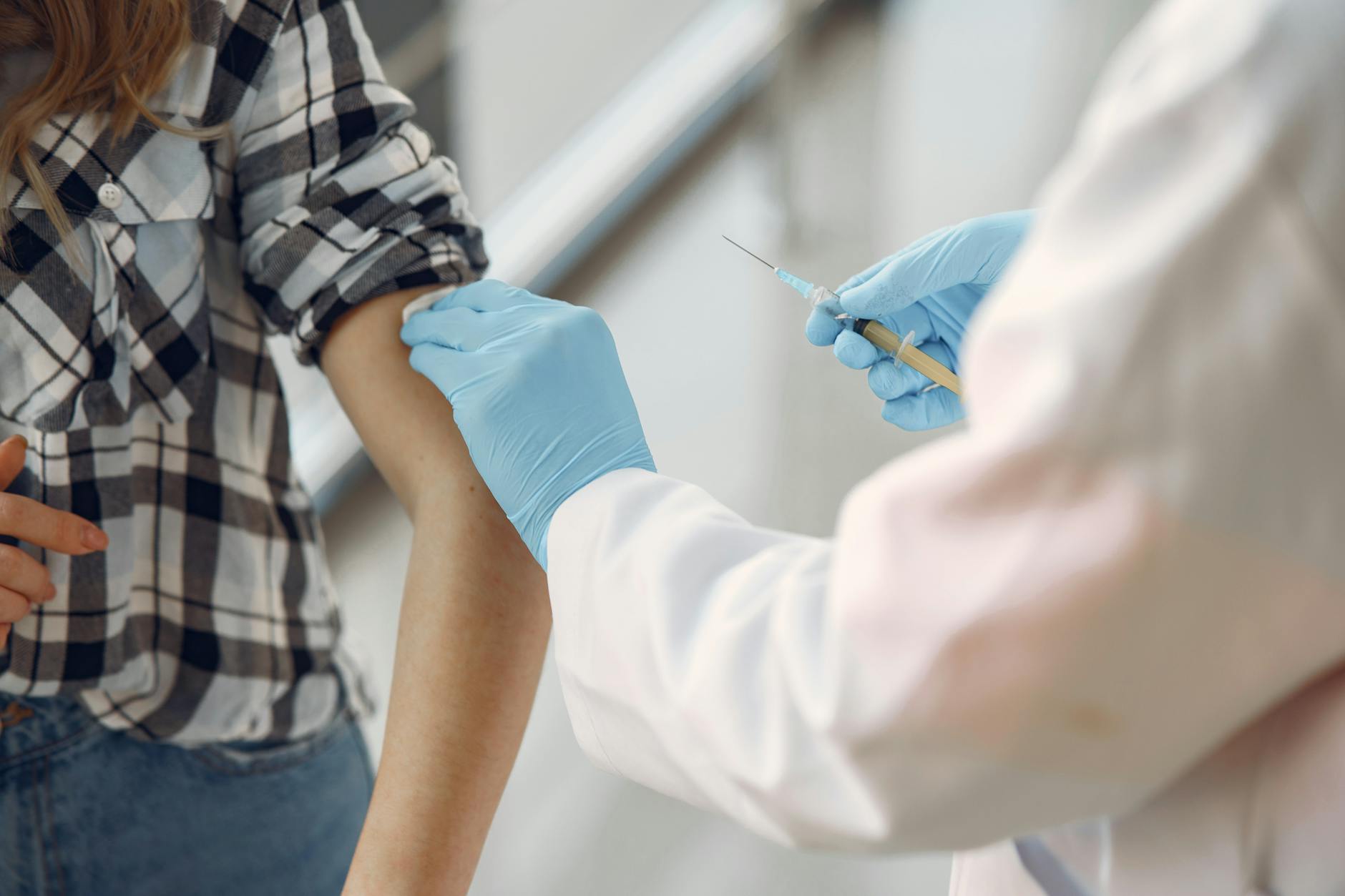
MOST AMERICANS SUPPORT MMR VACCINE DESPITE RISING MEASLES
A new Annenberg Poll reveals that 87% of Americans believe the benefits of the childhood measles, mumps, and rubella (MMR) vaccine outweigh the risks, and 67% know MMR vaccines do not cause autism. Despite this, 2025 is on track for the highest U.S. measles cases since elimination in 2000, with over 1,000 confirmed cases mainly in under-vaccinated communities. Only 58% of adults recognize the surge compared to 2024. Support for mandatory MMR vaccination for public school entry rose to 80%, while 18% favor parental choice. Many adults lack understanding of measles complications, especially risks during pregnancy. The poll also shows mixed beliefs about unproven treatments like vitamin A and cod liver oil, which have been controversially promoted despite risks of toxicity. Meanwhile, Canada faces a large outbreak, with 1,846 cases, mostly in Ontario and Alberta, and Mexico reports linked cases and a recent death, highlighting the regional spread of measles in North America. (CIDRAP)
WHO MEMBER COUNTRIES UNANIMOUSLY APPROVE HISTORIC PANDEMIC TREATY
The World Health Organization’s member countries unanimously approved a historic treaty aimed at improving global pandemic prevention, preparedness, and response following the COVID-19 crisis. Celebrated with sustained applause at the WHO’s annual assembly in Geneva, the agreement was developed over three years to foster international cooperation. It ensures that countries sharing virus samples will receive corresponding tests, medicines, and vaccines, with up to 20% of these products allocated to the WHO to aid poorer nations during future pandemics. WHO Director-General Tedros Adhanom Ghebreyesus praised the treaty as a vital example of multilateralism amid rising nationalism. Namibia’s Health Minister, Dr. Esperance Luvindao, who chaired the committee behind the agreement, highlighted the pandemic’s severe toll on lives and economies. She emphasized the shared responsibility of sovereign states to unite in protecting vulnerable populations and frontline workers from future global health emergencies. (AP)
SAG AFTRA FILES CHARGE OVER AI DARTH VADER VOICE USAGE
Hollywood’s actors’ union, SAG-AFTRA, filed an unfair labor practice charge against Llama Productions, alleging the company used artificial intelligence to generate Darth Vader’s voice in Fortnite without notifying or bargaining with the union. Llama Productions, owned by Epic Games, is accused of making unilateral employment changes over the past six months by replacing actors’ work with AI-generated voices, violating the union’s rights. Epic Games has not yet commented. SAG-AFTRA called a strike in July against major game companies after interactive media contract talks stalled over unregulated AI use. The union emphasized the importance of protecting members’ rights—and those of their estates—to control digital replicas, including voice work. They stressed the need to negotiate terms whenever AI replaces human performances, specifically noting concerns about voices like Darth Vader’s iconic portrayal in video games. (AP)
TEXAS LEADS US PUSH TO RESTRICT MINORS SOCIAL MEDIA ACCESS
Texas is poised to lead the U.S. in restrictive social media legislation with House Bill 186, which would ban minors from creating accounts on platforms like TikTok, Twitter, and Instagram. The bill also mandates age verification using “public or private transactional data” and allows parents to request deletion of their child’s existing accounts. Supporters, including the bill’s author Rep. Jared Patterson and co-sponsor Sen. Adam Hinojosa, frame it as a necessary response to a youth mental health crisis exacerbated by social media exposure. However, critics argue the bill may harm young adults by abruptly restricting access until age 18, leaving them unsupported in digital spaces later. Legal experts and advocacy groups warn HB 186 infringes on First Amendment rights, undermines parental authority, and creates serious privacy risks due to vague rules on data collection and deletion. Similar laws in other states face legal challenges, and opponents call for education and family-centered solutions rather than broad government mandates. (Gizmodo)

US GOVERNMENT SCIENCE INVESTMENT DRIVES LIFE CHANGING INNOVATIONS
Since World War II, the U.S. has invested heavily in basic science, fueling breakthroughs that often take years to show practical impact. Government funding helped create GPS, originally designed to track satellites and submarines, now essential worldwide. NIH research on Gila monster venom led to diabetes and obesity drugs like Ozempic. Quantum dots, developed with federal support, improve displays and medical imaging. Linguist William Stokoe’s NSF-backed work legitimized American Sign Language. Carnegie Mellon researchers created CAPTCHA to distinguish humans from bots, enhancing web security. The USDA eradicated the screwworm parasite through sterile insect release programs. A lab accident with femtosecond lasers inspired bladeless LASIK surgery. NIH studies revealed benefits of infant massage for premature babies. NASA’s Apollo lunar drill project spurred the cordless Dustbuster vacuum. These innovations highlight how sustained government investment in basic science drives technology and improves lives. (New York Times)
CAPUCHIN MONKEYS KIDNAP BABY HOWLERS IN UNPRECEDENTED BEHAVIOR
Scientists observed surprising “kidnappings” of baby howler monkeys by capuchin monkeys on a small Panamanian island between 2022 and 2023. Video footage showed capuchins carrying at least 11 infant howlers—unrelated and different species—on their backs, often while using stone tools. The abductions likely happened in the trees, but researchers never witnessed those moments directly. Most of the baby howlers likely died, many from starvation, though some carrying of deceased infants was recorded. There was no aggression or predation involved, and the capuchins treated the infants gently, suggesting possible confused parental instincts motivating the behavior. Only one group of capuchins was observed kidnapping, with others mimicking the behavior. The reasons remain unclear, but the finding reveals remarkable behavioral variation among social groups. Researchers described the discovery as unprecedented in the animal kingdom and continue to investigate the motivations behind this unusual interspecies interaction. (AP)
DENISOVAN DISCOVERY REVEALS NEW ANCIENT HUMAN SPECIES THROUGH DNA
In 2008, archaeologists in Denisova Cave, Siberia, discovered a small bone fragment—the tip of a little finger—from an ancient human. Geneticists led by Johannes Krause at the Max Planck Institute extracted DNA from the bone and sequenced its entire mitochondrial genome. The results, announced in 2010, revealed a previously unknown human population distinct from both modern humans and Neanderthals, which they named the Denisovans. This discovery was groundbreaking, as it was the first time a new hominin group was identified solely through DNA analysis rather than fossil morphology. Later that year, the team sequenced the entire nuclear genome from the same bone, showing that Denisovans were a sister group to Neanderthals. The researchers also identified a large molar tooth as Denisovan based on its mitochondrial DNA, further confirming the existence of this mysterious ancient human lineage that once inhabited parts of Asia. (Nature)
UT AUSTIN STUDENTS UNCOVER MARS ANCIENT WATER CYCLE SLOW INFILTRATION
Graduate students at The University of Texas at Austin have made a key breakthrough in understanding Mars’ ancient water cycle, bridging the gap between surface water and groundwater. Mohammad Afzal Shadab and Eric Hiatt developed a computer model estimating that water took 50 to 200 years to percolate from the surface to deep underground aquifers on early Mars—much slower than on Earth, where water tables lie closer to the surface. Published in *Geophysical Research Letters*, their findings suggest this slow infiltration could have created a vast volume of subsurface water, potentially enough to cover Mars with at least 300 feet of water. Unlike Earth’s dynamic water cycle, early Mars likely had a dry atmosphere, causing water that seeped underground to rarely resurface. Hiatt notes that any standing surface water was probably short-lived. This subsurface water persistence offers hope for past microbial life and may guide future missions seeking buried water to support human exploration. (Space Daily)
NASA REVIVES VOYAGER 1 THRUSTERS AFTER TWO DECADES DEAD
NASA engineers recently revived Voyager 1’s thrusters, considered dead for over 20 years, in a critical mission to maintain communication with the aging spacecraft. Voyager 1 and 2, launched in 1977 to study the outer planets, have far exceeded their expected five-year mission, now exploring interstellar space. Voyager 1’s primary roll thrusters failed in 2004, leaving only backup thrusters for orientation and communication. However, buildup in the backup thrusters’ fuel tubes threatened their function just as NASA’s only antenna capable of commanding Voyager 1 was scheduled for a long upgrade downtime. Engineers hypothesized a circuit switch malfunction caused the heater failure on the primary thrusters and successfully sent commands to flip the switch back on, reactivating the thrusters. This risky maneuver took nearly two days to confirm due to communication delays over 14 billion miles. Despite ongoing challenges, NASA plans to keep the probes operational into the next decade, allowing them to silently drift through space long after human civilization ends. (Smithsonian Magazine)
Thanks for reading. Let’s be careful out there.
WORDS: The Biology Guy.


Leave a Reply