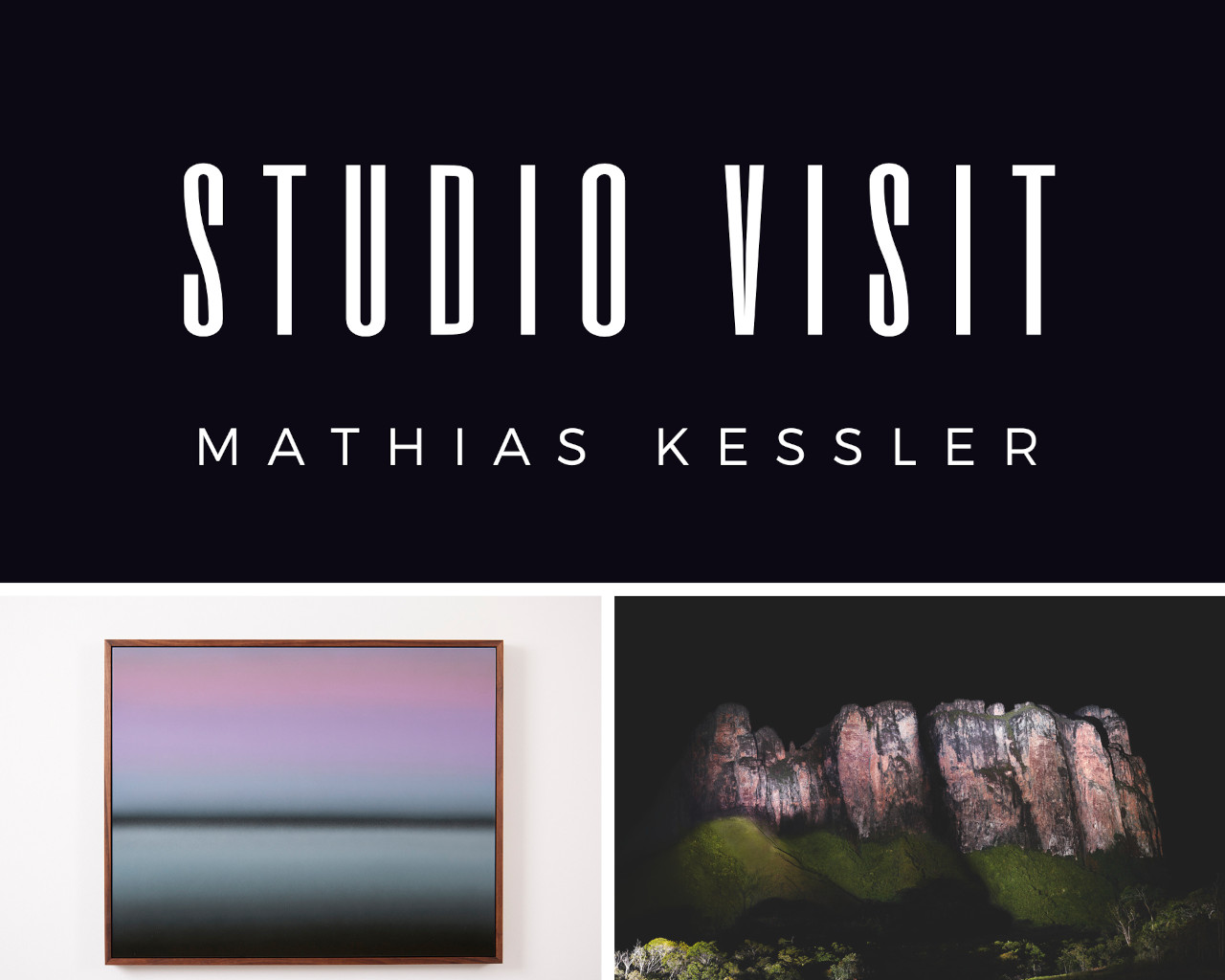
Mathias Kessler is an Austrian artist whose work straddles the intersection of art, science, and the natural world. With a background rooted in photography—his family ran photo labs, and his grandfather was a photographer—Kessler’s artistic journey began in the 1990s when he immersed himself in the art scene of Vienna while working in his family’s lab in Linz. In 1997, Kessler moved to New York, where he worked with fashion designers and artists, eventually building an unconventional career that spans both commercial and fine art.
Through collaborations with scientists and innovative use of materials, Kessler creates experiential artworks that not only engage the senses but also provoke thought about the role of art in addressing urgent environmental and social issues. His projects range from long-term investigations into pollution, such as his Wasted Sunset series, to conceptual installations like After Nature, which examines the interconnectedness of life and death through living corals feeding on a human skull.
Let’s start from the beginning. Can you tell me about your background and how you first became interested in art?
My family had photo labs, and my grandfather was a photographer who started one. So I’ve always had a connection to photography.
In the ‘90s, I became really interested in art. We had a photo lab in Linz, and I met a lot of artists in Vienna while producing photographs. Then, in ’97, I moved to New York and continued working for fashion designers like Helmut Lang, while also printing and assisting artists and photographers.
Over time, this evolved into an unusual career. I first worked for Interview magazine and shot pictures for The Source magazine—mostly music artists. That gradually led to my career as an artist. I then studied at the School of Visual Arts and completed a master’s in fine arts. That’s when I really became a professional artist.
Growing up in the Austrian mountains, there was always this connection between my grandfather’s photos of landscapes and the reality of nature—especially how it’s been used for tourism.
Are there any particular artists or movements that have influenced you throughout your development?
Absolutely. The Land Art movement of the ’60s has been a major influence on my work. I’m also drawn to artists like Francis Alÿs and Mark Dion, and I’m fascinated by the interplay of nature, science, and art. I often explore how these three intersect and how media influences our perception of nature, animals, plants, and so on.
Can you walk me through your creative process? How do you go from the initial idea to the finished product? From what I’ve seen of your work, it seems like you do a lot of research before starting a project. Is that correct?
Exactly. My projects often take about five years to complete. For example, the iceberg you see in the background—I traveled to Greenland in 2007 to stage and light these giant ice structures at night. It was a kind of performance for me—lighting up an iceberg in the Arctic night with huge movie lights from a boat. I wanted to put a spotlight on nature and say, “This is real nature,” while also engaging with photography and the legacy of landscape photography, particularly Ansel Adams, who believed capturing untouched nature could help conserve it.
My work, however, explores a different discourse. By the time I visited Greenland, we had already affected the landscape. I wanted to highlight how nature has become an object—something we mine, relax in, or visit as tourists. There’s always a value attached to landscapes, and that’s what I’m negotiating through these images.


Marc Landas: How do you decide on the medium for a project? Does the medium ever force you to adjust your approach to the subject?
Mathias Kessler: The medium always connects to the image in my research. For example, I did a project with a human skull submerged in an aquarium tank, with corals growing on it. The saltwater extracts calcium from the skull, which feeds the coral. It’s a commentary on evolution, death, life, and sculpture, but also an image—like the memento mori tradition in art, reminding us of mortality.
I feel like art has distanced itself from reality, and I’m trying to bring that back. In this case, people can experience a real human skull in an aquarium, with coral slowly growing on it. It becomes a slow, biological process.

You mentioned in one of your statements that your work explores the tension between human intervention and the desire for an authentic natural experience. How do you navigate this tension in your creative process, and what are you trying to communicate to your viewers?
I always aim to get people to think about how we behave in the world. For example, when I staged those images in the Arctic, people initially saw them as beautiful, but I wasn’t satisfied with the reaction. So I did another project where I installed a giant mirror in a gallery. It was 10 by 14 feet, and cold water was sprayed on the back, freezing the surface. People could experience the cold and see their reflection, recreating the experience I had in the Arctic.
I also installed a 3D-printed figure of Caspar David Friedrich in a fridge. Visitors could open the fridge, see the sculpture slowly freezing, and grab a beer from the fridge. It’s about creating environments that offer experiential and reflective moments.
Your Wasted Sunset series is both beautiful and thought-provoking. How did you come up with the concept for that, and what went into making it?
Wasted Sunset was a proposal for an exhibition in Frankfurt. The project started when I learned from a scientist at MIT that the colors we see in sunsets are largely due to pollution—fine dust particles in the atmosphere. That idea fascinated me because we all admire sunsets, but what we’re really seeing is pollution.
I worked with Christos Zerefos, a scientist in Greece, who studied paintings from 1500 to 1800, linking them to geological events like volcanic eruptions. I went to places Turner and other painters had captured in their landscapes, photographed the sunsets, and compared the colors to the paintings. The results reflected how much fine dust and pollution has increased over time.


Was it difficult to get all those color gradations and shades of sunsets using airbrushing?
Yes, it was a long process. I started this project over 10 years ago, and we had to use airbrushing because inkjet printing couldn’t accurately reproduce the colors. We applied a glossy car finish to the surface, so viewers could see their reflection in the piece, becoming part of the artwork. It’s a reminder of how much we’ve collectively altered the skies.
Since you mentioned that the Wasted Sunset project had its roots in After Nature, could you talk about that installation and your collaboration with Dr. Weingarten?
After Nature involved developing a sensor with Dr. Weingarten that measured plant health. We created a prototype for an installation in a museum where plants could “express” their needs. Although the project was never fully developed due to a lack of funding, NASA has since built a similar sensor for space travel and agriculture.
How do you balance the sense of serenity in your work, like the sunsets and glaciers, with more intense pieces like Disasters of Climate Change?
Disasters of Climate Change is more visceral. The fires I depict in the series are based on real media images, but I transform them into slow-burning processes by laser-cutting them into paper, using ash as the medium. It’s about pausing and reflecting on the destructive impact we have on the planet.

What role do you think art plays in addressing social and environmental issues?
Art can inspire people to think differently, though it’s not a mass movement. But in the environmental movement, artists have had a significant impact—not just through their work, but through conversations and activism. In New York, for example, artists helped stop Canal Street from becoming a highway. Art can have a powerful voice, even if it’s not always supported by the market.
ALL IMAGES AND VIDEOS CREDIT: Mathias Kessler.
Sign up for the Daily Dose Newsletter and get the morning’s best science news from around the web delivered straight to your inbox? It’s easy like Sunday morning.


Leave a Reply