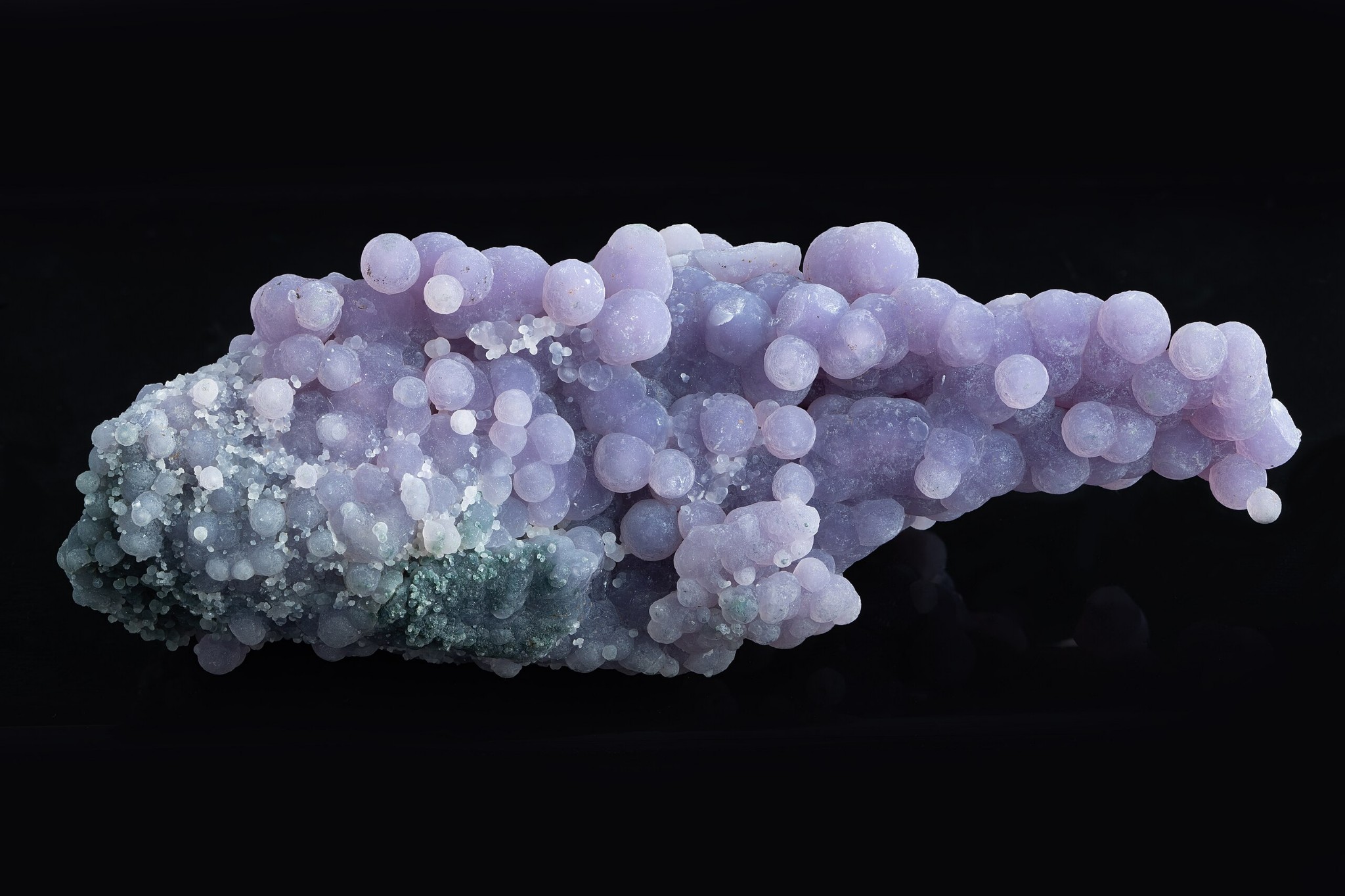

Botryoidal Purple Grape Agate Chalcedony is a unique and visually striking mineral formation. This mineral is named for its botryoidal (grape-like) shape, where clusters of tiny, round formations resemble bunches of grapes. The color ranges from deep purple to lighter lavender hues, making it particularly attractive and sought after by collectors.
Grape Agate is a form of chalcedony, which is a variety of microcrystalline quartz. The purple color is typically due to the presence of trace amounts of iron or manganese within the crystal structure. This combination of mineral content and structure gives Grape Agate its distinctive and captivating appearance.
Botryoidal chalcedony forms in a variety of geological environments, often in volcanic rocks or hydrothermal veins. The grape-like clusters grow slowly over time as silica-rich water percolates through rock cavities, depositing layers of chalcedony. This gradual process results in the beautiful and intricate formations that are highly prized.
One of the primary sources of Grape Agate is Indonesia, specifically from the Mamuju area in Sulawesi. This region has become well-known for producing high-quality specimens. The unique geological conditions in this area contribute to the formation of these stunning mineral clusters.
Beyond its aesthetic appeal for mineral collectors, Grape Agate is sometimes used in jewelry and decorative items. Its unique appearance makes it a popular choice for cabochons, beads, and carvings. The distinctive look of Grape Agate pieces adds a touch of natural beauty to any collection or piece of jewelry.
In the realm of crystal healing, Grape Agate is believed to have calming and soothing properties. It is thought to enhance intuition, clarity, and inner peace, making it a favored stone for meditation and spiritual practices. Many people are drawn to its serene energy and use it as a tool for personal growth and relaxation.
Like other forms of chalcedony, Grape Agate should be handled with care. It is relatively durable but can be damaged by harsh chemicals or extreme temperatures. Cleaning should be done with mild soap and water, avoiding ultrasonic cleaners or steamers to maintain its natural beauty and integrity.



Leave a Reply