
FDA ADVISORY PANEL ENDORSES ELI LILLY’S ALZHEIMER’S DRUG
The FDA advisory panel has unanimously endorsed Eli Lilly’s experimental Alzheimer’s drug, donanemab, recognizing its benefits over risks for early-stage patients. This approval paves the way for the FDA’s final decision, expected soon. The treatment, which involves monthly infusions, has shown to slow cognitive decline by 29%, closely aligning with results from Eisai and Biogen’s Leqembi, which also targets beta amyloid plaques in the brain. Despite its potential, donanemab poses safety concerns, including a significant incidence of brain swelling and bleeding, particularly among patients with a genetic predisposition to Alzheimer’s. Lilly’s trial also uniquely focused on tau protein levels to determine patient eligibility, which could influence treatment outcomes but also accessibility due to limited testing availability. This novel approach has sparked discussions about its implementation in clinical settings. The advisory panel’s positive feedback could lead to FDA approval, boosting Eli Lilly’s market presence. (Reuters)
SILICON VALLEY BILLIONAIRES FACE OPPOSITION ON NEW CITY PROJECT
Silicon Valley billionaires, including LinkedIn’s co-founder and Lauren Powell Jobs, have initiated a development project, California Forever, aiming to build a sustainable “city of yesterday” near San Francisco. Despite claims of using non-prime farmland, the Solano Land Trust, after a thorough review, strongly opposes the project. They argue that the development, spread over 60,000 acres, would harm ecosystems, deplete water resources, and destroy efficient farmlands that rely on natural rainfall, thus maintaining crucial aquifers and carbon sequestration in the soil. The trust also highlights that the project’s location, the Jepson Prairie Preserve, is home to rare species and contributes significantly to local biodiversity. Moreover, the plan could bring about 400,000 new residents, impacting local traffic, air quality, and overall environmental integrity. California Forever’s portrayal of the land as low-quality and underutilized is contested by the trust, accusing the project of misleading the public about the land’s true value and ecological importance. (Popular Science)
If you’re enjoying the Daily Dose, sign up for the Daily Dose Newsletter and get the morning’s best science news from around the web delivered straight to your inbox? It’s easy like Sunday morning.
SYNTIS BIO INNOVATES OBESITY TREATMENT WITH NEW DAILY PILL
Syntis Bio, a new biotech firm in Boston, is diverging from popular GLP-1 agonists in obesity treatment by developing SYNT-101, a daily pill that emulates gastric bypass surgery effects by blocking nutrient absorption in the upper small intestine. This innovation stems from MIT-developed “SYNthetic Tissue-lining technology,” which uses a mussel-inspired polydopamine coating to redirect nutrient absorption and enhance satiety hormone release, lasting up to 24 hours. SYNT-101 has progressed into clinical trials with results due later this year, aiming for further FDA trials in 2025. Syntis Bio’s broader pipeline includes engineered enzymes for rare pediatric diseases, with plans to seek FDA approval for treatments next year. The company’s work is supported by a $15.5 million seed funding round and strategic acquisitions from Codexis, focusing on conditions from obesity to rare metabolic disorders. (Fierce Biotech)
WATER DISCOVERED AT MARTIAN EQUATOR
For the first time, water frost has been observed at the equator of Mars, particularly in the Tharsis volcanic region. This unexpected finding challenges previous assumptions that frost couldn’t form in Mars’ equatorial tropics due to its warm temperatures influenced by sunshine and a thin atmosphere. The discovery was made by European Space Agency spacecraft, ExoMars Trace Gas Orbiter and Mars Express, and reported by Adomas Valantinas of the University of Bern, now at Brown University. The frost, although transient and as thin as human hair, covers a significant area and contains substantial water, estimated at 111 million liters. This phenomenon, occurring briefly at sunrise, suggests active water exchange between Mars’ surface and atmosphere. It could impact future Mars exploration by indicating new water sources. The presence of frost is attributed to unique microclimates in volcanic calderas, where moist air rises, cools, and condenses. This finding enhances understanding of Martian atmospheric dynamics and has been published in Nature Geoscience. (space.com)

HORSE DOMESTICATION TIMELINE UPDATED, REVEALS LATER ORIGIN
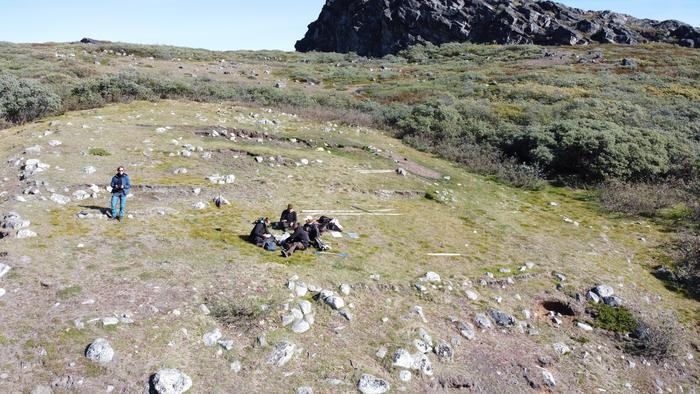
A recent genomic study has revised the timeline and location of horse domestication, suggesting it occurred around 2200 B.C.E., a millennium later than previously believed. This research, published in Nature, indicates that a specific horse lineage from the Pontic-Caspian steppe quickly became predominant and spread throughout Eurasia. This lineage is directly linked to today’s domesticated horses. The study involved analyzing DNA from 475 ancient and 77 modern horses, correlating these findings with archaeological evidence to construct a more accurate historical timeline. Earlier theories posited that the Botai culture of Kazakhstan first domesticated horses for meat and milk around 5500 years ago, but this practice did not continue. The study suggests a subsequent domestication by the Bronze Age Sintashta culture, motivated by the need for mobility, led to a rapid expansion of this new equine lineage. This challenges previous theories, including those suggesting the Yamnaya people were riding horses 5000 years ago, as genetic evidence shows horse genes spreading significantly later. (Smithsonian)
CALIFORNIA RAINS SPARK SEARCH FOR UNDISCOVERED FUNGI
After heavy rains in California, a variety of fungi, ranging from mushroom-like structures to fluorescent corals and jelly-like forms, emerge in the forests, presenting a unique opportunity for mushroom hunters to discover new species. According to a 2023 report from Royal Botanic Gardens, Kew, up to 95 percent of fungal species worldwide remain undescribed. Mandie Quark, a mycologist involved with California’s Fungal Diversity Survey, mentioned that these emergences could lead to the identification of new species, as many have begun using DNA sequencing to catalog fungi they find. This process involves extracting DNA and sequencing a portion of the genetic code to distinguish different fungi, with findings often shared on platforms like iNaturalist or entered into scientific databases by various research organizations. The practice has seen a significant increase, with over 21,000 samples sequenced in the current year alone. This surge in sequencing helps deepen understanding of fungal diversity and aids in conservation efforts, especially as the climate continues to change. (New York Times)
Thanks for reading. Let’s be careful out there.
WORDS: The Biology Guy.
IMAGE CREDIT: NASA.


Leave a Reply