The Santa Barbara Channel’s kelp forests and its sandy beaches are intimately connected. Giant kelp, the foundation species of rocky reefs, serves as a major part of the beach food web as fronds of the giant seaweed break away from the forest and are transported to the beach. But the relationship goes deeper.
In a paper published this week in the Proceedings of the National Academy of Sciences, a team of scientists demonstrated that kelp forests can do more than supply food to tiny, hungry crustaceans living in the sand. They can also influence the dynamics of the sandy beach food web.

“The amount of kelp on the reef changes through time in a way where the peaks and low points in abundance across several kelp forests are matched together,” said lead author Jonathan Walter, a senior researcher at the University of California, Davis, and its Center for Watershed Sciences. “That’s what we refer to as synchrony. It is related to the ability of systems to persist in the face of changing environmental conditions. A little asynchrony allows systems to be resistant to fluctuations and therefore more stable.”
The study uncovers the role of synchrony in the beach food web, with broader implications as the climate shifts in ways that might change how linked ecosystems perform their functions.
Sign up for the Daily Dose Newsletter and get every morning’s best science news from around the web delivered straight to your inbox? It’s easy like Sunday morning.
Revealing synchrony’s role in these ecosystems fills a key knowledge gap in our understanding of the connection of reef and beach.
“The kelp forest and the beach are both highly dynamic ecosystems,” said co-author Jenny Dugan, a coastal marine ecologist at UC Santa Barbara. “How the dynamics of those two ecosystems interact and behave is the key question here, especially with the beach system so dependent on the kelp forest.”
In sync
Though a natural and ubiquitous phenomenon, synchrony and its implications are not yet fully understood.
The research team sought to understand whether and how kelp wrack (detritus) could affect the beach ecosystem’s dynamics. For instance, how might species respond to the changing environment, and how resilient is the beach ecosystem to disturbances?
To address these questions, the study used long-term data from UCSB’s Santa Barbara Coastal Long Term Ecological Research site, which is supported by the National Science Foundation. The team’s model was built on a time series of wind, wave, wrack, and beach-width data at five sandy beaches over 11 years.
It revealed patterns of synchrony — where the abundance of kelp wrack on beaches could be explained by kelp abundance in the forest, wave action, and beach width fluctuating together. At the longest timescales, kelp forest biomass and beach width were the biggest drivers of kelp wrack on the beaches.
Beach melodies
“We found time lags in this synchrony that were important,” Dugan said. “It wasn’t as simple as everything changing at the same time — it was like separate songs or melodies that came together in different ways. This made the patterns more complex, which is why it required the type of analyses we used.”
Importantly, the researchers found this synchrony crossed from ocean to shore. The abundance of predatory shorebirds, like sandpipers and plovers, lagged behind the deposition of wrack on beaches.
“Once on the beach, kelp wrack feeds a highly productive community of small invertebrates — crustaceans and insects — that are in turn a favorite food of shorebirds,” Dugan explained. The cross-system synchrony is particularly notable because the beach ecosystem relies so heavily on kelp subsidies, she added.
Dynamic nature
“The dynamic nature of kelp forests, in terms of their high productivity and turnover, is unique for ecosystems structured around foundation species,” said co-author and coastal ecologist Kyle Emery, a researcher in the UCSB Marine Science Institute. “It allows us to observe change many times over compared to other foundation species and gives us the ability to observe many different system states, processes and functions. This enabled us to more rapidly analyze these questions of cross-ecosystem synchrony.”
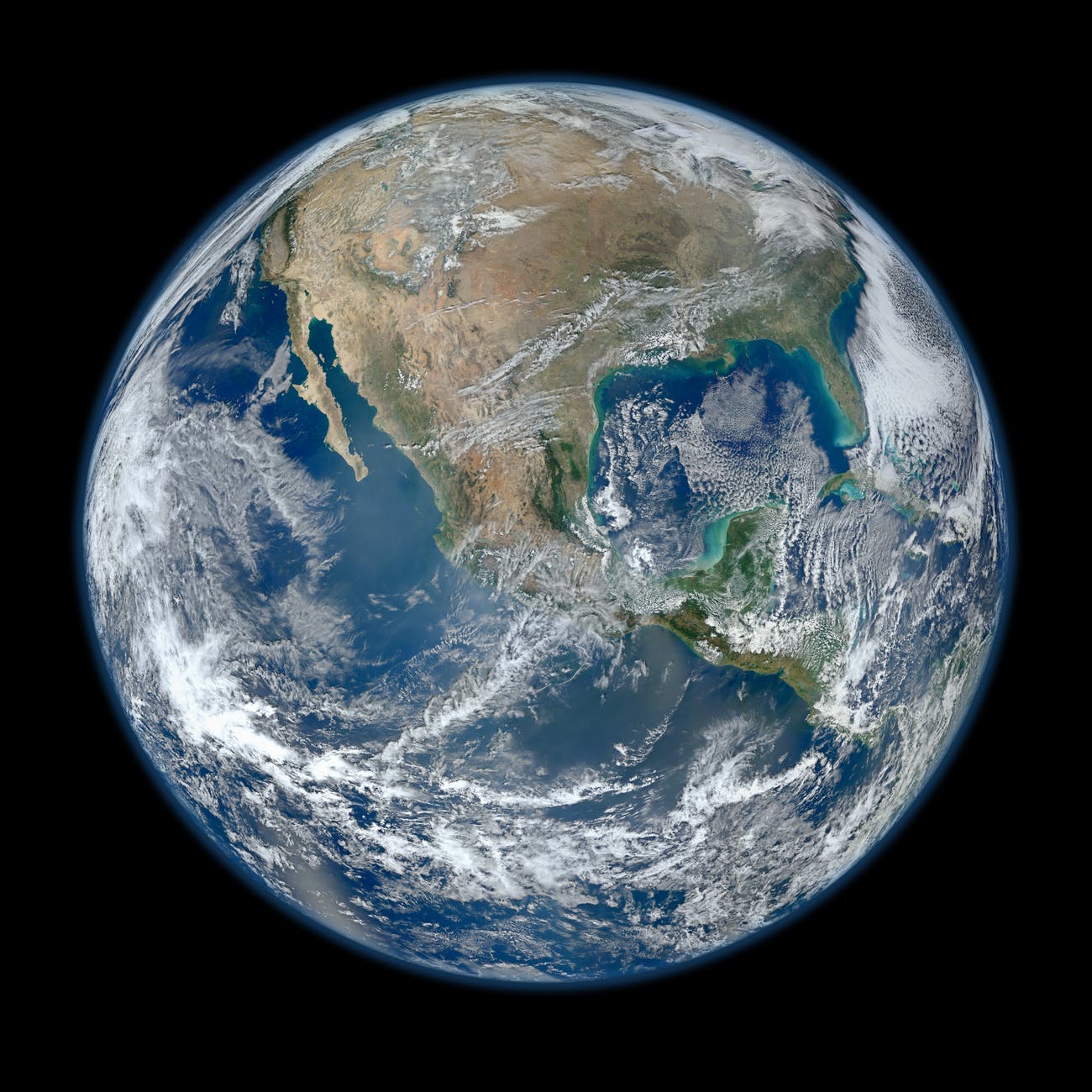
IMAGE CREDIT: NASA.
If you enjoy the content we create and would like to support us, please consider becoming a patron on Patreon! By joining our community, you’ll gain access to exclusive perks such as early access to our latest content, behind-the-scenes updates, and the ability to submit questions and suggest topics for us to cover. Your support will enable us to continue creating high-quality content and reach a wider audience.
Join us on Patreon today and let’s work together to create more amazing content! https://www.patreon.com/ScientificInquirer



Leave a Reply