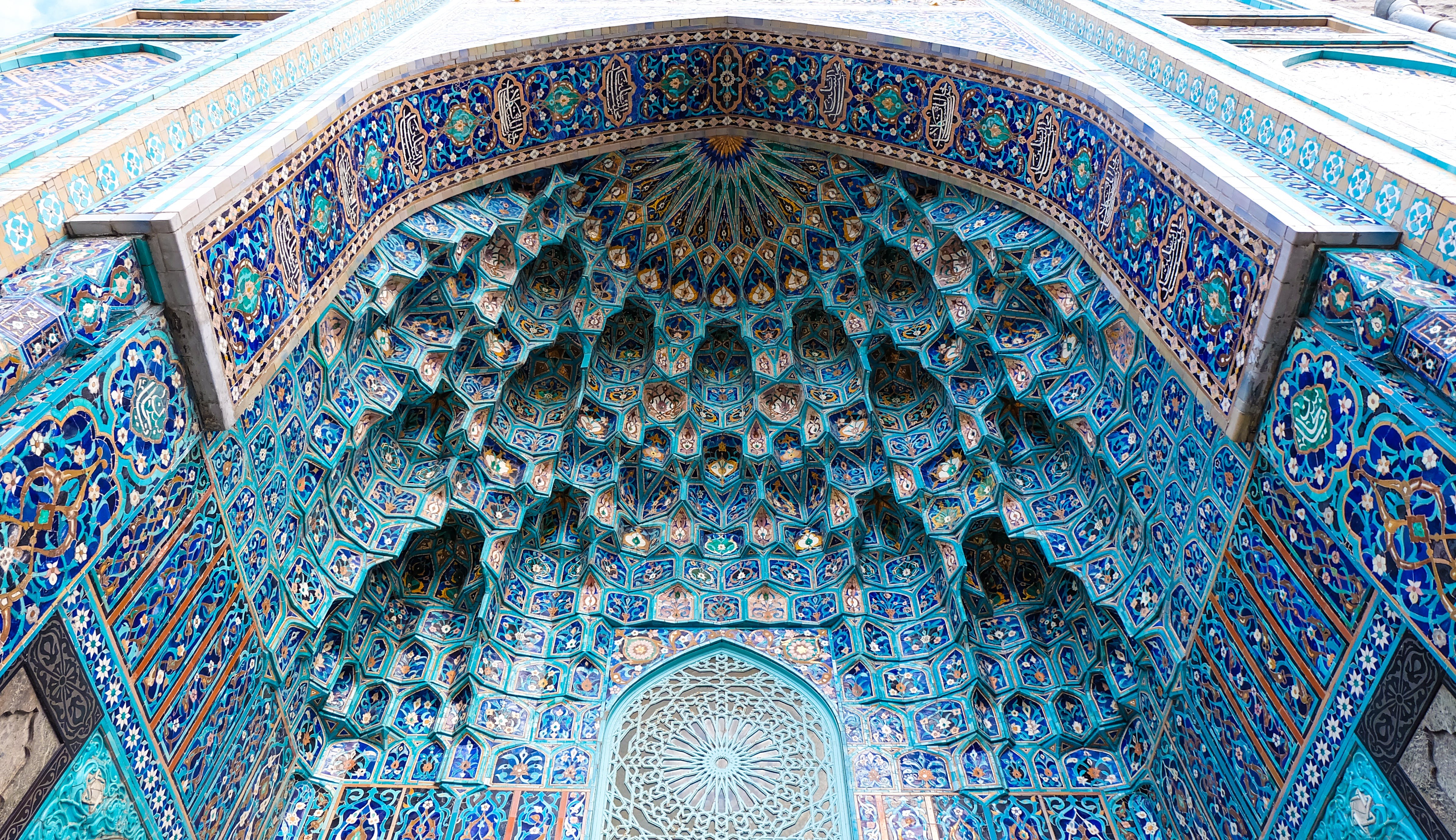

The Saint Petersburg Mosque, inaugurated in 1913, is not just a significant religious edifice in Russia but also an architectural marvel that beautifully blends Islamic art with the unique cultural essence of Saint Petersburg. This mosque, a symbol of the Islamic community in a predominantly Orthodox Christian city, stands as a testament to religious harmony and artistic integration.
Architecturally, the mosque is a fusion of traditional Islamic designs with local Russian influences. Its minarets, soaring to a height of 49 meters, echo the skyline of Saint Petersburg, harmonizing with the city’s famous architectural landmarks. The striking blue ceramic tiles adorning its exterior are reminiscent of the iconic blue domes of the famous mosques in Samarkand, reflecting a connection with Central Asian Islamic architecture.
The interior of the mosque is equally impressive. The walls and ceilings are elaborately decorated with traditional Islamic patterns and calligraphy, imbuing the space with a sense of reverence and tranquility. The intricate geometric designs, coupled with the use of vibrant colors, create a visual spectacle that is both awe-inspiring and spiritually uplifting.
Beyond its architectural splendor, the Saint Petersburg Mosque holds a special place in the cultural and spiritual life of the city. It has been a center for Islamic learning and a place of gathering for Muslims in Saint Petersburg for over a century. The mosque not only serves the religious needs of the local Muslim community but also stands as a symbol of the city’s diverse and inclusive spirit.
It is worth noting that Islamic art in mosques is renowned for its masterful use of geometry, reflecting the cultural emphasis on aniconism and the symbolic representation of the infinite nature of the universe. Geometric patterns in Islamic mosques serve both aesthetic and metaphysical purposes. Intricate designs, created through the repetition, overlapping, and interlacing of squares and circles, generate complex patterns that symbolize the unending nature of creation. These patterns, often seen in tile work, stucco, and carpet designs, are not merely decorative; they are a profound expression of the Islamic philosophical and spiritual principles, embodying a cosmos that is orderly, unified, and harmonious.
IMAGE CREDIT: Pixabay.



Leave a Reply