HAVE YOUR SAY.
Join us in The Bullpen, where the members of the Scientific Inquirer community get to shape the site’s editorial decision making. We’ll be discussing people and companies to profile on the site. On Wednesday, September 14 at 5:30pm EST, join us on Discord and let’s build the best Scientific Inquirer possible.
A group of international researchers has uncovered evidence of a super rare genetic condition that gives men an extra X chromosome, reporting the oldest clinical case of Klinefelter Syndrome to date.
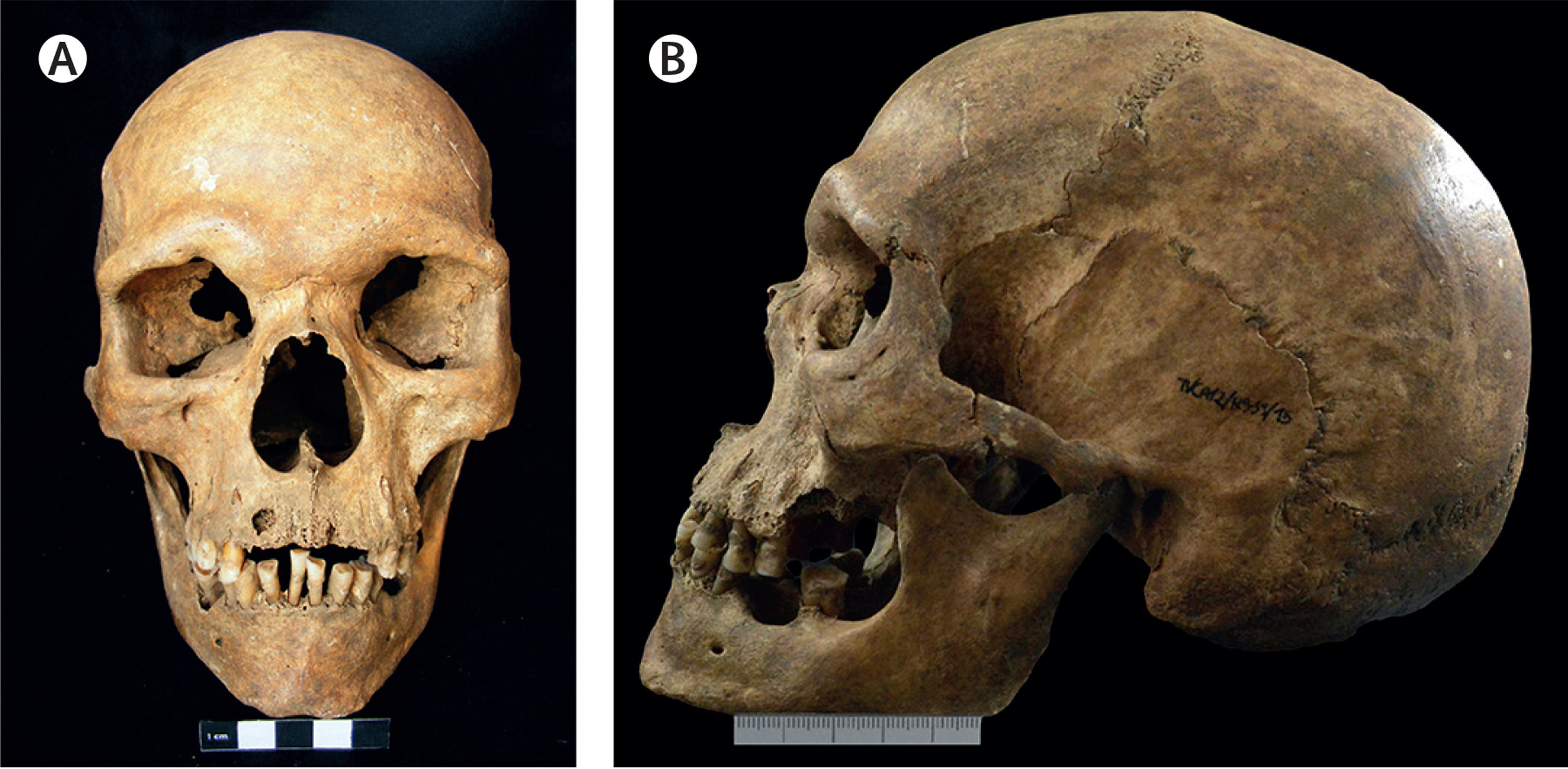
The evidence comes from a 1,000-year-old skeleton from Portugal.
Klinefelter Syndrome is a rare genetic condition where individuals are born with an extra copy of the X chromosome, occurring in approximately one in 1,000 genetic-male births.

The study coordinated by Dr João Teixeira, an ARC DECRA Fellow at The Australian National University (ANU), brought together a multidisciplinary team that combined genetic, statistical, archaeological and anthropological information to establish a definitive diagnosis.
The team began by analysing genetic information obtained from a skeleton found in northeastern Portugal that had been radiocarbon dated to the 11th century by researchers from the University of Coimbra in Portugal.
“We were immediately excited the first time we looked at the results,” Dr Teixeira said. “However, ancient DNA, is often degraded and of low quality and abundance, meaning we were initially cautious.”
The researchers say the findings will help establish a historic record for Klinefelter Syndrome, as well as enhance understanding of its prevalence throughout human history.
“Our research shows the immense potential of combining different lines of evidence to study the human past, and the frequency of different health conditions through time,” Dr Teixeira said.
Associate Professor Bastien Llamas, Head of Molecular Anthropology at the Australian Centre for Ancient DNA, said: “In recent years, ancient DNA helped rewrite the history of worldwide human populations. Our study demonstrates it is now a valuable resource for biomedical research and the growing field of evolutionary medicine”.
The DNA was extracted by PhD student at the University of Adelaide, Xavier Roca-Rada, who said “genetic analysis was undertaken to computationally map the degraded DNA fragments of the X and Y chromosomes to the reference human genome”.
Given the well preserved state of the specimen, the researchers were also able to determine physical traits in the skeleton compatible with Klinefelter Syndrome.
“Given the fragile state of the DNA, we developed a new statistical method that could take into account the characteristics of ancient DNA, and our observations to confirm the diagnosis,” Dr Teixeira said.
“While the study offers compelling evidence for the genetic history of Klinefelter Syndrome, no sociological implications can be drawn from this diagnostic.”
The researchers suggest their new method to analyse this particular skeleton can be further improved to study different chromosomal abnormalities in other archaeological specimens, including Down Syndrome.
IMAGE CREDIT: The Lancet




Leave a Reply