For some people with alcohol use disorder, it might be the sight of a familiar bar or a favorite bottle; for others, it might be the feeling of leaving the office after a stressful day at work or stepping into a crowded party. Most people who struggle with drug or alcohol addiction have particular cues that set off their cravings.

Now, scientists at Scripps Research have discovered how, in rats dependent on alcohol, environmental cues that become associated with drinking during withdrawal are much more powerful than those learned during the early phases of alcohol use, leading to more irresistible cravings. The new findings, published online in the British Journal of Pharmacology, could eventually lead to new treatments to minimize cravings in people with addictions.
“We already knew that the craving produced by environmental stimuli typically intensifies over time in severe alcohol use disorder,” says Friedbert Weiss, PhD, a professor at Scripps Research, “but no one had teased apart, at both a behavioral and neurobiological level, why that is until now.”
An estimated 14.5 million people in the United States have alcohol use disorder, which encompasses a range of unhealthy drinking behaviors. Like other drug addictions, alcohol addiction is characterized by cycles of withdrawal, abstinence and relapse. Cravings set off by environmental stimuli—like those present when driving past a local bar—are powerful drivers for relapse. Similarly, rats that have learned to associate a particular smell with alcohol will seek out alcohol when exposed to the smell.
In the new work, Weiss and his colleagues sought to understand whether the experience of repeatedly drinking alcohol during withdrawal—rather than just the length of time or severity of the addiction—helps strengthen the learned associations that lead to cravings. They conditioned rats that were not dependent on alcohol to associate an anise or orange scent with alcohol. Then, a subset of those animals went through cycles of withdrawal, during which they were conditioned to associate a different scent with alcohol consumption.
“This allowed us to separate, for the first time, the learning that happens during the original, non-dependent state, and the learning that happens during withdrawal,” says Weiss.
When all the animals were then tested to see what lengths they would go to for alcohol in the presence of a conditioned scent, Weiss’ group discovered that cues learned during withdrawal were far stronger at eliciting a reaction. In other words, the experience of learning how alcohol relieves negative withdrawal symptoms led to even stronger cravings than the original experience of learning alcohol’s feel-good effects.
“It is commonly thought that people drink because it makes them feel good. But in people who have developed dependence, the ‘feel-good’ sensation that the drug produces is actually a reversal of feeling terrible,” says Weiss. “When this reversal of feeling terrible is experienced repeatedly, then environmental cues that become associated with this experience produce a much more powerful craving than the initial ‘feel-good’ craving.”
Rats that had learned to associate a scent with alcohol during withdrawal were much more persistent in the presence of that scent; during a 30-minute time period, they pressed a lever attempting to obtain alcohol twice as many times as animals that had only been conditioned during early alcohol drinking while not yet dependent. This persistence remained even when they received a small electric shock upon pressing the lever, or when the task of lever pressing was made increasingly more difficult.
“If an alcoholic comes home from work and there’s nothing in the refrigerator, what lengths will they go to for alcohol? Will they run next door to the liquor store? What if it’s snowing outside and the store is a five-mile walk away? What we’re seeing is that in rats, they’ll work much harder to overcome obstacles and are willing to endure adverse consequences if they’ve been conditioned with cues during withdrawal,” says Weiss.
Moreover, the team found that the new conditioning actually weakened older cues that had been learned before the animal became alcohol dependent. If an animal originally associated alcohol with an anise scent, but was later made dependent and conditioned to associate alcohol with an orange scent while drinking during withdrawal, the anise scent was no longer as strong a cue for setting off alcohol-seeking behaviors compared to the second scent that was associated with alcohol drinking during withdrawal.
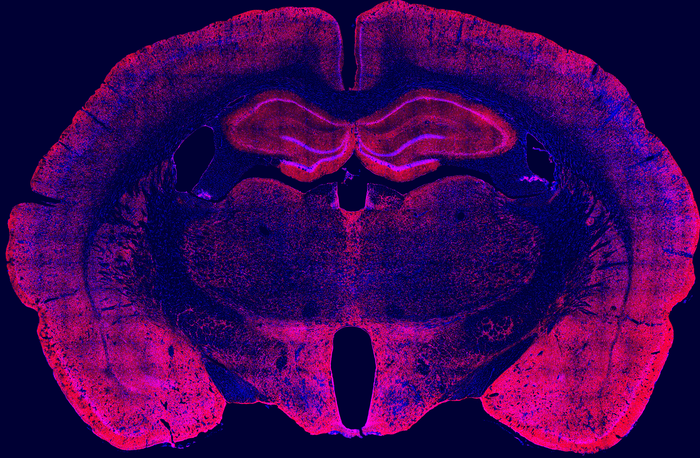
The researchers then studied the amygdala, the part of the brain associated with drug and alcohol addiction in humans and rats, to see how it changed during each conditioning experiment. Different areas, they discovered, were activated depending on whether rats were learning a scent during initial alcohol exposure while not dependent, or during withdrawal after having been made dependent.
“Identifying how learned associations between drug and environment are instantiated in the brain was the really exciting part of this paper for me,” says one of the authors, Hermina Nedelescu, PhD, a Scripps Research staff scientist. “Once we can narrow in on which circuits in the brain are responsible for this withdrawal-associated learning, we can start thinking about how to target them with therapeutics.”
The group is now planning future experiments to more specifically identify the exact groups of neurons involved.
IMAGE CREDIT: Scripps Research


Leave a Reply