The history of life on Earth has been marked five times by events of mass biodiversity extinction caused by extreme natural phenomena. Today, many experts warn that a Sixth Mass Extinction crisis is underway, this time entirely caused by human activities.

A comprehensive assessment of evidence of this ongoing extinction event was published recently in the journal Biological Reviews by biologists from the University of Hawai‘i at Mānoa and the Muséum National d’Histoire Naturelle in Paris, France.
“Drastically increased rates of species extinctions and declining abundances of many animal and plant populations are well documented, yet some deny that these phenomena amount to mass extinction,” said Robert Cowie, lead author of the study and research professor at the UH Mānoa Pacific Biosciences Research Center in the School of Ocean and Earth Science and Technology (SOEST). “This denial is based on a biased view of the crisis which focuses on mammals and birds and ignores invertebrates, which of course constitute the great majority of biodiversity.”
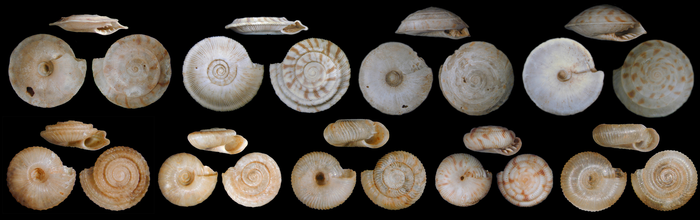
By extrapolating from estimates obtained for land snails and slugs, Cowie and co-authors estimated that since the year 1500, Earth could already have lost between 7.5 and 13% of the two million known species on Earth – a staggering 150,000 to 260,000 species.
“Including invertebrates was key to confirming that we are indeed witnessing the onset of the Sixth Mass Extinction in Earth’s history,” said Cowie.
The situation is not the same everywhere, however. Although marine species face significant threats, there is no evidence that the crisis is affecting the oceans to the same extent as the land. On land, island species, such as those of the Hawaiian Islands, are much more affected than continental species. And the rate of extinction of plants seems lower than that of terrestrial animals.
Unfortunately, along with science denial taking a foothold in modern society on a range of issues, the new study points out that some people also deny that the Sixth Extinction has begun. Additionally, others accept it as a new and natural evolutionary trajectory, as humans are just another species playing their natural role in Earth’s history. Some even consider that biodiversity should be manipulated solely for the benefit of humanity – but benefit defined by whom?
“Humans are the only species capable of manipulating the biosphere on a large scale,” Cowie emphasized. “We are not just another species evolving in the face of external influences. In contrast, we are the only species that has conscious choice regarding our future and that of Earth’s biodiversity.”
To fight the crisis, various conservation initiatives have been successful for certain charismatic animals. But these initiatives cannot target all species, and they cannot reverse the overall trend of species extinction. Nonetheless, it is essential to continue such efforts, to continue to cultivate a wonder for nature, and to document biodiversity before it disappears.
“Despite the rhetoric about the gravity of the crisis, and although remedial solutions exist and are brought to the attention of decision-makers, it is clear that political will is lacking,” said Cowie. “Denying the crisis, accepting it without reacting, or even encouraging it constitutes an abrogation of humanity’s common responsibility and paves the way for Earth to continue on its sad trajectory towards a Sixth Mass Extinction.”
IMAGE CREDIT: O. Gargominy, A. Sartori.


Leave a Reply