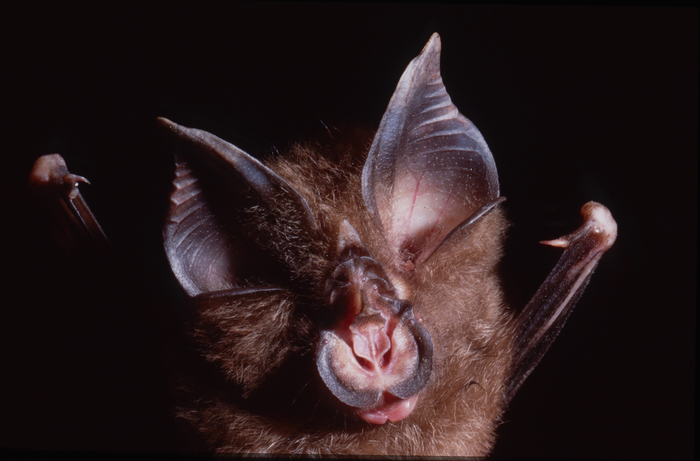
A team of scientists have identified coronaviruses closely related to SARS-CoV-2 from two bats sampled in Cambodia more than a decade ago. The discovery described in the journal Nature Communications, along with the recent detection of the closest ancestors of SARS-CoV-2 known to date in cave-dwelling bats in Laos, indicates that SARS-CoV-2-related viruses that cause COVID-19 have a much wider geographic distribution than previously reported and further supports the hypothesis that the pandemic originated via spillover of a bat-borne virus.

Scientists used metagenomic sequencing to identify the nearly identical viruses in two Shamel’s horseshoe bats (Rhinolophus shameli) originally sampled in 2010. The finding suggests that SARS-CoV-2 related viruses likely circulate via multiple Rhinolophus species.
The authors state that the current understanding of the geographic distribution of the SARS-CoV and SARS-CoV-2 lineages possibly reflects a lack of sampling in Southeast Asia, or at least across the Greater Mekong Subregion, which encompasses Myanmar, Laos, Thailand, Cambodia and Vietnam, as well as the Yunnan and Guanxi provinces of China.
Along with bats, the authors note that pangolins, as well as certain species of cat, civet, and weasels found in this region are readily susceptible to SARS-CoV-2 infection, and might represent intermediary hosts for transmission to humans. In 2020, viruses of the SARS-CoV-2 sublineage, one exhibiting strong sequence similarity to SARS-CoV-2 in the receptor biding domain, were detected in distinct groups of pangolins seized during anti-smuggling operations in southeast China. While it is not possible to know where these animals became infected, it is important to note that the natural geographic range of the pangolin species involved (Manis javanica) also corresponds to Southeast Asia and not China.
Said Dr. Lucy Keatts of the Wildlife Conservation Society’s (WCS) Health Program and a co-author of the study: “These findings underscore the importance of increased region-wide investment in bridging capacity for sustainable surveillance of pathogens in wildlife, through initiatives such as WildHealthNet. Southeast Asia hosts a high diversity of wildlife and an extensive wildlife trade that puts humans in direct contact with wild hosts of SARS-like coronaviruses. The region is undergoing dramatic land-use changes such as infrastructure development, urban development, and agricultural expansion that can increase contacts between bats, other wildlife, domestic animals and humans. Continued and expanded surveillance of bats and other key wild animals in Southeast Asia is a crucial component of future pandemic preparedness and prevention.”
IMAGE CREDIT: Ben Hayes



Leave a Reply