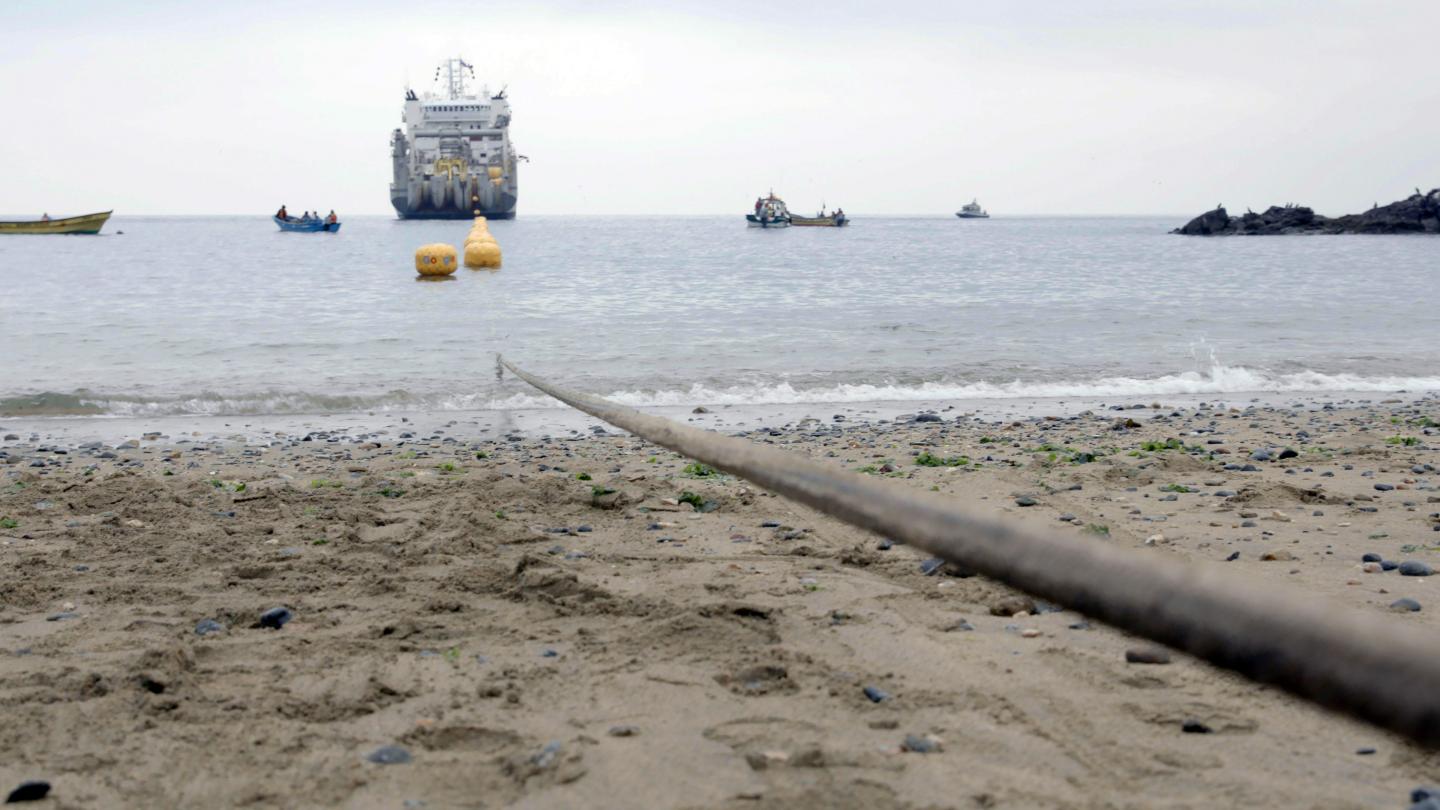
In a new study, researchers show that the fiber optic cables that carry data across the world’s oceans can also be used to sense geophysical events and monitor ocean and seafloor conditions.

Although buoys and cabled observatories can be used to monitor parts of the ocean, the information they provide is limited to their immediate surroundings. The new approach could offer a way to use the global network of subsea fiber optic cables to study otherwise inaccessible parts of the ocean.

“Once perfected, this new technique will allow geophysical sensing in the ocean depths, which are largely unexplored because of a lack of instrumentation that works in this environment,” said Zhongwen Zhan, assistant professor of geophysics at Caltech. “It could one day be used to detect earthquakes with epicenters in the ocean, allowing earlier warnings of earthquakes and tsunamis, for example.”


DAILY DOSE: Justice Department Orders Three NSF Diversity Programs Ended; Congo Ebola Outbreak Becomes Countryโ€™s Deadliest.
The U.S. Justice Department has ordered the termination of three NSF diversity …
DAILY DOSE: Worldโ€™s Largest Electric Aircraft Takes Flight; AI-Designed Phages Defeat Resistant Bacteria.
Heart Aerospace's X1, the largest electric aircraft, successfully completed its maiden flight, …
Astronomers May Have Been Listening for Aliens on the Wrong Radio Channel
New research by Louisa Mason explores previously unexamined radio frequencies for extraterrestrial …
Ancient penguin fossils offer new window into Antarctica’s changing climate
Researchers studied ancient penguin fossils to reveal environmental changes in Antarctica, using …

COPY II


Processingโ€ฆ
Success! You're on the list.

Leave a Reply

Trending

Discover more from Scientific Inquirer

Subscribe now to keep reading and get access to the full archive.

Continue reading