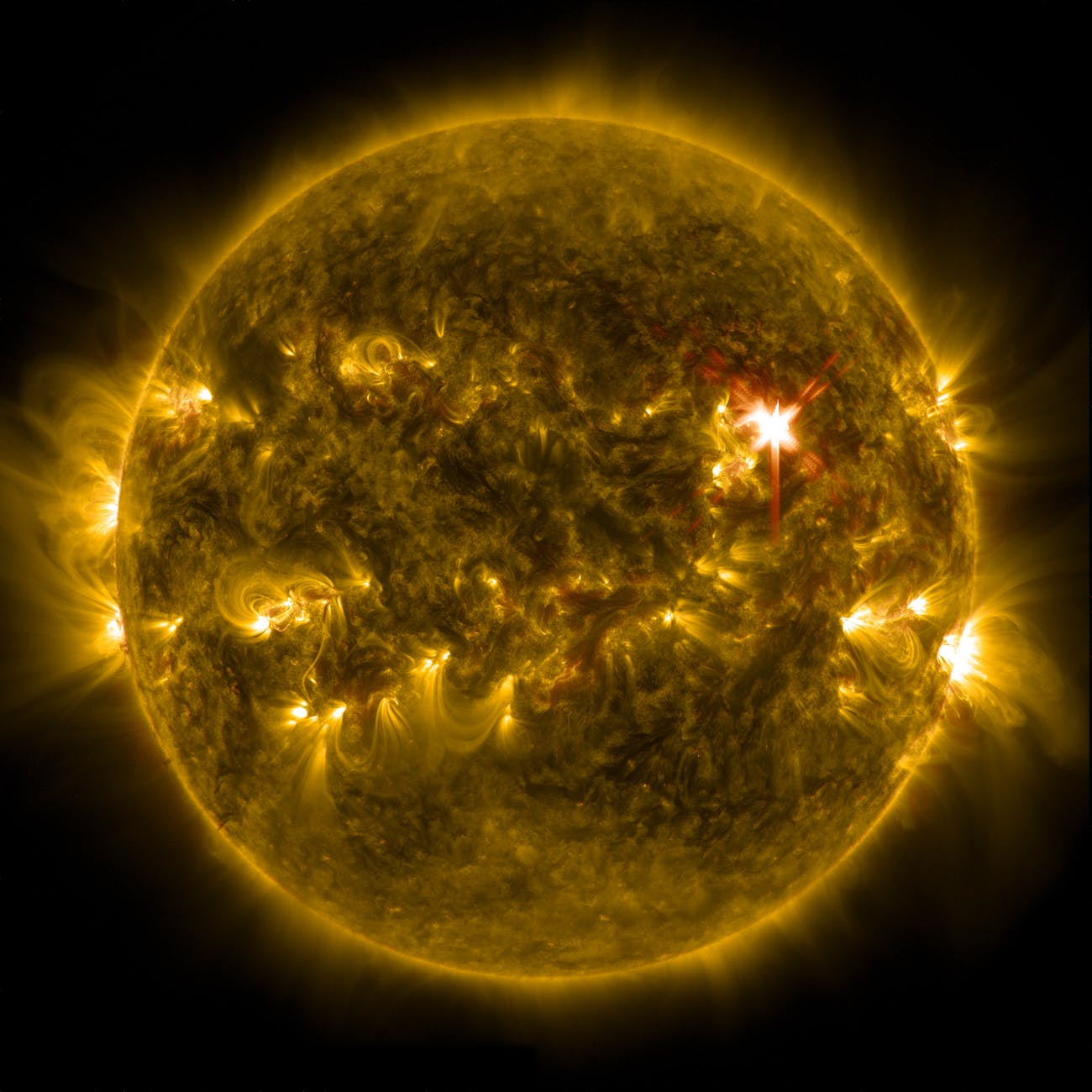
In a new study researchers, led by Research Scientist Dimitra Atri of the Center for Space Science at NYU Abu Dhabi (NYUAD), identified which stars were most likely to host habitable exoplanets based on the calculated erosion rates of the planetary atmospheres.
In the paper titled Stellar flares versus luminosity: XUV-induced atmospheric escape and planetary habitability, published in the journal Monthly Notices of Royal Astronomical Society: Letters, Atri and graduate student Shane Carberry Mogan present the process of analyzing flare emission data from NASA’s TESS (Transiting Exoplanet Survey Satellite) observatory.
It was found that more frequent, lower energy flares had a greater impact on an exoplanet’s atmosphere than less frequent, higher energy flares. The researchers also determined how different types of stars extreme ultraviolet radiation (XUV) through stellar flares, and how nearby planets are affected.
The ability to sustain an atmosphere is one of the most important requirements for a habitable planet. This research provides new insights into the habitability of exoplanets, as the effects of stellar activity were not well understood. This study also highlights the need for better numerical modeling of atmospheric escape – how planets release atmospheric gases into space – as it can lead to the erosion of atmosphere and the diminishment of the planet’s habitability.
“Given the close proximity of exoplanets to host stars, it is vital to understand how space weather events tied to those stars can affect the habitability of the exoplanet,” said Atri. “The next research step would be to expand our data set to analyze stellar flares from a larger variety of stars to see the long-term effects of stellar activity, and to identify more potentially habitable exoplanets.”


Leave a Reply