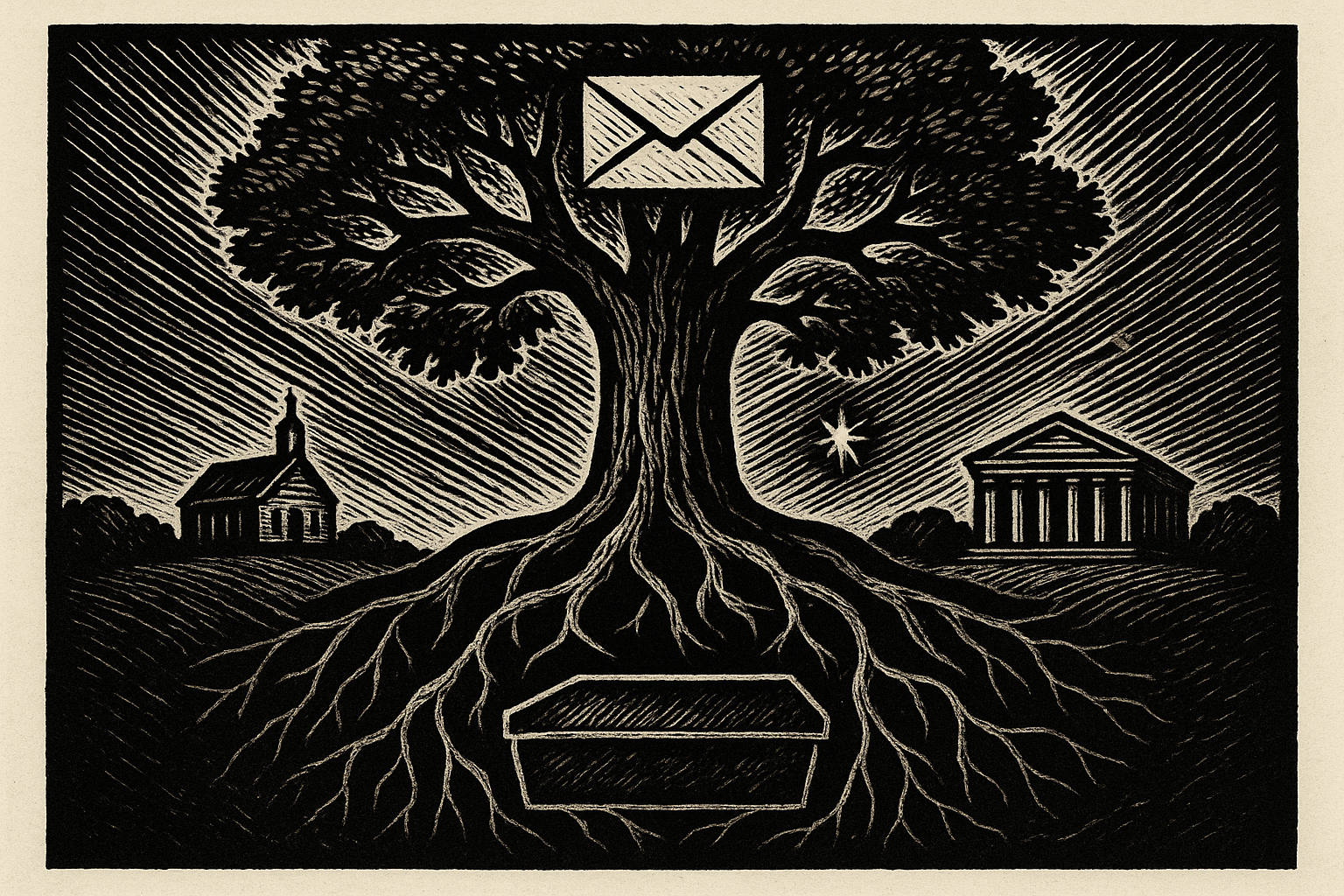
In the first part of our conversation, forensic archaeologist Scott Warnasch recounted the extraordinary 2011 discovery of an iron coffin in Elmhurst, Queens — a find that began as a suspected homicide and quickly transformed into one of New York City’s most compelling archaeological investigations. Drawing on his earlier experiences excavating 19th-century iron coffins beneath Newark’s Prudential Center, Warnasch described how a routine call for a buried body revealed the well-preserved remains of an African American woman later identified as Martha Peterson. What followed was a complex forensic effort involving the CDC, the Landmarks Preservation Commission, and the Medical Examiner’s Office to ensure public safety and trace the burial’s origins.
In Part 2, Warnasch explains how the investigation deepened — from securing the cooperation of St. Mark’s Church, the descendant congregation of the original burial ground, to the painstaking forensic and archival work that ultimately illuminated Martha Peterson’s identity and the rich story of Newtown’s 19th-century African American community.

While the CDC was evaluating the specimens from Martha Peterson, was there any movement in terms of learning more about the cemetery and old church that had previously existed on the plot of land in Elmhurst?
Landmarks contacted St. Mark’s Church in Jackson Heights — the last descendant congregation connected to the original property. Although the denominations differed, St. Mark’s was the closest “next of kin,” so to speak, to the earlier congregation associated with that land.
After reaching out and explaining the situation, we came to an agreement with the church. They were genuinely interested in learning who this person could have been and what her remains might reveal about the African American community that once lived there.
Because I had already done extensive work with the Smithsonian, the next logical step was to transport the body there for analysis. The Smithsonian had experts who could examine the clothing and study the remains. Unfortunately, the institution’s higher-ups balked at the idea of receiving a potential smallpox victim, even though the CDC had clearly determined there was no threat. That decision effectively ended the collaboration between the Smithsonian and St. Mark’s Church.
The church was understandably upset that we couldn’t continue the work there. But in an unexpected twist, Dr. David Hunt from the Smithsonian wrote to the church saying that, although they couldn’t accept the body, “Scott can handle the whole thing.”

Marc Landas: That’s quite a vote of confidence, but what was that like for you?
Scott Warnasch: It was an incredible compliment — but I had no lab, no budget, and I wasn’t a mummy expert by any means. Still, I managed to assemble an amazing team of specialists from across the region — Connecticut, New Jersey, New York — each contributing their expertise to the analysis.
Little by little, we uncovered fascinating details about the woman’s funeral traditions and the African American community that buried her. They had sewn a burial shroud for her, repurposed from other garments. These findings offered unusually fine insight into 19th-century African American funerary customs, which, interestingly, weren’t very different from white burial traditions of the time.

Marc Landas: What did the condition of her clothing and body tell you about how she was prepared for burial?
Scott Warnasch: The clothing was remarkably well-preserved — torn only by the backhoe — allowing us to reconstruct much about how she was prepared. Beneath the shroud, she wore a chemise or nightgown, long, thick knee socks, and a cap secured with a comb. Her fingernails were manicured. You could see the care and time the community devoted to preparing her for a proper burial.
Considering the virulence of smallpox at that time, that care was extraordinary. Handling the body was dangerous — anyone touching it risked infection. But African American communities, like others, had long experience managing smallpox. They understood immunity and likely relied on individuals who had survived the disease to safely wash and dress the deceased.
Marc Landas: So, in a sense, it wasn’t just a burial — it reflected communal medical knowledge, too.
Scott Warnasch: Exactly. It speaks to a larger story of resilience, understanding, and care within that community.

Marc Landas: Let’s go back to your analysis. The burial details are extraordinary — but what forensic techniques were most critical in reconstructing her life and identity?
Scott Warnasch: The identification process starts the same way whether the body is 170 years old or from last week. You begin with a biological profile, which a forensic anthropologist develops — in this case through X-rays, since some tissue was still present. Usually, these cases are skeletal.
The anthropologist creates a profile — sex, approximate age, stature, and, when possible, ancestry. In this case, much of that was visually apparent: a young adult woman, African American.
Marc Landas: And beyond the biological data — what else helped narrow things down?
Scott Warnasch: The clothing analysis was essential. It was conducted by a professor at LSU and helped establish an independent timeline. Since it was rare for an African American woman to be buried in a state-of-the-art iron coffin, we had to confirm that the coffin hadn’t been reused decades later. The clothing study showed that the burial occurred in the same period those coffins were actually manufactured and sold — the early 1850s.
That finding allowed us to align the forensic data with historical research.

Marc Landas: How did you approach the archival side of things?
Scott Warnasch: Once the burial date range was clearer, I began combing through the 1850 federal census — the first to list everyone in a household by name, age, sex, and relationship. Newtown didn’t have newspapers at the time, so the census was the best surviving record.
I started with about thirty potential candidates — young African American women in Newtown who fit the biological profile and timeframe. To keep track, I pulled the information from the census PDFs into a spreadsheet so I could filter and compare the names more easily.
About halfway through the list, one entry stood out: Martha Peterson, age 26. She fit the biological profile perfectly. Even more significant, she worked for Fisk, the manufacturer of the iron coffin — likely as a domestic servant. That connection immediately elevated her as the prime candidate.
Marc Landas: That’s an extraordinary link — finding her tied directly to the coffin maker. Where did that lead next?
Scott Warnasch: From there, I did more genealogical work and discovered that she was almost certainly the daughter of John Peterson, president of the African Benevolent Society — the very organization that had purchased the church property where she was buried. That made her identification even more compelling.
She also lived in the household of William Raymond, Fisk’s brother-in-law, who had moved in to help rebuild the business after the foundry fire. Fisk himself had fallen ill after fighting that fire and died in 1850. Raymond took over the company. So Martha was living and working in the home of the man managing the very business that made her coffin.
Marc Landas: Did you find any evidence of smallpox clusters in the area at that time? Because these outbreaks rarely happened in isolation.
Scott Warnasch: Right, I looked into that. I don’t have an exact death date for Martha, but it’s likely around 1851. I did find one record of a smallpox death — an African American man who died in Flushing on December 29, 1850, just a few miles away. That’s the closest confirmed case.
Later, after our excavation, other archaeologists returned to finish the site and discovered another iron coffin. It had been hit by machinery during later construction. Unfortunately, there was never an official archaeological report, but the remains were described as an adult male.
Marc Landas: Another iron coffin, at the same location? That’s incredible.
Scott Warnasch: Yes. And here’s where it gets interesting — the 1850 census for that household lists not only William Raymond and Martha Peterson but also Henry Peterson, age 35. If my identification of Martha is correct, it’s entirely plausible that this second coffin belonged to Henry.
That could also explain how Martha contracted smallpox. She was a housekeeper, rarely leaving the house. If Henry — likely a cousin — brought the disease home, she could have caught it there. It’s speculation, but the pattern fits the evidence. Henry may have died first, followed by Martha soon after.
Check back soon for the third installment of this fascinating interview with Scott Warnasch.



Leave a Reply to Conversations with Scott Warnasch: Unearthing the Silences in Newtown’s Lost Churchyard and the Woman in the Iron Coffin. – Scientific InquirerCancel reply