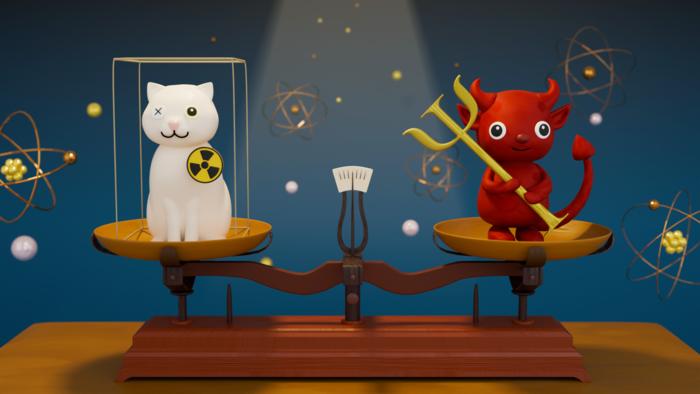
In a groundbreaking discovery, researchers from Nagoya University in Japan and the Slovak Academy of Sciences have unveiled new insights into the interplay between quantum theory and thermodynamics. The team demonstrated that while quantum theory does not inherently forbid violations of the second law of thermodynamics, quantum processes may be implemented without actually breaching the law. This discovery, published in npj Quantum Information, highlights a harmonious coexistence between the two fields, despite their logical independence. Their findings open up new avenues for understanding the thermodynamic boundaries of quantum technologies, such as quantum computing and nanoscale engines.
This breakthrough contributes to the long-standing exploration of the second law of thermodynamics, a principle often regarded as one of the most profound and enigmatic in physics. The second law asserts that entropy—a measure of disorder in a system—never decreases spontaneously. It also states that a cyclically operating engine cannot produce mechanical work by extracting heat from a single thermal environment and underscores the concept of a unidirectional flow of time.
Despite its foundational role, the second law remains one of the most debated and misunderstood principles in science. Central to this debate is the paradox of “Maxwell’s Demon,” a thought experiment proposed by physicist James Clerk Maxwell in 1867.
Maxwell envisioned a hypothetical being—the demon—capable of sorting fast and slow molecules within a gas at thermal equilibrium without expending energy. By separating these molecules into distinct regions, the demon could create a temperature difference. As the system returns to equilibrium, mechanical work is extracted, seemingly defying the second law of thermodynamics.
The paradox has intrigued physicists for over a century, raising questions about the law’s universality and whether it depends on the observer’s knowledge and capabilities. Solutions to the paradox have largely centered on treating the demon as a physical system subject to thermodynamic laws. A proposed solution is erasing the demon’s memory, which would require an expenditure of mechanical work, effectively offsetting the violation of the second law.
Sign up for the Daily Dose Newsletter and get every morning’s best science news from around the web delivered straight to your inbox? It’s easy like Sunday morning.
To explore this phenomenon further, the researchers developed a mathematical model for a “demonic engine,” a system powered by Maxwell’s demon. Their approach is rooted in the theory of quantum instruments, a framework introduced in the 1970s and 1980s to describe the most general forms of quantum measurement.
The model involves three steps: the demon measures a target system, then extracts work from it by coupling it to a thermal environment, and finally erases its memory by interacting with the same environment.
Using this framework, the team derived precise equations for the work expended by the demon and the work it extracts, expressed in terms of quantum information measures such as von Neumann entropy and Groenewold-Ozawa information gain. When comparing these equations, they got a surprising result.
“Our results showed that under certain conditions permitted by quantum theory, even after accounting for all costs, the work extracted can exceed the work expended, seemingly violating the second law of thermodynamics,” explained Shintaro Minagawa, a lead researcher on the project. “This revelation was as exciting as it was unexpected, challenging the assumption that quantum theory is inherently ‘demon-proof.’ There are hidden corners in the framework where Maxwell’s Demon could still work its magic.”
Despite these loopholes, the researchers emphasize that they don’t pose a threat to the second law. “Our work demonstrates that, despite these theoretical vulnerabilities, it is possible to design any quantum process so that it complies with the second law,” said Hamed Mohammady. “In other words, quantum theory could potentially break the second law of thermodynamics, but it doesn’t actually have to. This establishes a remarkable harmony between quantum mechanics and thermodynamics: they remain independent but never fundamentally at odds.”
This discovery also suggests that the second law does not impose strict limitations on quantum measurements. Any process permitted by quantum theory can be implemented without violating thermodynamic principles. By refining our understanding of this interplay, the researchers aim to unlock new possibilities for quantum technologies while upholding the timeless principles of thermodynamics.
“One thing we show in this paper is that quantum theory is really logically independent of the second law of thermodynamics. That is, it can violate the law simply because it does not ‘know’ about it at all,” Francesco Buscemi explained. “And yet—and this is just as remarkable—any quantum process can be realized without violating the second law of thermodynamics. This can be done by adding more systems until the thermodynamic balance is restored.” The implications of this study extend beyond theoretical physics. Illuminating the thermodynamic limits of quantum systems provides a foundation for innovations in quantum computing and nanoscale engines. As we explore the quantum realm, this research serves as a reminder of the delicate balance between the fundamental laws of nature and the potential for groundbreaking technological advancements.
IMAGE CREDIT: Reiko Matsushita




Leave a Reply