Ancient civilizations were keen observers of the night sky, weaving celestial events into their mythologies and cultural narratives. Modern astronomical research has revealed that many of these stories, once dismissed as mere folklore, actually contained accurate scientific observations. Here are ten remarkable examples where ancient myths aligned with astronomical reality.

The Crab Nebula in Chinese Astronomy
In 1054 CE, Chinese astronomers recorded a “guest star” that appeared suddenly in the constellation Taurus, remaining visible for nearly two years. According to their records, it was bright enough to be seen during daylight hours. Modern astronomers have confirmed this observation as the supernova that created the Crab Nebula, with their precise timing and location details matching exactly what we see today.

Maya Solar Eclipses
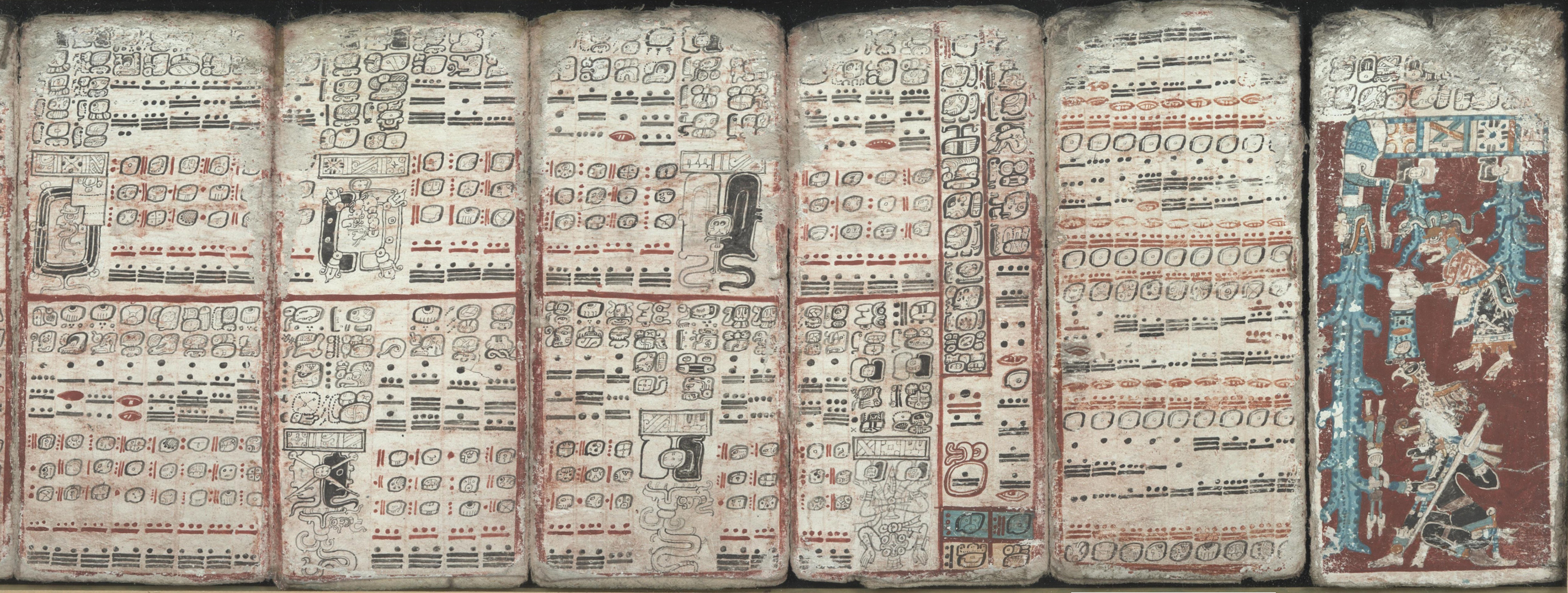
The Dresden Codex, an ancient Maya manuscript, contains detailed eclipse tables that enabled Maya astronomers to predict solar eclipses with remarkable accuracy. Modern calculations have confirmed that their mathematical methods, based on careful observation and recording over centuries, correctly identified eclipse seasons and cycles, demonstrating sophisticated astronomical knowledge that rivals modern computational methods in its precision.

Aboriginal Australian Meteor Impact
Aboriginal oral traditions in South Australia tell of a star that fell from the sky, creating Henbury Crater. This story, passed down through generations, describes not only the impact but also the dangerous nature of the site. Geological studies have confirmed that the Henbury Craters were indeed formed by a meteorite impact approximately 4,700 years ago, closely matching the timeframe suggested in Aboriginal stories.

Babylonian Venus Tablets
The Venus Tablet of Ammisaduqa, dating from the first millennium BCE, records detailed observations of Venus’s appearances and disappearances over a 21-year period. Modern astronomical retrograde calculations have verified the accuracy of these ancient observations, confirming that Babylonian astronomers correctly documented Venus’s 584-day synodic period.


Norse Mythology’s Eclipses
Norse myths speak of wolves chasing the sun and moon, occasionally catching them and causing darkness. While metaphorical, analysis of these stories reveals accurate descriptions of both solar and lunar eclipses, including the corona’s appearance during totality and the brief duration of the phenomenon, demonstrating precise observational knowledge embedded within mythological framework.

Greek Observations of Halley’s Comet
Ancient Greek astronomical records from 466 BCE describe a large celestial stone that “fell from the sun” accompanied by a “comet-star.” Modern orbital calculations have confirmed this timing coincides with an appearance of Halley’s Comet, suggesting the Greeks observed both the comet and an associated meteorite fall.

Polynesian Navigation Stars
Polynesian navigators used an intricate system of star paths, or “kaveinga,” to navigate vast ocean distances. Modern satellite tracking has confirmed the accuracy of these traditional navigation techniques, demonstrating that the position and timing of specific stars could indeed guide vessels precisely across thousands of miles of open ocean.

Egyptian Sirius Observations
Ancient Egyptian texts reference the heliacal rising of Sirius as a predictor of Nile flooding. Modern astronomical calculations have verified that during the Ancient Kingdom period, Sirius’s first annual appearance in the pre-dawn sky did indeed coincide with the beginning of the Nile’s annual flood, confirming the Egyptian’s precise astronomical timing.

Indian Planetary Conjunctions
The ancient Indian astronomical text Surya Siddhanta contains mathematical methods for calculating planetary positions. Modern analysis has shown its calculations for planetary conjunctions to be remarkably accurate, with only minimal deviation from current computational models, despite being created over 1,500 years ago.

Chinese Sunspot Records
Chinese astronomical records from 800 BCE onward contain detailed observations of sunspots, which they described as “black spots on the sun.” Modern historical research has confirmed these ancient observations correspond accurately with the solar cycle, proving that Chinese astronomers could observe and document solar activity well before the invention of the telescope.
These examples demonstrate how ancient civilizations embedded accurate astronomical observations within their cultural and mythological frameworks. While their interpretations may have differed from modern scientific understanding, their observational data often proved remarkably precise. This synthesis of cultural astronomy and modern science not only validates ancient knowledge systems but also provides valuable historical data for contemporary astronomical research.
The accuracy of these ancient observations continues to assist modern astronomers in calculating long-term celestial cycles and understanding historical astronomical events. This understanding bridges the gap between cultural heritage and scientific advancement, showing how human curiosity about the cosmos has remained constant throughout history, even as our methods of investigation have evolved.
IMAGE CREDIT: (ENTER NAMES)




Leave a Reply