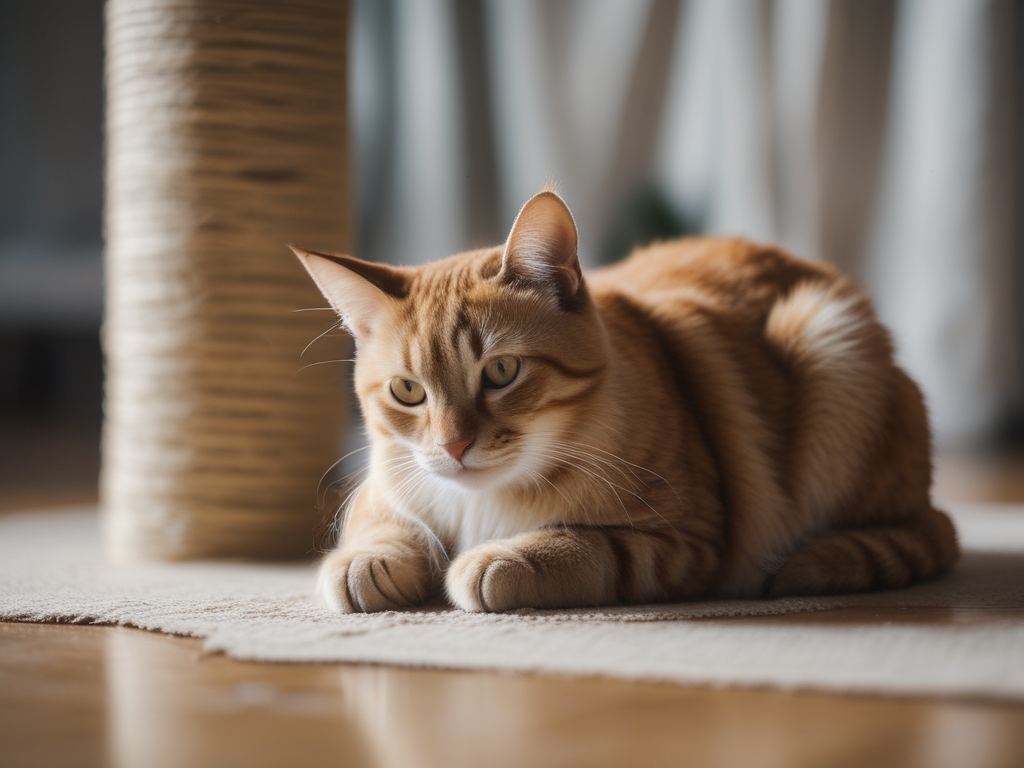
Many cat owners are familiar with torn cushions, carpets, and couches. The feline instinct to scratch is innate but is often perceived as a behavioral problem by cat owners and sometimes leads to interventions that are not cat friendly.
Now, an international team of researchers has investigated which factors influence undesired scratching behavior in domestic cats. They published their findings in Frontiers in Veterinary Science.
“Here we show that certain factors – such as the presence of children at home, personality traits of cats, and their activity levels – significantly impact the extent of scratching behavior,” said Dr Yasemin Salgirli Demi̇rbas, a veterinary researcher at Ankara University and first author of the study. “Our findings can help caregivers manage and redirect scratching to appropriate materials, which could help foster a more harmonious living environment for both cats and their caregivers.”

Kids, play, and personality
The researchers asked more than 1,200 cat owners in France about the daily lives and characteristics as well as undesired scratching behaviors of their feline companions. The study’s funder, Ceva Santé Animale, helped with collecting this data.
The researchers’ results showed that there are several factors that influence cats’ scratching behavior. “We see a clear link between certain environmental and behavioral factors and increased scratching behavior in cats,” Salgirli Demirbas explained. “Specifically, the presence of children in the home as well as high levels of play and nocturnal activity significantly contribute to increased scratching. Cats described as aggressive or disruptive also exhibited higher levels of scratching.”
Stress, the researchers said, was found to be a leading reason for unwanted scratching. For example, the presence of children, particularly while they are small, might amplify stress and be one of several causes that can make felines stress-scratch. The link between increased scratching and children in the home, however, is not fully understood and further study is needed. Another factor that could also be connected to stress is playfulness. When cats play for a long time, their stress levels can rise because of the uninterrupted stimulation.
Sign up for the Daily Dose Newsletter and get every morning’s best science news from around the web delivered straight to your inbox? It’s easy like Sunday morning.
Cat-friendly scratching interventions
While some factors that favor scratching – such as the cat’s personality or the presence of children – cannot be changed, others can, the researchers said. Placing scratch posts in areas the cat frequently passes or near to their preferred resting spot or the use of pheromones for example, can lessen cats’ scratching on furniture.
“Providing safe hiding places, elevated observation spots, and ample play opportunities can also help alleviate stress and engage the cat in more constructive activities,” Salgirli Demirbas pointed out. The key is to establish multiple short play sessions that mimic successful hunting scenarios. These play sessions are more likely to sustain cats’ interest and reduce stress, which ultimately can reduce excessive scratching on furniture. They can also foster the bond between cats and their caretakers, the researchers said.
“Understanding the underlying emotional motivations of scratching behavior, such as frustration, which seem to be linked to personality traits and environmental factors, allows caregivers to address these issues directly,” said Salgirli Demirbas. While the researchers had to rely on self-reported data, which is prone to subjectivity, they’ve gained unique insights into cats’ scratching behavior. The goal of this and future research is to develop more effective strategies to manage this behavior, ultimately enhancing the bond and harmony between cats and their caregivers, they said.
If you enjoy the content we create and would like to support us, please consider becoming a patron on Patreon! By joining our community, you’ll gain access to exclusive perks such as early access to our latest content, behind-the-scenes updates, and the ability to submit questions and suggest topics for us to cover. Your support will enable us to continue creating high-quality content and reach a wider audience.
Join us on Patreon today and let’s work together to create more amazing content! https://www.patreon.com/ScientificInquirer



Leave a Reply