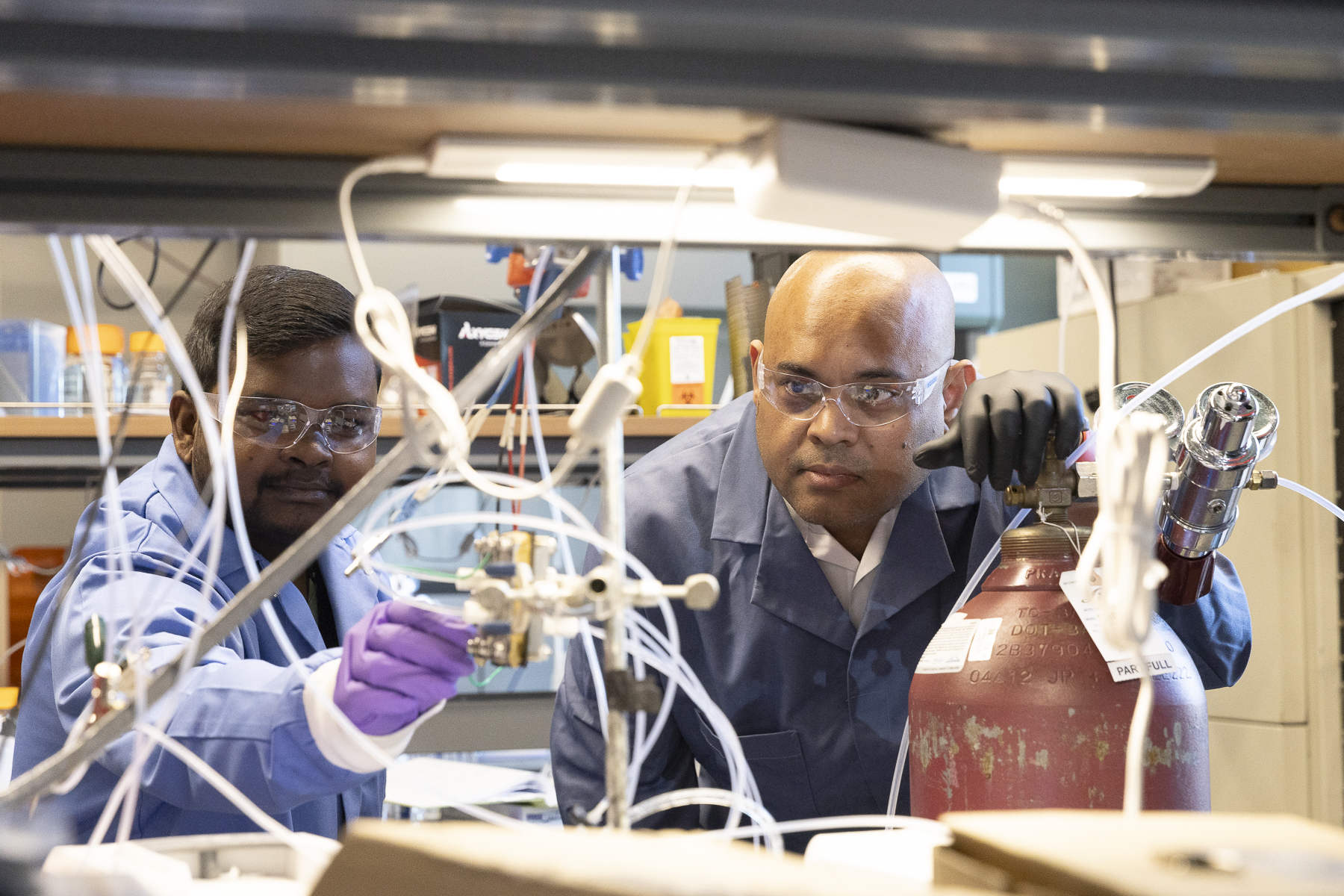
University of Illinois Chicago engineers have helped design a new method to make hydrogen gas from water using only solar power and agricultural waste, such as manure or husks. The method reduces the energy needed to extract hydrogen from water by 600%, creating new opportunities for sustainable, climate-friendly chemical production.
Hydrogen-based fuels are one of the most promising sources of clean energy. But producing pure hydrogen gas is an energy-intensive process that often requires coal or natural gas and large amounts of electricity.
In a paper for Cell Reports Physical Science, a multi-institutional team led by UIC engineer Meenesh Singh unveils the new process for green hydrogen production.

The method uses a carbon-rich substance called biochar to decrease the amount of electricity needed to convert water to hydrogen. By using renewable energy sources such as solar power or wind and capturing byproducts for other uses, the process can reduce greenhouse gas emissions to net zero.
“We are the first group to show that you can produce hydrogen utilizing biomass at a fraction of a volt,” said Singh, associate professor in the department of chemical engineering. “This is a transformative technology.”
Electrolysis, the process of splitting water into hydrogen and oxygen, requires an electric current. At an industrial scale, fossil fuels are typically required to generate this electricity.
Sign up for the Daily Dose Newsletter and get every morning’s best science news from around the web delivered straight to your inbox? It’s easy like Sunday morning.
Recently, scientists have decreased the voltage required for water splitting by introducing a carbon source to the reaction. But this process also uses coal or expensive chemicals and releases carbon dioxide as a byproduct.
Singh and colleagues modified this process to instead use biomass from common waste products. By mixing sulfuric acid with agricultural waste, animal waste or sewage, they create a slurry-like substance called biochar, which is rich in carbon.
The team experimented with different kinds of biochar made from sugarcane husks, hemp waste, paper waste and cow manure. When added to the electrolysis chamber, all five biochar varieties reduced the power needed to convert water to hydrogen. The best performer, cow dung, decreased the electrical requirement sixfold to roughly a fifth of a volt.
The energy requirements were low enough that the researchers could power the reaction with one standard silicon solar cell generating roughly 15 milliamps of current at 0.5 volt. That’s less than the amount of power produced by an AA battery.
“It’s very efficient, with almost 35% conversion of the biochar and solar energy into hydrogen” said Rohit Chauhan, a co-author and postdoctoral scholar in Singh’s lab. “These are world record numbers; it’s the highest anyone has demonstrated.”
To make the process net-zero, it must capture the carbon dioxide generated by the reaction. But Singh said this too could have environmental and economic benefits, such as producing pure carbon dioxide to carbonate beverages or converting it into ethylene and other chemicals used in plastic manufacturing.
“It not only diversifies the utilization of biowaste but enables the clean production of different chemicals beyond hydrogen,” said UIC graduate Nishithan Kani, co-lead author on the paper. “This cheap way of making hydrogen could allow farmers to become self-sustainable for their energy needs or create new streams of revenue.”
IMAGE CREDIT: Jenny Fontaine/ UIC
If you enjoy the content we create and would like to support us, please consider becoming a patron on Patreon! By joining our community, you’ll gain access to exclusive perks such as early access to our latest content, behind-the-scenes updates, and the ability to submit questions and suggest topics for us to cover. Your support will enable us to continue creating high-quality content and reach a wider audience.
Join us on Patreon today and let’s work together to create more amazing content! https://www.patreon.com/ScientificInquirer



Leave a Reply