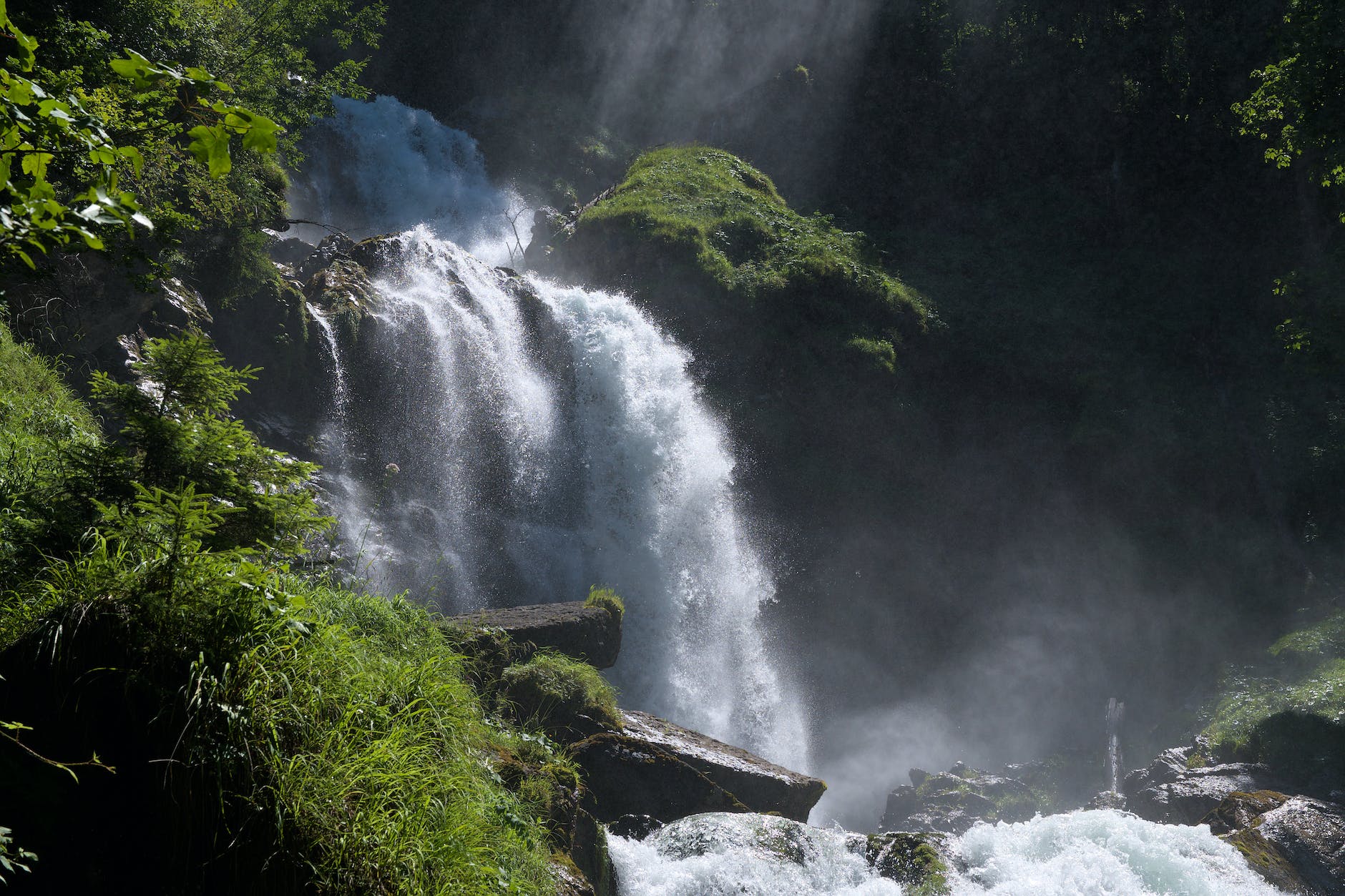
A team of international scientists led by Dr Rebecca Hamilton at the University of Sydney has found that rather than dry savannah in South East Asia dominating during the Last Glacial Maximum more than 19,000 years ago, there was a mosaic of diverse closed and open forest types, upending previous scientific consensus.
The findings suggest Asia’s tropical forests could be more resilient to climate change than previously thought, provided a diversity of landscape is maintained. They further show that humans and animals migrating across the region would have had a more diverse resource base than previously understood.
The research is published in the Proceedings of the National Academy of Sciences of the United States of America.

Dr Hamilton, from the School of Geosciences at the University of Sydney, said that with climate change accelerating, scientists and ecologists have been concerned about what impact this will have on tropical rainforests in regions like South East Asia.
“Maintaining forest types that facilitate resilience should be a conservation objective for the region. Our work suggests that prioritising protection of forests above 1000 metres (‘montane forest’) alongside seasonally dry forest types could be important for preventing future ‘savannisation’ of Asia’s rainforests,” she said.
Savannisation refers to the metamorphosis of a landscape, typically a forested area, into a savannah ecosystem, which typically involves open wooded plains. The change is typically induced by climate variations, human interventions or natural ecological dynamics.
The researchers analysed records from 59 paleoenvironmental sites across tropical SE Asia to test the so-called savannah model, which assumed a large, uniform grassland expanded across the region during the Last Glacial Maximum.
They found that records from pollen grains preserved in lakes show forests persisted during this period alongside an expansion of grasslands, indicated by other biochemical signatures.
Dr Hamilton said: “We put forward the idea that these seeming discrepancies can be reconciled if, during the cool and seasonal climate of the Last Glacial Maximum, montane forests (above 1000m) persisted and expanded in high-elevation regions, while lowlands experienced a shift to seasonally dry forests, which have a naturally grassy understorey.”
The team also included scientists from the Max Planck Institute of Geoanthropology in Jena, Germany; Flinders University; Purdue University in the USA; University of the Philippines; and the Australian National University.
Researchers said they expect the statistical methods developed to cross-compare the many paleoecological records will be useful for regional testing of other past ecological change.
IMAGE CREDIT: (ENTER NAMES)
Sign up for the Daily Dose Newsletter and get the morning’s best science news from around the web delivered straight to your inbox? It’s easy like Sunday morning.



Leave a Reply