Blood tests measuring the aging of certain white blood cells can predict cognitive and mood-related symptoms of depression, rather than physical symptoms.
The findings, published in The Journals of Gerontology, Series A: Biological Sciences and Medical Sciences, bring researchers closer to identifying a biomarker for detecting the mood disorder, which affects nearly one in five US adults.
Depression is diagnosed based on self-reported symptoms. While clinicians may run blood tests to rule out other health conditions, researchers have yet to identify an objective diagnostic biomarker that can signal early on that someone is experiencing depression.

Moreover, depression can go unrecognized because its symptoms extend far beyond sadness. Some people experience physical (or somatic) symptoms such as fatigue, poor appetite, or agitation. Other symptoms can affect mood or cognition, including feelings of hopelessness or anhedonia—the inability to feel pleasure and loss of interest in previously enjoyed activities.
“Depression is not a one-size-fits-all disorder—it can look really different from person to person, which is why it’s so important to consider varied presentations and not just a clinical label,” said study author Nicole Beaulieu Perez, assistant professor at NYU Rory Meyers College of Nursing. “Our study reveals unique biological underpinnings of mental health that are often obscured by broad diagnostic categories.”
Depression is more common in people with certain disorders that affect the immune system, including HIV. This may be a result of intersecting factors such as chronic levels of inflammation, stigma, and socioeconomics. Women with HIV have particularly high rates of depression, which can make it more difficult for them to engage in treatment and adhere to antiretroviral therapy.
“For women with HIV who may be experiencing depression, we want to better understand what’s going on and catch it earlier so that it doesn’t harm their whole overall health,” said Perez.
To explore the biological underpinnings of depression in women with and without HIV, the researchers looked at measures of accelerated biological aging, which have been linked to both depression and HIV. Biological age—which may differ from one’s actual age—can be assessed using “epigenetic clocks,” algorithms that capture chemical modifications to DNA.
The researchers analyzed data from 440 women—261 with HIV and 179 without HIV—who were part of the Women’s Interagency HIV Study. Depression was measured using the Center for Epidemiologic Studies Depression Scale (CES-D), a 20-item questionnaire that explores both somatic and non-somatic symptoms.
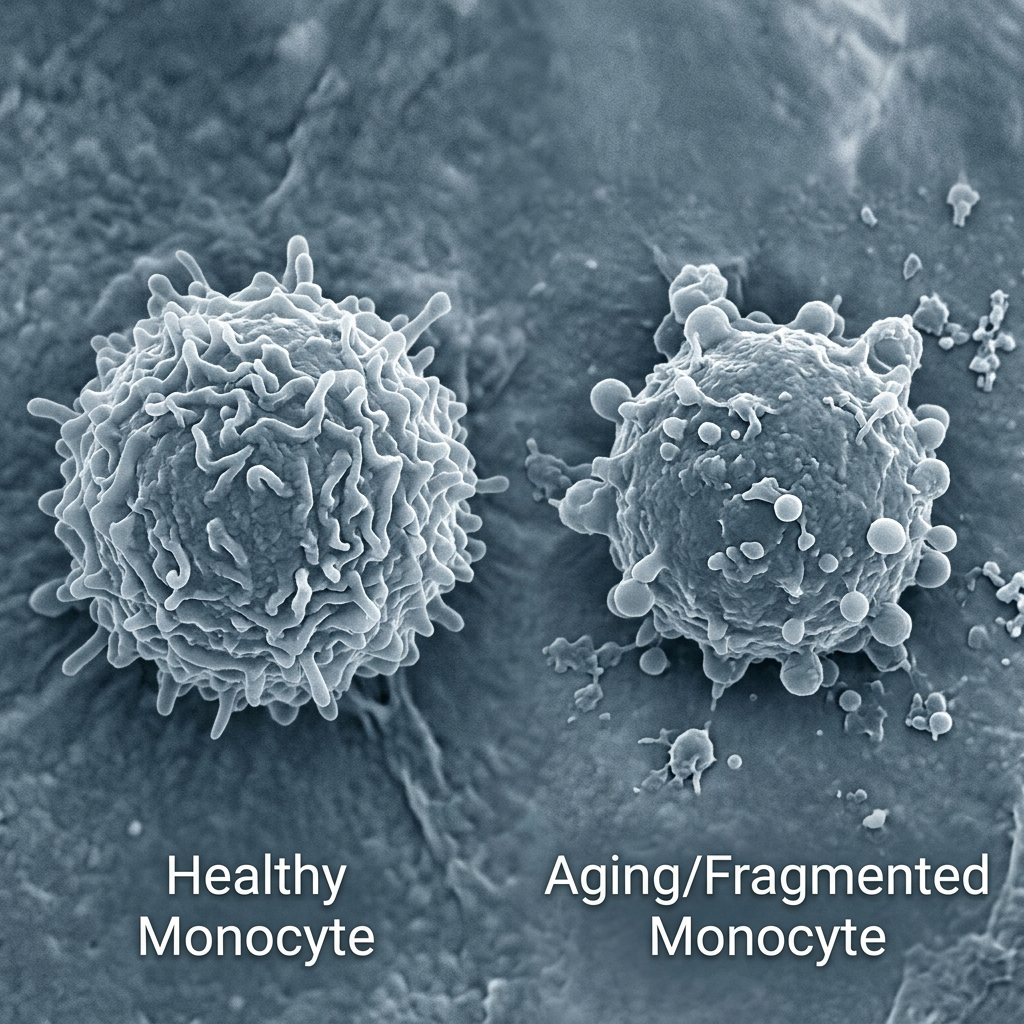
They also used blood samples to assess biological aging using two different epigenetic clocks: one that measures multiple cells and tissue types, and one focused on a type of white blood cells called monocytes. Monocytes, which are involved in a range of immune responses, play a key role in HIV infection and have been shown to be elevated in people with depression.
The researchers found that monocyte aging was a sensitive biomarker for non-somatic symptoms of depression—particularly anhedonia, hopelessness, and feelings of failure—among women with and without HIV.
“This is particularly interesting because people with HIV often have physical symptoms like fatigue that are attributed to their chronic illness rather than a depression diagnosis. But this flips that on its head because we found that these measures are associated with mood and cognitive symptoms, not somatic symptoms,” said Perez.
Measures of depression were not associated with the other epigenetic clock that uses multiple cells and tissue types.
Perez cautions that more research is needed on epigenetic aging and depression before it can inform how depression is measured and treated. Long-term, developing a biomarker test for depression could enable earlier diagnosis and even personalized treatment—for instance, predicting which medication is most likely to work based on an individual’s profile.
“I think about the adage, ‘What gets measured gets managed.’ An aspirational goal in mental health would be to combine subjective experience with objective biological testing,” said Perez. “Our findings bring us a step closer to this goal of precision mental health care, especially for high-risk populations, by providing a biological framework that could guide future diagnosis and treatment.”




Leave a Reply