Heart failure is a major health concern, especially for ageing populations—it significantly increases mortality rates, and severely impacts quality of life for those affected. Exercise therapy has been shown to be particularly effective for patients with heart failure. Previous research, however, has mainly examined the benefits of exercise after a diagnosis of heart failure. There is a considerable gap when it comes to our understanding of the role that exercise plays before a patient with heart failure is hospitalized.
Now, in a recent study published in the European Journal of Preventive Cardiology on 19 February 2025, researchers from Japan have explored the link between exercise habits before hospitalization and post-discharge outcomes in older patients with heart failure. The study was led by Dr. Taisuke Nakade, at the Department of Cardiovascular Biology and Medicine, Juntendo University Graduate School of Medicine. Other members of the research team include Dr. Yuya Matsue, Dr. Daichi Maeda, Dr. Nobuyuki Kagiyama, and Dr. Tohru Minamino from the Department of Cardiovascular Biology and Medicine, Juntendo University Graduate School of Medicine.
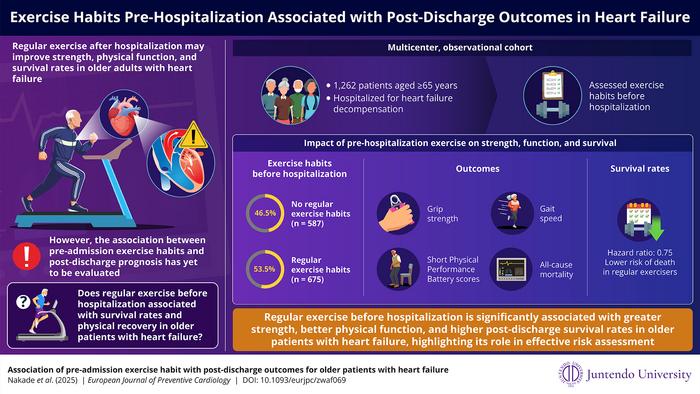
“We wanted to explore whether even a small but consistent amount of physical activity before hospitalization could be associated with better post-discharge health outcomes, making exercise more accessible and practical for a broader range of patients with heart failure,” states Dr. Nakade. To accomplish this, the team analyzed data from the FRAGILE-HF study, which was conducted at 15 hospitals across Japan, including 1,262 patients aged 65 years and older who were hospitalized for heart failure. In addition, they assessed the exercise habits of these patients before hospitalization.
Of the 1,262 patients included in this study, it was found that 675 (53.4%) patients reported regular exercise habits before hospitalization—this included moderate exercise lasting 30 minutes or vigorous activity lasting 20 minutes, performed at least once daily per week. Interestingly, the researchers found that those patients who reported regular exercise habits before hospitalization had a lower risk of death, compared to patients who did not exercise regularly. Additionally, it was found that patients who exercised regularly had greater grip strength and higher gait speeds (measured as the time taken to walk over a specified short distance). This indicated that regular exercise was also linked to better strength and physical function in older patients.
The findings of this study emphasize the importance of promoting regular exercise for older patients. They suggest that even a minimal level of physical activity (such as walking or moderate exercise once or twice a week) is linked to better outcomes in this population. Emphasizing the importance of these results for informing clinical practices, Dr. Nakade explains, “Although the nature of this study does not allow us to establish a causal relationship, our study supports more inclusive and feasible exercise recommendations for older patients. The findings of this study have led us to consider the effects of ‘muscle banking,’ which has potential benefits in preventing further health deterioration.”
Sign up for the Daily Dose Newsletter and get every morning’s best science news from around the web delivered straight to your inbox? It’s easy like Sunday morning.
Besides encouraging more inclusive clinical practices for older patients, the researchers of the study envision exciting opportunities for collaboration with the fitness and wearable technology industries. Wearable devices and digital health platforms could play a crucial role in supporting heart failure patients by offering real-time activity tracking, personalized exercise recommendations, and even the early detection of physical decline.
Given the growing burden of heart failure worldwide, the results of this study have highly relevant implications for healthcare policy, rehabilitation programs, and even patient education. Moreover, it highlights the importance of exercise in maintaining health and providing resilience against physical deterioration—we should all be aware of the importance of physical activity and consider it as an invaluable investment in our long-term health!
IMAGE CREDIT: Dr. Taisuke Nakade from Juntendo University, Japan




Leave a Reply