CALIFORNIA REPORTS AVIAN FLU CASE IN DAIRY WORKER
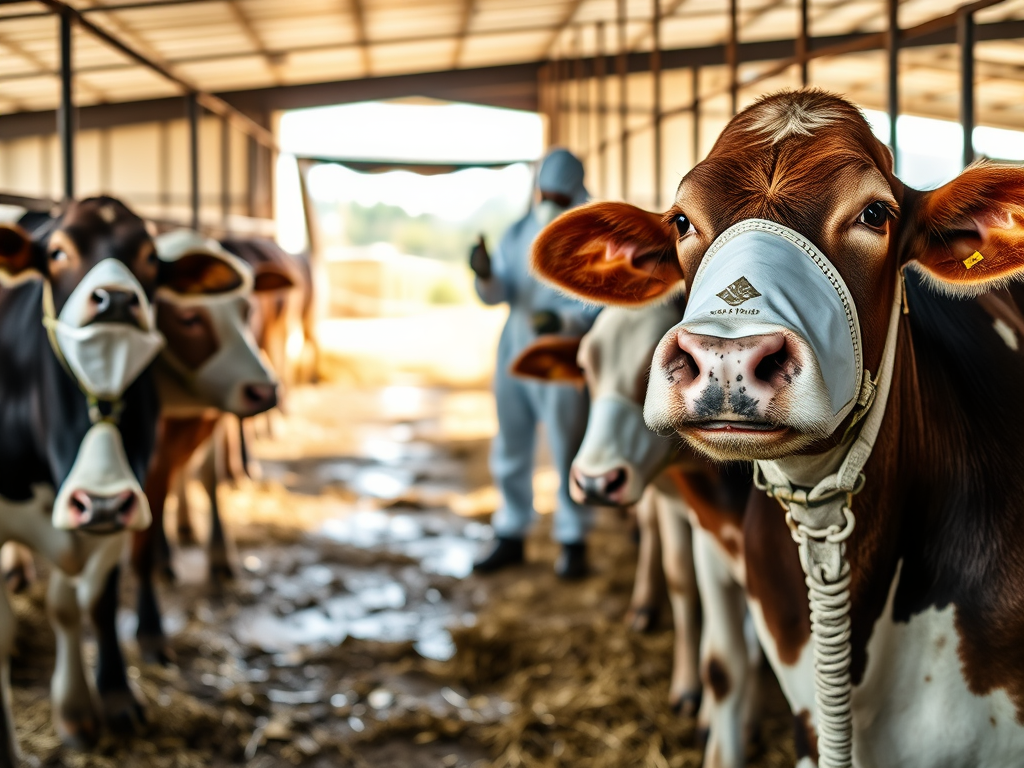
The California Department of Public Health (CDPH) reported a new case of avian flu in a dairy worker, bringing the total in the state to 32 cases this year, with 31 involving workers exposed at affected dairy farms. The Centers for Disease Control and Prevention (CDC) confirmed the national total at 58. Following positive avian flu test results in Raw Farm’s raw milk, cream, and other products, CDPH announced a widened recall. The California Department of Food and Agriculture has placed the farm under quarantine, preventing new distribution of products. No human illnesses have been linked to the contaminated dairy products, but the CDPH has warned that drinking, inhaling, or touching raw milk could pose a risk of infection. The agency also cautioned that pets, including cats, have died after consuming raw milk from infected farms. Meanwhile, the USDA confirmed additional outbreaks in dairy cattle and poultry, with the total number of affected cows exceeding 700. (CIDRAP)
H5N1 BIRD FLU SPREADS ACROSS US DAIRY FARMS
Since March, H5N1 bird flu has rapidly spread across U.S. dairy farms, infecting over 700 herds in 15 states, with 58 human cases, mostly farm workers. The virus primarily spreads through infected milk, as it replicates in cows’ udders, creating milk with high levels of the pathogen. This can lead to contamination of dairy workers and equipment, especially in large-scale dairy farms. Though pasteurization inactivates the virus, raw milk, particularly in California, has tested positive for H5N1. The rise in cases highlights concerns about the potential health risks, especially given the popularity of raw milk consumption among certain groups, including Robert F. Kennedy Jr., a proponent of raw milk. The consolidation of dairy farms has exacerbated the problem, with larger, more industrialized operations increasing the likelihood of rapid virus spread. Robotic milking parlors, which reduce human contact with cows, show promise in lowering transmission risks but are not without their own challenges. (New York Times)
UNKNOWN DISEASE KILLS 143 IN DEMOCRATIC REPUBLIC OF CONGO
An unknown disease has killed 143 people in the Panzi health zone of the Democratic Republic of Congo’s Kwango province in November. The victims exhibited flu-like symptoms, including high fever and severe headaches. Authorities have dispatched a medical team to collect samples and identify the disease. The situation is worsening, with a rising number of cases, and the remote location of Panzi has led to challenges in providing medical supplies and treatment. Local leaders reported that people are dying at home due to lack of care, with women and children being the most affected. The World Health Organization (WHO) has been alerted and is collaborating with Congo’s health ministry to investigate further. (Reuters)
PRE-EXPOSURE PROPHYLAXIS AIMS TO END HIV AS PUBLIC THREAT
Oral pre-exposure prophylaxis (PrEP) is a highly effective HIV prevention strategy, reducing the risk of acquisition from sex by 99% and injection drug use by at least 74%. Since 2015, the World Health Organization and UNAIDS have pushed for global PrEP access, with a goal of reaching 21.2 million users by 2025. The U.S. President’s Emergency Plan for AIDS Relief (PEPFAR), in collaboration with the CDC, has supported PrEP programs, initially focusing on high-risk groups like adolescent girls, young women, and key populations such as men who have sex with men (MSM) and sex workers. From 2017 to 2023, CDC-supported PrEP initiations rose from 11,397 to 856,816, surpassing targets. However, the 2023 goal of 21.2 million users globally remains unmet. Efforts are focused on expanding PrEP access, addressing stigma, and introducing long-acting alternatives like injectable PrEP to accelerate progress toward ending HIV as a public health threat by 2030. (MMWR)

U.S. OFFICIALS URGE ENCRYPTION AMID CHINESE HACKER THREAT
U.S. government officials are urging Americans to use encrypted messaging services as Chinese hackers, specifically the group Salt Typhoon, have infiltrated telecom networks. Reports from October revealed that telecom giants like Verizon, AT&T, T-Mobile, and Lumen were compromised, with the hackers possibly accessing systems used for court-authorized wiretaps. While T-Mobile severed a compromised connection and claimed its network wasn’t directly hacked, concerns remain about unauthorized access to metadata and communications. U.S. officials from CISA, the NSA, and FBI are advising telecom providers to enhance security, though it remains unclear when the hackers will be fully removed from the networks. Encryption is recommended to protect communications, although the U.S. government has long sought backdoor access to encrypted data, a contentious issue in the cybersecurity community. The hacks also raise questions about the 1994 CALEA law, which mandates telecom companies facilitate surveillance, potentially making these systems vulnerable to espionage. (Ars Technica)
RUSSIAN PROGRAMMER DETAINED AND FORCED TO REVEAL SPYWARE
Russian programmer Kirill Parubets, who identifies as an opposition activist, was detained by FSB agents in Moscow in April 2024. During his arrest, he was forced to give up the passcode to his Android phone, which was later found to have spyware installed. Parubets, a systems analyst with Ukrainian heritage, had been involved in providing aid to Ukrainians after Russia’s invasion. The FSB agents questioned him about his activities and pressured him to spy on a friend, which he agreed to do under duress. After his release, Parubets discovered a suspicious app on his phone that turned out to be spyware, later confirmed by Citizen Lab researchers. The spyware, based on a previous malware called Monokle, had extensive capabilities, including accessing messages, location data, and video recording. Parubets’ experience highlights the risks of spyware from physical access to devices and serves as a warning to those targeted by repressive regimes. (Tech Crunch)
TIKTOK’S FUTURE IN U.S. UNCERTAIN AHEAD OF 2024 ELECTION
As the 2024 election year saw Republicans and Democrats pouring significant resources into TikTok content, the app’s future in the U.S. remains uncertain due to legal challenges. In April, President Joe Biden signed the Protecting Americans from Foreign Adversary Controlled Applications Act, which mandates TikTok’s parent company, ByteDance, sell its U.S. operations by January 2025 or face a ban. TikTok has filed a lawsuit against the law, arguing it violates free speech protections. A federal appeals court decision on the law is expected soon, which could either uphold or strike down the ban. If upheld, TikTok’s fate could be left to President-elect Donald Trump, who has recently voiced support for the app despite previously trying to ban it. With 170 million U.S. users, TikTok has strong public backing, and Democrats argue that losing the platform would hurt their outreach to younger voters. The legal outcome will determine whether TikTok remains a key political tool. (Wired)
AI-POWERED VIRTUAL LAB AUTOMATES SCIENTIFIC DISCOVERY PROCESS
Researchers have developed a virtual laboratory using artificial intelligence (AI) to automate scientific discovery. This system combines multiple AI scientists, each with specialized roles, to collaborate on research goals set by human scientists. The system successfully designed 92 nanobodies targeting SARS-CoV-2, completing the task much faster than human teams. The virtual lab includes an AI principal investigator, a scientific critic, and other agents with expertise in fields like immunology, computational biology, and machine learning. These agents work autonomously, making decisions and collaborating on tasks, with human researchers providing high-level guidance. The system demonstrated versatility, with potential applications in various scientific domains. However, experts stress that human oversight remains critical, as AI cannot fully replace human judgment. Future research will focus on evaluating AI’s decision-making and improving safety protocols in human-AI collaborations. The system shows promise but requires further validation through real-world experiments. (Nature)
Thanks for reading. Let’s be careful out there.
WORDS: The Biology Guy.



Leave a Reply