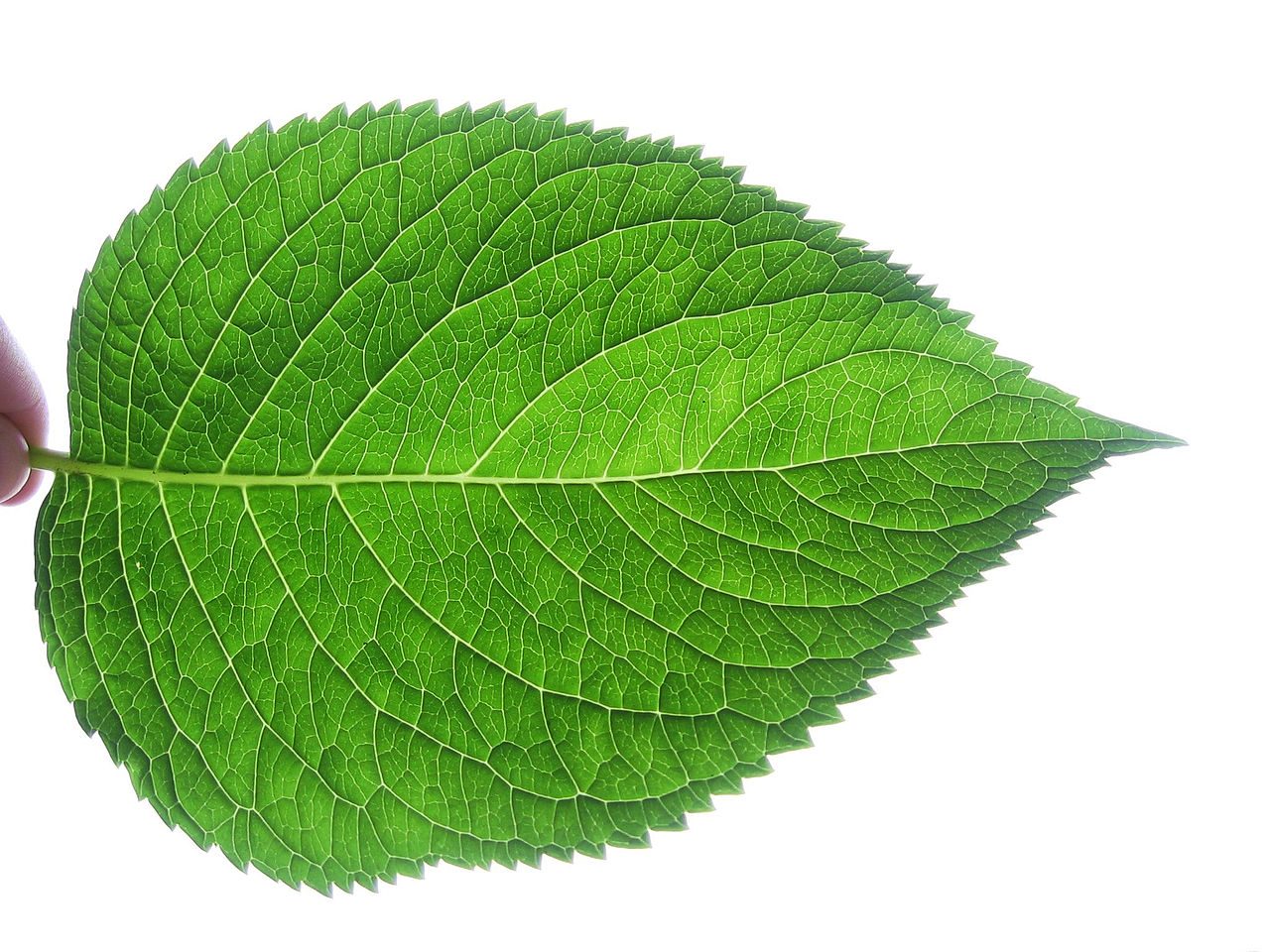

Fractals are fascinating mathematical patterns characterized by self-similarity, meaning their smaller parts resemble the whole. They appear at various scales in nature, art, and computer-generated graphics, often resulting from recursive algorithms. In nature, fractals can be observed in tree branching, river networks, cloud formations, and even the venation patterns of leaves.
A hydrangea leaf exemplifies fractal-like properties through its intricate network of veins. While not a perfect mathematical fractal, its vein arrangement reveals a branching pattern that is self-similar to some degree, mimicking the principles of fractals. The primary central vein divides into secondary veins, which further branch into tertiary and quaternary veins, gradually creating a comprehensive network. This intricate system ensures efficient nutrient transport, water distribution, and structural support, vital for the leaf’s health and growth.
The hydrangea leaf’s serrated edge, broad shape, and vibrant green color also contribute to its distinct visual appeal, making it a favorite among gardeners and botanists alike. By understanding the fractal nature of venation patterns, scientists can gain insights into evolutionary biology, plant efficiency, and biomimetic designs that mimic these patterns for technological applications, highlighting the intricate interplay between science and nature.



Leave a Reply