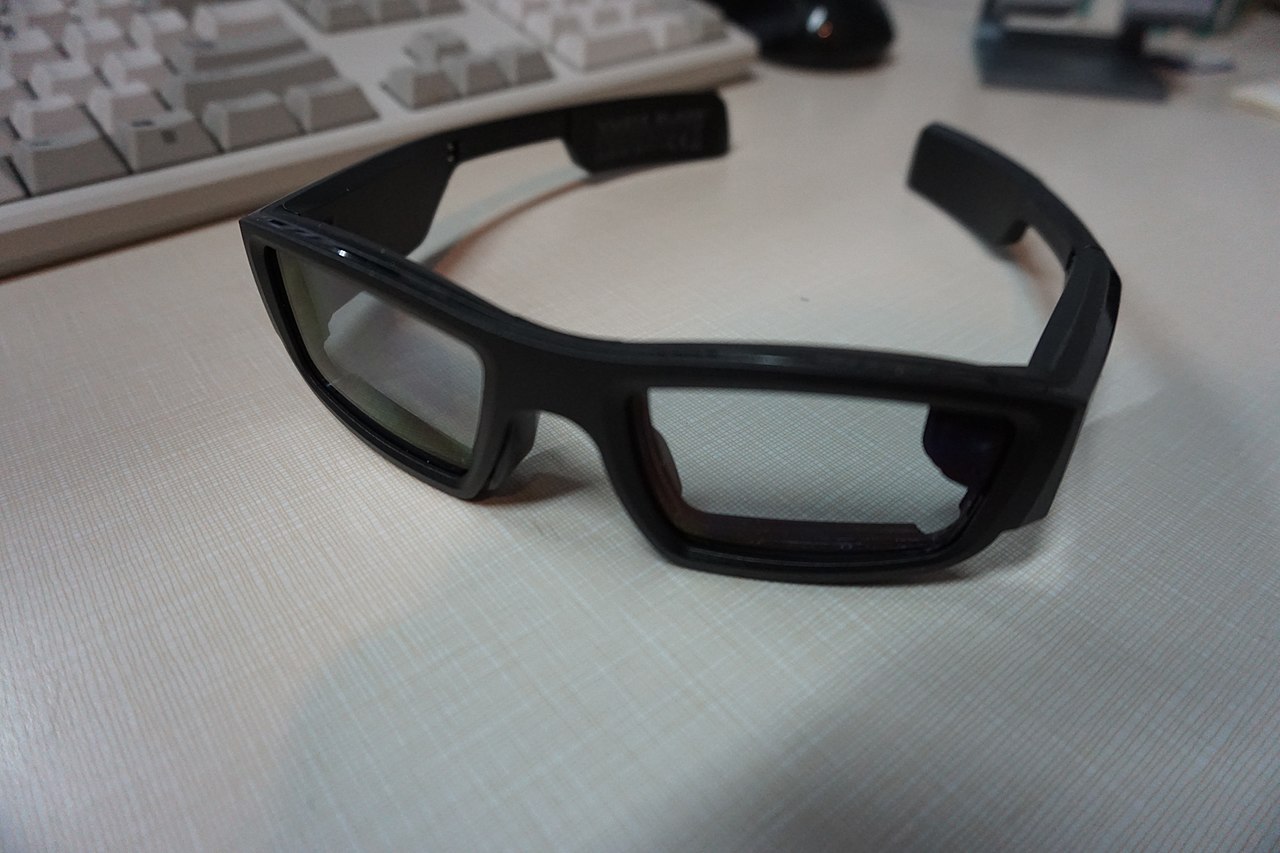
Cornell and Brown University researchers, including doctoral student Jenny Fu, presented a study at the 2023 ACM Designing Interactive Systems Conference, revealing a power imbalance created by AR glasses. The study focused on how these glasses affect interactions between the wearer and others. While wearers experienced reduced anxiety with fun filters, non-wearers felt disempowered and concerned about their appearance and privacy due to the potential of being recorded or transformed via filters without consent. Observing five pairs using Spectacles, an AR prototype from Snap Inc., the research highlighted issues like the inability to make eye contact due to darkened lenses, affecting social interaction quality.
Jenny Fu discussed her research with SCINQ.

What prompted you to do this study?
We have three main motivations for conducting this study. Firstly, we are interested in exploring the use of AR glasses in design to support social anxiety and emotional regulation. For example, consider a scenario where you are speaking in front of a large audience and experiencing stage fright. We want to investigate how AR glasses, with their ability to augment reality with text and images, can be designed to help people relax in such situations. One idea is to augment the audience’s appearance, perhaps by overlaying potato head features, allowing the speaker to interact through the mediation of the glasses and feel more at ease.
Our second motivation stems from an incident during the pandemic involving a lawyer who accidentally appeared with a cat filter in a video call, saying, ‘I’m not a cat,’ as he struggled to remove the filter. This incident highlights the nuances of frustration and lack of control in self-presentation. We’re curious to explore the effects of using AR glasses to apply filters to others, such as humorous cat or potato filters, and how this impacts those not wearing the glasses but involved in the interaction.
Lastly, our third motivation is to understand the current state of AR glasses in social conversations. Most research on AR glasses has focused on augmenting the capabilities of knowledge workers in professional settings, like the various applications of Google Glass. We are interested in examining their use in more casual, social contexts to see what dynamics unfold. This exploration marks the early iteration of our study, where we begin to sketch and experiment with these ideas.
How was your study designed?
The study involved recruiting five pairs of participants, each consisting of two individuals. The study was divided into three parts.
In the first part, we assigned one person in each pair to wear a pair of AR glasses, while the other person did not wear them. We introduced the wearer to the features of the AR glasses, explaining how to change and play around with filters, and suggesting various interactions to explore. The participants then engaged in social negotiation tasks while one of them wore the AR glasses. The goal of these tasks was to facilitate brainstorming and interaction through the functional prototype of the glasses.
Following the interactive task, we conducted a whiteboarding brainstorming session as part of a design workshop. During this session, we encouraged participants to design future AR glasses for both wearers and non-wearers. This design process drew upon their experiences during the previous interaction. We asked them to reflect on what they liked about the AR glasses and what aspects they thought could be improved based on their interaction with the device.
The final part of the study was a semi-structured interview. As researchers, we prompted the participants to reflect on their previous experiences and to share their vision for the future of AR glasses in a broader context. This interview aimed to gather more in-depth insights into their thoughts and expectations for the technology.
The next logical question, what were the findings?
In our study, we discovered two significant findings regarding the impact of AR glasses on social interactions.
The first finding relates to how certain design elements of AR glasses contribute to a power imbalance during interactions. Features such as dark lenses, face filters, and discrete recording capabilities seemed to advantage the AR glasses user, making non-users feel self-conscious and as if their self-presentation was being violated. This imbalance stems from the inherent design of the technology.
Additionally, we observed changes in power dynamics and adaptive behaviors during mixed reality interactions. Notably, we identified three behaviors: active ignoring, passive ignoring, and readjusting. Active ignoring occurred when participants were aware of the AR glasses but chose to disregard them to maintain the conversation’s quality. Passive ignoring happened when participants either did not notice or chose to overlook the AR glasses, believing the conversation would remain unaffected.
The most intriguing behavior was readjusting, where participants actively adapted to the AR glasses’ features or limitations. For example, when there was a misalignment of the filter with the other person’s face, the AR glasses wearer would adjust their position to align the filter correctly. This adjustment informed the non-wearer about the technology’s limitations and led to a mutual exploration and negotiation of self-presentation.
These dynamics, especially the readjustment behavior, revealed a complex interaction with the visual representation of individuals, beyond just the mediation of the AR glasses. This finding was unexpected and provided deep insights, which were highlighted through video observations of participant interactions during the tasks.
Did all this take place in a in a controlled setting?
Our study was conducted in a laboratory setting. We successfully recruited participants for these lab experiments through a combination of flyers and social media posts. This approach allowed us to reach a diverse group of individuals who were interested in participating in our research.

How strongly did they react to the people wearing glasses?
In our lab experiment, participants’ reactions to the AR glasses were quite notable. Initially, those wearing the AR glasses, which resembled 3D glasses, sparked curiosity and fascination among the non-wearers. Many commented on the cool, futuristic look, comparing it to something from ‘The Matrix.’
However, as the experiment progressed, we observed a shift in perception, especially concerning psychological safety. This change was particularly evident during the interaction phase and the subsequent interviews. Participants expressed concerns when they noticed certain behaviors associated with the AR glasses. For instance, a key feature of the AR glasses was the ability to change filters by swiping on the side of the glasses. This action, although simple, caused confusion and apprehension among the non-wearers. They were puzzled and sometimes alarmed, wondering why the other person was swiping their glasses suddenly during a conversation. This led to questions and requests to see what the wearer was seeing, indicating a growing concern and curiosity about the interaction.
The most significant shift in attitudes occurred during the interview phase when participants learned about the AR glasses’ camera and recording capabilities. Prior to this revelation, most had assumed that the interactions were temporary and just for fun. Discovering the presence of a recording feature dramatically changed their perceptions. Both wearers and non-wearers expressed discomfort, realizing that their actions were being permanently recorded. This concern was heightened by the discreet design of the camera, which made it difficult to recognize its presence.
Overall, the experiment revealed a drastic shift in attitudes towards AR glasses, especially concerning the acceptance of these devices. The key turning point was the realization of the camera and recording feature, which significantly impacted the participants’ comfort and perception of the technology.
At some point have were there any reactions by the glasses wearer to the reaction of the non-glasses wearer?
Indeed, an interesting aspect of our study was the impact of the AR glasses on self-presentation, affecting both wearers and non-wearers. This theme was particularly evident in the interviews. Participants reflected on how the AR glasses influenced their self-presentation in public settings.
Wearers of the glasses pointed out that the design features of the AR glasses made them very conspicuous. They expressed that they would be more comfortable wearing these glasses among friends, who already know and understand them, rather than in public spaces with strangers. In familiar settings, they felt their actions, such as playing with face filters, would be seen as playful rather than inappropriate.
However, the prospect of wearing these glasses in public raised concerns about how they might be perceived by others. Participants worried that strangers might react negatively, seeing them as intrusive or even threatening. This concern highlighted a significant aspect of impression management: deciding whether or not to wear the AR glasses in public based on potential reactions from others.
Overall, the study revealed that the decision to wear AR glasses in different settings involves careful consideration of self-presentation and impression management, reflecting the wearer’s awareness of how their actions might be interpreted by those around them.
Were the glasses clear?
One of the notable issues with the AR glasses in our study was the darkness of the lenses. The lenses were so dark that they not only blocked eye contact but also made it difficult to see any glare off the glasses. This aspect significantly impacted the participants’ experience during the tasks.
Participants expressed frustration because they couldn’t tell where the person wearing the AR glasses was looking. When the wearer was swiping on the glasses, it was unclear whether they were engaged in the conversation or distracted by something else. This uncertainty led to doubts about whether the wearer was actually listening or just passively present in the conversation.
The inability to establish eye contact due to the dark lenses created a barrier to effective communication. It left the non-wearers feeling unsure and disconnected, impacting the overall quality of the interaction. This highlighted a crucial aspect of how technology design, specifically the physical attributes of AR glasses, can affect social dynamics and interpersonal communication.

Your paper goes into power imbalances and with the fact that when party information with the glasses and the other did that what is the problem?
Indeed, the study highlighted how the AR glasses introduced a complex power dynamic in social interactions. This dynamic was not just about the imbalance created by one person wearing the glasses and the other not, but also about the nature and potential of the augmented information.
During the interviews, participants reflected on the implications of augmentation. They considered the possibility that the glasses could display more than just filters – potentially showing information that could be either helpful or detrimental. This duality was evident in their responses. For instance, some wearers mentioned that using the AR glasses in a high-pressure situation, like an interview, could be calming and beneficial. The glasses could provide a sense of relaxation and reduce anxiety.
However, the versatility of the AR glasses also raised concerns. Participants were aware that the glasses could augment reality in ways that might not always be positive or welcome. This aspect underscores the potential impact of AR technology in altering the nature of social interactions and the information exchange within them.
Overall, whether the impact of the AR glasses was viewed positively or negatively seemed to depend on the individual’s experience and interaction with the technology. This variability was clearly observed among the study participants
How can this imbalance essentially be addressed in the designing functionality?
The study’s participants suggested insightful design improvements for AR glasses, which are crucial for both designers and researchers in the field. They proposed the inclusion of indicator lights on the glasses. These lights would serve as a visual signal to indicate when the glasses are recording or engaging in other activities. This feature aims to inform people around the glasses wearer that they are entering a space where recording or other specific functions are active. Such transparency could help alleviate concerns related to privacy and awareness, making interactions more comfortable and building trust.
Another innovative idea from the participants was the development of a projection feature or a synchronized app. This would allow the syncing of the AR glasses with an app or enable the projection of the filter, so others can see what the wearer is viewing. This approach addresses the main issue of confusion and lack of awareness among non-wearers. By enabling others to understand and interact with the virtual information displayed by the AR glasses, they would feel more involved and informed about the ongoing interaction. This feature could potentially enhance feelings of safety and interest, fostering a more inclusive and engaging AR experience.
These suggestions highlight a desire for greater transparency and a shared experience in AR technology use. They underscore the need for non-wearers to be informed and involved in the augmented reality experienced by the wearer.
The next steps would involve exploring practical ways to incorporate these features into the design of AR glasses. Future research could focus on how these enhancements affect the user experience, with additional testing to refine the technology and further investigate how these changes impact user interactions and acceptance.
Will you be taking this out of the lab and into the wild?
We’re interested in diversifying the social relationships among participants in your studies. Currently, your research primarily involves acquaintances or strangers. Moving forward, you aim to observe interactions involving friends and family members. This shift could provide valuable insights into how AR glasses impact dynamics in more intimate or familiar social settings. Understanding these casual social relationships and the accompanying power dynamics is a key area of interest.
Additionally, we’re looking to broaden the types of interactions studied by changing the environment. While the current research is conducted in a lab setting, we are curious about how the dynamics might differ in a workplace, where interactions are with colleagues, or in a casual setting like a café, which offers a more relaxed atmosphere. Another interesting environment to explore is tourist scenarios, which could provide unique insights due to their distinct social dynamics.
Our research is poised to delve into various directions, examining how different settings and relationships influence the use of AR glasses. This exploration promises to be exciting and opens up new avenues for understanding the impact of AR technology in everyday life.
IMAGE CREDIT: Jenny Fu.
If you enjoy the content we create and would like to support us, please consider becoming a patron on Patreon! By joining our community, you’ll gain access to exclusive perks such as early access to our latest content, behind-the-scenes updates, and the ability to submit questions and suggest topics for us to cover. Your support will enable us to continue creating high-quality content and reach a wider audience.
Join us on Patreon today and let’s work together to create more amazing content! https://www.patreon.com/ScientificInquirer

Leave a Reply