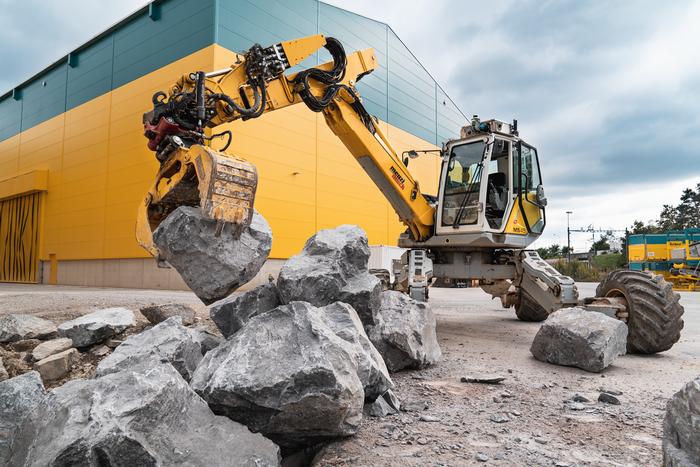
ETH Zurich researchers deployed an autonomous excavator, called HEAP, to build a six metre-high and sixty-five-metre-long dry-stone wall. The wall is embedded in a digitally planned and autonomously excavated landscape and park.
The team of researchers included: Gramazio Kohler Research, the Robotics Systems Lab, Vision for Robotics Lab, and the Chair of Landscape Architecture.

They developed this innovative design application as part of the National Centre of Competence in Research for Digital Fabrication (NCCR dfab).
Using sensors, the excavator can autonomously draw a 3D map of the construction site and localise existing building blocks and stones for the wall’s construction. Specifically designed tools and machine vision approaches enable the excavator to scan and grab large stones in its immediate environment.
Sign up for the Daily Dose Newsletter and get every morning’s best science news from around the web delivered straight to your inbox? It’s easy like Sunday morning.
It can also register their approximate weight as well as their centre of gravity. An algorithm determines the best position for each stone, and the excavator then conducts the task itself by placing the stones in the desired location. The autonomous machine can place 20 to 30 stones in a single consignment – about as many as one delivery could supply.
IMAGE CREDIT: Gramazio Kohler Research, ETH Zurich, Eberhard AG. Photo: Marc Schneider.
If you enjoy the content we create and would like to support us, please consider becoming a patron on Patreon! By joining our community, you’ll gain access to exclusive perks such as early access to our latest content, behind-the-scenes updates, and the ability to submit questions and suggest topics for us to cover. Your support will enable us to continue creating high-quality content and reach a wider audience.
Join us on Patreon today and let’s work together to create more amazing content! https://www.patreon.com/ScientificInquirer


Leave a Reply