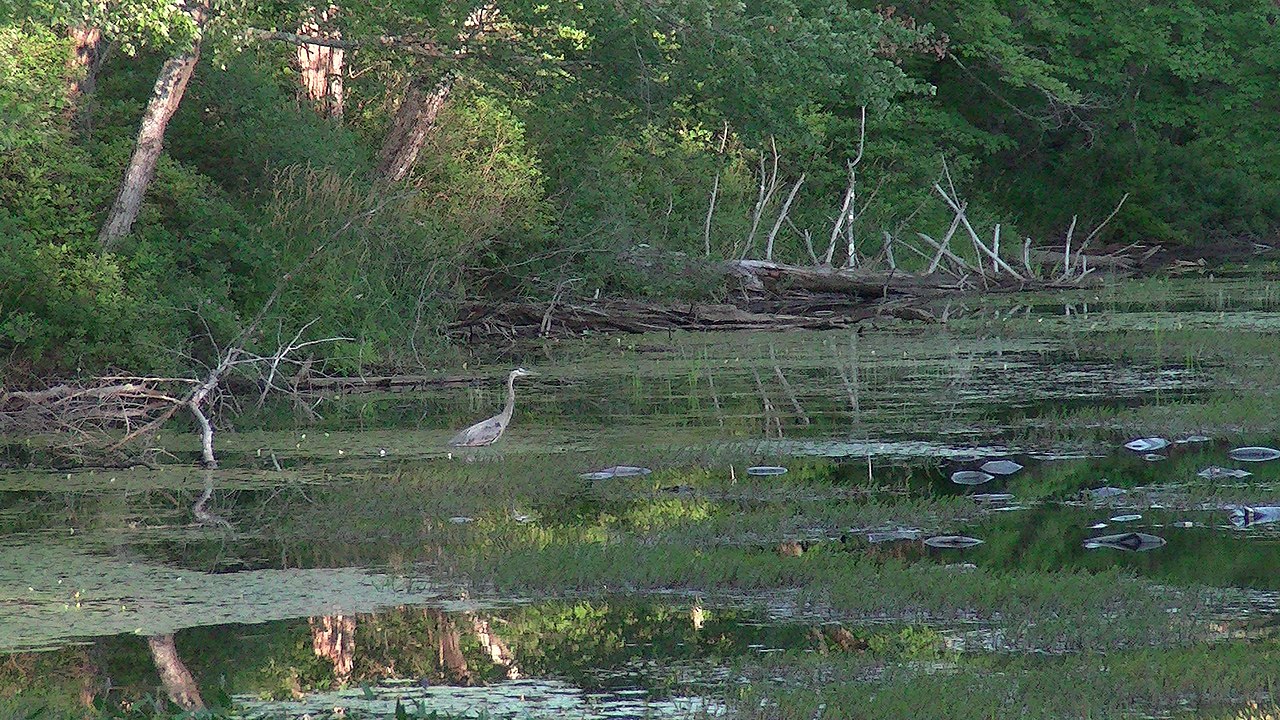
Southern Ontario wetlands provide $4.2 billion worth of sediment filtration and phosphorus removal services each year, keeping our drinking water sources clean and helping to mitigate harmful and nuisance algal blooms in our lakes and rivers.

A new study from the University of Waterloo uses economic valuation to help us understand the importance of Southern Ontario’s wetlands for water filtration – particularly as these sensitive ecosystems continue to be lost by conversion to agriculture or urban development.
“Wetlands naturally filter out phosphorus and sediments from water, but their value is often greatly overlooked,” said Tariq Aziz, who carried out the study during his PhD and postdoctoral work in Waterloo’s Department of Earth and Environmental Science. “By calculating the economic value of wetland filtration and comparing it to the costs of engineered interventions, we hope to reinforce the importance of protecting our wetlands.”
The total value of $4.2 billion in sediment and phosphorus filtration services was found based on the average rate of sediment accretion in each type of wetland in Southern Ontario and estimating how much the removal and disposal of the same amounts of sediment and phosphorus in stormwater management facilities in Ontario would cost.
This is the first economic valuation study to separate the values of the major types of wetlands in Southern Ontario: marshes, bogs, swamps, and fens. “We found that marshes were the most valuable wetland type for sediment and phosphorus filtration, based on the removal rates per hectare,” said Aziz. “However, because swamps make up 87 per cent of Southern Ontario’s wetlands, they contribute about 80 per cent of the overall filtration services we benefit from, at a value of about $3.4 billion per year.”
This study also calculated how much it would cost to replace wetlands’ existing phosphorus filtration function with three different human-engineered solutions. Building artificially constructed wetlands would cost an average of $2.9 billion per year to replace the free phosphorus filtration service our natural wetlands currently provide. Implementing agricultural Best Management Practices to remove an equivalent phosphorus load would cost society $13 billion annually, while expanding current wastewater treatment capacity to replace wetlands’ filtration service would cost $164 billion per year.
IMAGE CREDIT: Zendry423.




Leave a Reply