In the wake of the United Nations Climate Change Conference (COP26) that was held in Glasgow, Scotland, the post-mortem was awash in storylines, in particular the way India and China kneecapped the conference with their insistence on watering down any language having to do with coal. Though there were some mildly positive developments, the discouraging signs always seemed to have a bit more to them. And just like most conferences in modern times, the gathering was high on promises but low on tangible solutions.
For example, according to Adam Tooze writing for The Guardian, “The talk at the conference was all about the annual $100bn (£75bn) that rich countries had promised to poorer nations back in 2009. The rich countries have now apologised for falling short. The new resolution is to make up the difference by 2022 and then negotiate a new framework. It is symbolically important and of some practical help. But, as everyone knows, it falls laughably short of what is necessary.”

One of the major red flags to emerge from the conference was the more prominent roles large multi-national corporations played in the overarching climate change strategy. As a potential source of funding, their allure is undeniable. However, it is also hard to ignore the possible risk that companies will use the opportunity simply to make money in the long run, at the expense of climate change efforts.
Larry Fink, the CEO of the massive investment firm BlackRock, suggested that he would be able to supply trillions of dollars toward the energy transition in low-income countries toward sustainable, clean energy. He suggested certain conditions needed to be met first though. Namely, the International Monetary Fund and the World Bank would need to essentially insure BlackRock’s investment by absorbing the first loss on projects in Africa, Latin America, and Asia. According to Fink, more money would become available if there was a carbon tax that would essentially make clean energy the more palatable option.
Tooze isn’t buying the whole multi-national white knight proposition. “It is a neat solution,” he writes. “The same neat neoliberal solution that has been proffered repeatedly since the 1990s. The same solution that has not been delivered… At this point those promising trillions in private funding to fight the climate crisis reveal themselves to be the true utopians, just utopians of a neoliberal variety.”
The inherent problem with private industry’s involvement, especially publicly traded ones, in combating climate change is that the remit to maximize profits creates significant conflict of interests with non-profit players that figure prominently in the field. Another issue that inevitably arises from being beholden to shareholders or being family run is one of accountability. When push comes to shove, the decision making process is just too opaque. Moreover, any accountability a CEO of a multinational would have would be to the Board and to shareholders. Any public-private partnership would essentially entail a leap of faith.

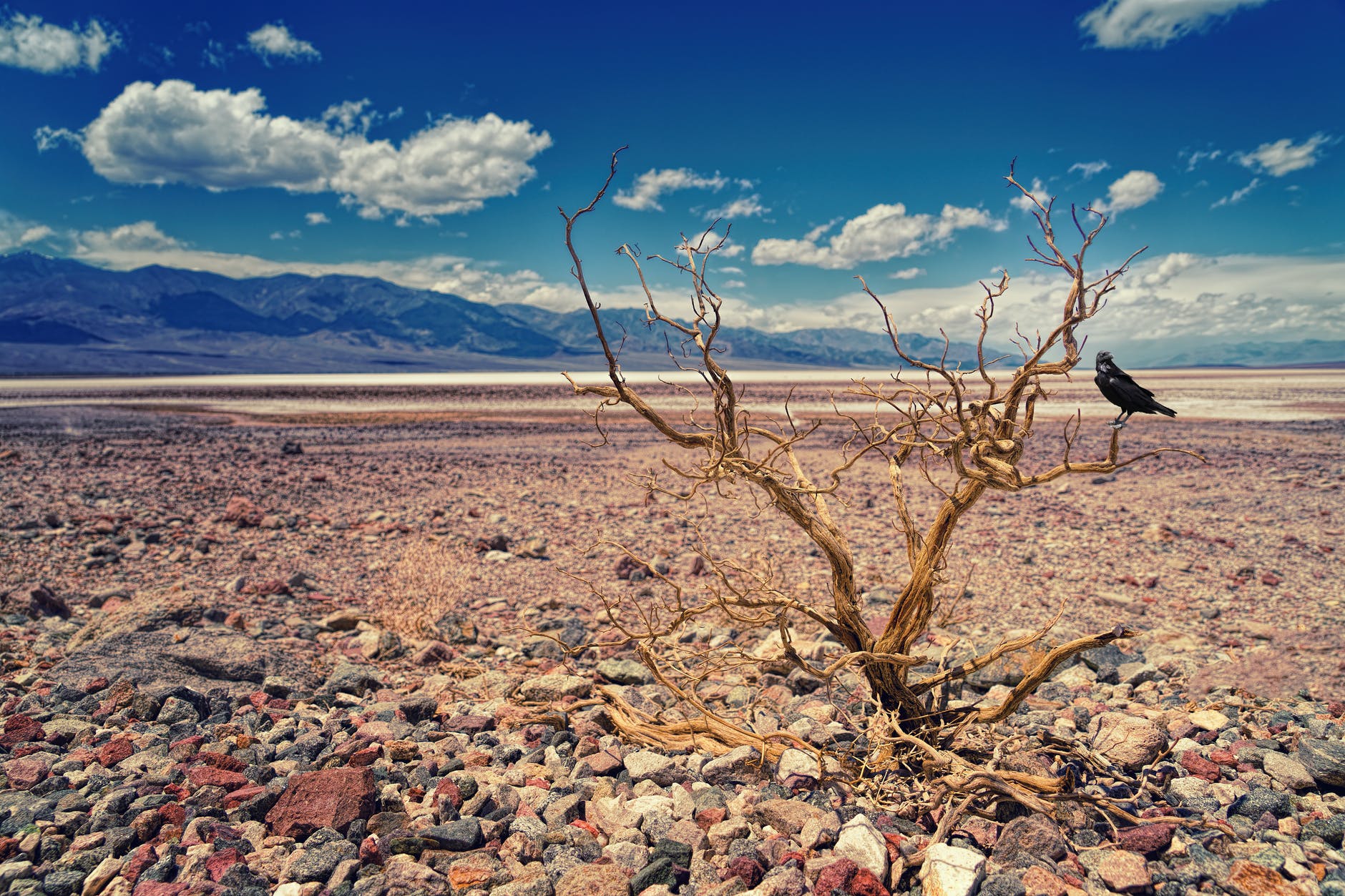
The idea of entrusting private industry to be the good-faith protectors of the planet and humanity plays a central role in Matt Bell’s debut novel, Appleseed: A Novel. The novel takes place in an unspecified future where the Earth is ravaged by climate change. Shifts in temperature have rendered parts of the United States useless for anything, especially food production. Wild animals have died out entirely. Everything from elephants to bees are extinct.
The train scrolls on, its tube tunnel suspended over cracked surface roads full of abandoned vehicles. The conductor makes no announcements, but eventually John recognizes the Iowa he once knew in the red barns and white farmhouses planted alongside wasted fields, wind-tilted cornstalks evidence of last harvests so poor they weren’t even worth plowing under… This American emergency -- the costs quaked and drowned, the center burned up and blown away -- John knows this wasn’t the world anyone wanted. A sullen midwestern dystopia, with only Earthtrust coming to save us.
The normal global economy has all but disintegrated while entire nations exist on a knife-edge, struggling to feed their citizens. And while their plights may vary, the one thing common to countries around the world is a corporation called Earthtrust.
Earthtrust embodies the modern-day multinational company brought to its logical conclusion. Run by a woman named Eury Mirov, the organization has the technology and vision that allows it to save humanity from destruction. They command the ability to terraform the Earth, as if it were Mars and are able to clone organisms, including humans, using an instrument called The Loom. They control the means of production from single cell to entire organisms.
The company controls vast swaths of America and uses it’s technological leverage to feed America and other countries around the world willing to bend to the Eury Mirov’s demands. In the U.S. citizens are forced into labor on “The Farm” and those who choose not to participate are detained. The slaves are euphemistically referred to as “Volunteers” even though their labor is anything by voluntary. Ultimately, they are all replaceable, faceless cogs in a company’s drive for power. When John, the novel’s protagonist, questions Mirov’s use of the Loom, she offers a curt reply,
“John, did you think people were going to live in cooperative agricultural communities run by megacorporations forever? I keep telling you: Earthtrust is a transitional company. To bridge the present we have and the future we want requires using the tools available. We live in a capitalist country; I built a capitalist tool. But I don’t care about the money, only what it can do.”
What it can and does do, is grant God-like power to Eury Mirov. The pure exploitation of the workers on The Farm, even after their demise, is capitalism par excellence.
What’s more, the meager benefits allotted to the non-replicated Volunteers doesn’t originate in benevolence; they are “all part of Earthtrust’s stripping as many Americans as possible of their citizenship and their constitutional rights.”
A band of activists opposing Earth-Trust’s efforts sets out to sabotage the company by destroying the Loom. In the process, it would also cripple Earthtrust’s ability to launch its signature program, codenamed Pinatubo.

Pinatubo is named after the volcano in the Philippines that erupted in 1991 and whose ashes entered the atmosphere enough to lower the global temperature for months. Earthtrust’s version is an effort to save the human race by artificially cooling the planet long enough to repopulate it with the creatures that once walked the earth but who are genetically engineered to be able to survive in the new climate.
In Mirov’s own words,
Pinatubo is our grace period, in the time it gives us, we’ll finish the transition from fossil fuels to a sustainable energy culture, humanely draw the population down to an appropriate size, then determine where and how people can most productively live… Over time, we’ll terraform unused landscapes into new green zones, places where humans can grow crops and graze livestock, where we can reintroduce a sustainable wild world to live alongside humanity.
With the technology at their disposal, and the infrastructure to deploy and realize their goals, the fatal flaw in Earthtrust’s model lay in its single ultra-centralized decision making process.
Eury wanted to save the world too, but she’d never wanted to return to the Garden. Eury wanted to save the world only if she could also choose the future that came after, if she could be the one to decide what the human future should be.
The only person Eury Mirov was accountable to was herself and that left her with very little margin for error.
Ultimately, Earthtrust runs like an authoritarian government where accountability suffers at the expense of ego. And like those regimes, the company’s goals crumble from the weight of its leader’s decisions.



Leave a Reply