Normally, the approval of a new drug designed to combat Alzheimer’s disease would be greeted with praise all around. Today’s U.S. FDA approval of such a drug, produced by Biogen and Eisai Co. has fostered tepid enthusiasm from experts. According to the Associated Press, “Government health officials on Monday approved the first new drug for Alzheimer’s disease in nearly 20 years, disregarding warnings from independent advisers that the much-debated treatment hasn’t been shown to help slow the brain-destroying disease… The decision, which could impact millions of older Americans and their families, is certain to spark disagreements among physicians, medical researchers and patient groups.” It also has far-reaching implications for the standards used to evaluate experimental therapies, including those that show only incremental benefits.” The new drug did not reverse mental decline during trials. In fact, it only slowed the disease in one study. The medication, aducanumab, will be sold on the market as Aduhelm. http://bit.ly/3gw03RF
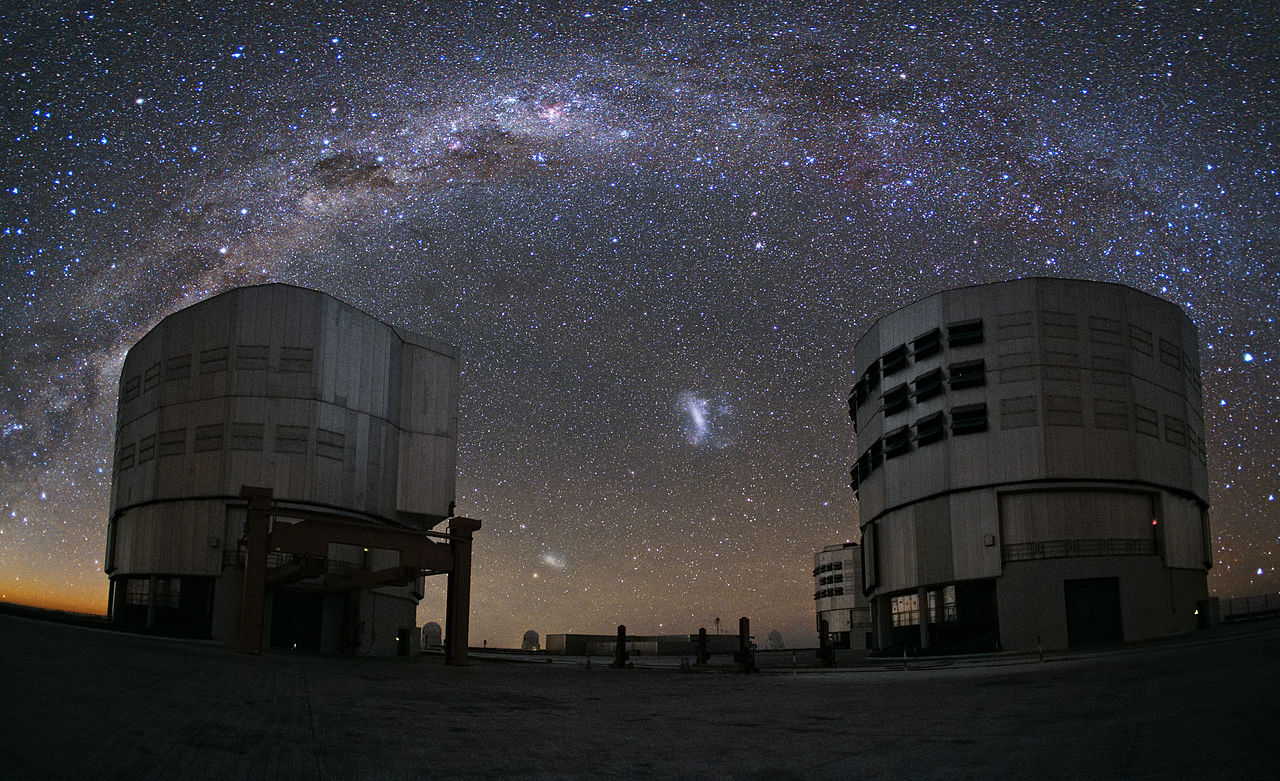
Astronomers are peering into the the depths of the Milky Way trying to locate particle accelerators. According to Nature, “What are the most powerful particle accelerators in our Galaxy, and how many of them are out there? Given what is already known about the Milky Way, it is perhaps surprising to hear that scientists are still not entirely sure. In a paper in Nature, the Large High Altitude Air Shower Observatory (LHAASO) Collaboration1 reports the detection of an unprecedented number of candidates for such accelerators, signalling the advent of a new era in very-high-energy astrophysics.” Cosmic rays can produce γ-rays when they collide with interstellar matter or interact with interstellar electromagnetic fields close to accelerators. These γ-rays can carry about one-tenth of the energy of their progenitor cosmic rays. http://go.nature.com/3x34KJ5
Bluebird Bio has gotten the green light to resume its clinical trial for it’s sickle cell anemia drug. Per Fierce Biotwch, “The FDA has lifted a clinical hold placed on bluebird bio’s sickle cell gene therapy in February, making way for the company to get a phase 1/2 trial and phase 3 study of the treatment back on track. Bluebird paused the trials in mid-February after two patients in the phase 1/2 study developed blood cancer after treatment. One patient developed acute myeloid leukemia (AML), while the other developed myelodysplastic syndrome (MDS).” http://bit.ly/2S8ztG5
Plants are perhaps the most misunderstood organisms on the face of the Earth. A recent study of ferns in the wild has shown that they are capable of forming complex, interdependent societies. According to Science News,“The shrubby apparatus reminded Burns of a termite mound, with a communal store of resources and the segregation of different jobs in the colony. Scientists call these types of cooperative groups, where overlapping generations live together and form castes to divide labor and reproductive roles, ‘eusocial.’” The central problem in most people’s views on plants has to do with time. We experience time in a much faster frame than members of the plant world. As a result, we fail to see the complex aspects of their behavior. http://bit.ly/3cp6cxr
Thanks for reading. Let’s be careful out there.

Leave a Reply