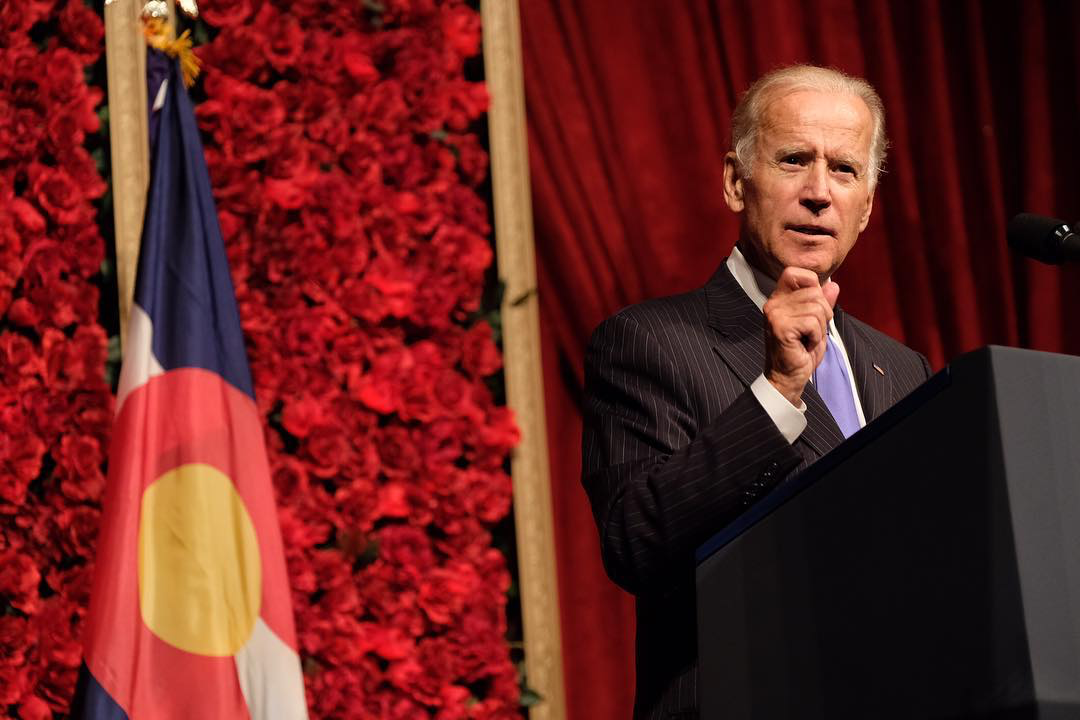
The scientific community in the United States suffered a significant blow after former President Donald Trump blacklisted travelers from a number of Muslim countires. During his first week in office, President Joe Biden signed an executive order immediately reversing the blacklist. On paper, the action corrected the Trump Administration’s ill-conceived travel ban. However, the reality is a little more nuanced.
Per Science, “The COVID-19 pandemic has forced scientific gatherings to go virtual, so researchers from the formerly blacklisted countries—Chad, Iran, Libya, North Korea, Somalia, Sudan, Syria, and Yemen—won’t be flocking to the United States for meetings anytime soon. (Iraq and Sudan were initially listed but removed later in 2017; North Korea was added to portray the ban as not singling out Muslims.) And in the case of Iran, which of the six targeted nations has the most advanced scientific community, other factors dilute the good news. Sanctions imposed on Iran by the United States “have had an extreme effect on travel,” says Navid Madani, director of the Science Health Education Center in the Middle East and North Africa at the Dana-Farber Cancer Institute. Iran’s currency has plummeted in value, making international travel a luxury that many cannot afford. ‘The situation is dire,’ she says.”
As with other areas damaged by four years of conservative leadership, e.g. the environment and inequality, it will take some time to completely remove the rot. https://bit.ly/2YvvjYa
The current residents of the International Space Station have completed a zero gravity version of home improvement. Per the Associated Press, “A pair of NASA astronauts ventured out on their second spacewalk in under a week Monday to complete a four-year effort to modernize the International Space Station’s power grid. Over the weekend, flight controllers in Houston used the station’s big robot arm to replace the last pair of old-style batteries with a single better-quality one. Astronauts Mike Hopkins and Victor Glover needed to put the finishing touches on this newest lithium-ion battery to complete a series of spacewalks that began in 2017.” Now who’s taking out the garbage? https://bit.ly/3arDHNQ
A company called bluShift Aerospace is the latest company to jump into the reusable rocket industry. What differentiates them from competitors is the nature of their product. It runs on biofuels. According to the BBC, “Stardust is a small rocket, just 20ft (6m) long and weighing 550lbs (250kg). But because it’s relatively cheap to fly and doesn’t need the high-tech infrastructure of larger rockets, it will help make space research accessible to more people. Students, researchers and businesses will be able to conduct experiments and test products with greater control and frequency.” A carbon-neutral rocket should make a lot of people happy. https://bbc.in/39CpSNC
A couple of weeks ago we highlighted the step declines of some insect populations around the world. As bad luck would have it, they aren’t alone. A recent study looked at sharks and rays in the ocean. They did not report good news. “We find that, since 1970, the global abundance of oceanic sharks and rays has declined by 71% owing to an 18-fold increase in relative fishing pressure. This depletion has increased the global extinction risk to the point at which three-quarters of the species comprising this functionally important assemblage are threatened with extinction.” There’s really no good way to spin a 71% decline. https://go.nature.com/3j7RYmW
Now there’s creepy and there’s creeeeepy. This news about a mask making company in Japan is a case of the latter. Hyperallergic reports, “Kamenya Omote, a Tokyo-based shop that sells artistic masks for parties and film and theater productions, has started producing three-dimensional face masks that model the features of a stranger’s face. The masks are frighteningly realistic, with only two details giving them away — the printed eyes and lips don’t move.” This is one link you need to click-through if for no other reason than to see examples of what the company’s masks look like. https://bit.ly/39CMNIp
Leave a Reply