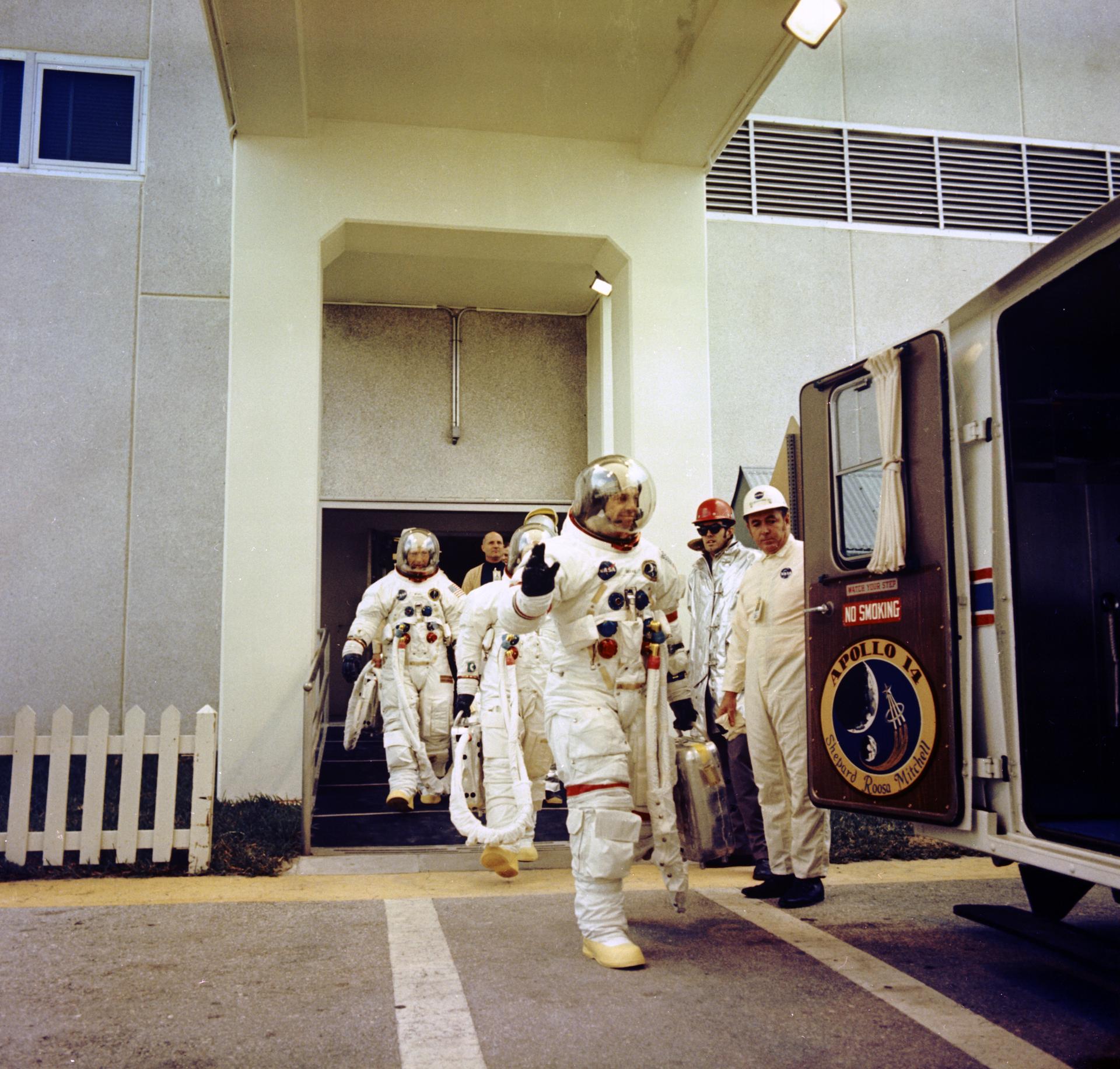
When the Artemis II crew entered quarantine in Houston on March 19, 2026, they were following a protocol with roots stretching back more than half a century. Prelaunch quarantine is one of the least glamorous but most medically essential rituals in human spaceflight — a deliberate severing from the outside world designed to protect both the crew and the mission itself.
The formal prelaunch quarantine program was established with the Apollo 14 mission in 1971, though informal isolation precautions had been in place since Apollo 11. The shift to mandatory protocol was driven by hard experience.
“NASA implemented a prelaunch quarantine starting with the Apollo 14 mission because we saw some infectious disease occurrences in flight or in the preflight period for some of the earlier Apollo launches,” said Dr. Robert Mulcahy, a flight surgeon at NASA’s Johnson Space Center.¹
Those earlier missions had seen crews suffer from upper respiratory infections and gastrointestinal illness — conditions that, in microgravity, with no easy access to medical care, could jeopardize both crew health and mission objectives.

The protocol works by sharply limiting who can interact with the astronauts in the weeks before launch. Today, the standard window is approximately two weeks of restricted contact, with daily health monitoring beginning three weeks out. Everyone permitted near the crew must pass symptom screenings and temperature checks. Meetings that once happened around a conference table now occur with glass walls between the astronauts and NASA staff — a practice borrowed, in part, from Russian pre-Soyuz launch procedures at Baikonur.
“It’s kind of like staying at a mid-tier hotel somewhere that’s comfortable and it gets them ready to be prepared for their mission,” Mulcahy said of the Kennedy Space Center crew quarters where astronauts are housed during isolation.¹
The logic is straightforward but the stakes are enormous. A cold contracted three days before launch could force a crew swap or scrub a mission years in the making. More critically, once in space, the crew has no immune system reinforcement, no pharmacy down the hall, and no possibility of rest in a hospital bed. Any pathogen that slips through the quarantine barrier travels with them.
This dynamic was understood even during the Apollo 11 era, though the post-flight quarantine of that mission was aimed at the opposite problem — preventing contamination coming back from the Moon. The prelaunch dimension of that mission’s isolation was nearly undone by a presidential dinner request.
As NASA flight surgeon Dr. Charles Berry recalled about President Nixon’s wish to dine with the crew the night before launch: “If [the astronauts] came down with anything, whatever it was, a cough, a sniffle, or anything else, we were going to have to prove that it didn’t come from the moon. So I think it would be pretty stupid to let somebody just walk into that situation. It would have been a total breakdown of the program.”²
The protocol evolved further during the COVID-19 pandemic, when NASA added daily health surveys, rapid testing, and additional contact restrictions. Many of those measures were retained afterward. For Artemis II, the quarantine carries particular weight: the four crew members — Reid Wiseman, Victor Glover, Christina Koch, and Jeremy Hansen — will travel farther from Earth than any humans since 1972. There is no rescue flight, no contingency abort to a nearby station. Good health at launch is not a preference. It is a prerequisite.
Endnotes
- Dr. Charles Berry, NASA flight surgeon, Apollo era. Quoted in “Apollo 11 Astronauts Spent 3 Weeks in Quarantine, Just in Case of Moon Plague.” Space.com, July 24, 2019. https://www.space.com/apollo-11-astronauts-quarantined-after-splashdown.html
- Robert Mulcahy, flight surgeon, NASA Johnson Space Center Health Stabilization Program. Quoted in “NASA astronaut launches stop for nothing — not even a pandemic.” Houston Style Magazine, March 4, 2021. https://stylemagazine.com/news/2021/mar/04/nasa-astronaut-launches-stop-nothing-not-even-pand/
IMAGE CREDIT: NASA.
Leave a Reply