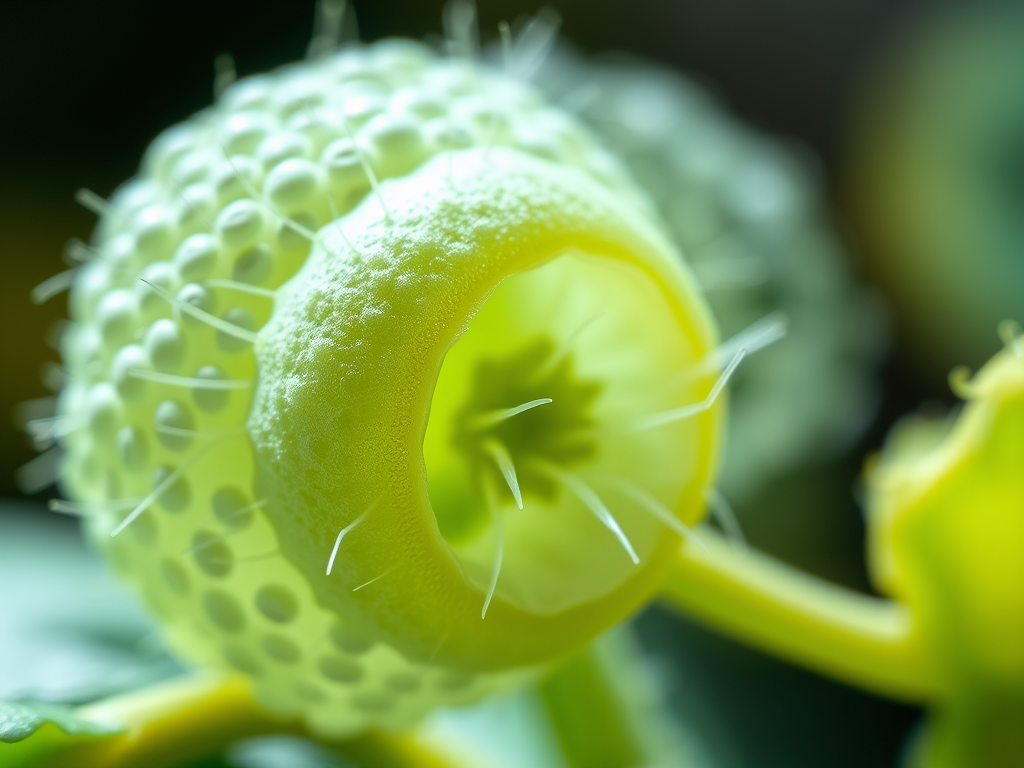
Plants might look passive and unhurried, but beneath their calm exterior lies a bustling world of cellular choreography. Every leaf, stem, and flower you see started as a tiny plant stem cell that divided and differentiated at just the right moment. For decades, scientists have known that a plant’s shoot apical meristem—the zone at the tips of shoots where stem cells reside—is the heart of plant growth. What they’ve struggled to understand is how these stem cells manage to divide in the right directions and at the right times to build complex, orderly plant structures.
A new study now reveals an elegant and surprisingly dynamic mechanism: the plant cell wall itself helps direct this process. What was once thought to be a mostly passive structure turns out to be part of a built-in growth regulator that ensures shoots and branches form properly.
More Than Just a Wall
Plant cells are surrounded by a rigid cell wall made of complex carbohydrates such as cellulose and pectin. Walls give plant cells their shape, provide protection, and resist internal pressure from water. Until recently, scientists largely treated cell walls as static frames—essential, but inert.
This new research, however, shows that cell walls are actively modified during growth in a pattern that helps stem cells decide when and how to divide. Using high-resolution microscopy and molecular biology techniques, researchers mapped the stiffness of cell walls across the shoot apical meristem in a model plant species.
They discovered a striking pattern: old walls between cells are stiff, while newly formed walls are softer and more pliable. Why does this matter? Because the mechanical properties of the wall influence how cells expand and divide. Softer walls are easier to reshape, giving new walls the flexibility needed during and after division.
A Clever Timing Mechanism
The team then asked how plants create this stiffness pattern—especially how softness is restricted to new walls while older walls remain rigid.
The answer centers on a molecule called pectin, a key component of the cell wall. Pectin can be chemically modified to make the wall either stiff or soft. An enzyme called pectin methylesterase (produced from the gene PME5) removes certain chemical groups from pectin, softening the wall. But the plant doesn’t want this softening to happen everywhere at once.
Here’s where things get particularly clever: the PME5 messenger RNA—the blueprint for making the softening enzyme—is held inside the cell’s nucleus, trapped away from the cellular machinery that makes proteins. Only during cell division, when the nucleus temporarily breaks down, does this RNA spill into the cell’s interior and get translated into the enzyme. The enzyme then acts specifically on newly forming walls.
In effect, the plant uses the timing of nuclear breakdown to control when and where wall-softening happens. Older walls stay stiff because their pectin has already been “locked down,” while new walls get just enough flexibility to let cells divide and grow.
What Happens When It’s Disrupted
To test how critical this mechanism is, researchers engineered plants in which the PME5 RNA was released prematurely from the nucleus. The result? Disorganized cell divisions, reduced stem cell activity, and abnormal plant structures—fruits with clusters of odd shapes instead of orderly arrangements. This shows that the regulated release of PME5 RNA is not just neat biology, but essential for normal plant growth.
Why This Matters
This discovery shifts how we think about the plant cell wall. Rather than being a static shell, the wall is part of an active regulatory system that readies certain areas for division while stabilizing others. The plant uses a built-in timing mechanism—sequestering RNA and releasing it only during division—to coordinate mechanical properties with development.
Even more compelling is that similar patterns of wall stiffness have been observed in major crop plants such as corn, soybean, and tomato, suggesting this mechanism is widespread across the plant kingdom. That means these findings could have practical implications: understanding cell wall mechanics at the stem cell level could help scientists develop crops with improved architecture, stronger stems, or more efficient branching patterns—traits that influence yield and resilience.
Peering Into Plant Inner Workings
This study is part of a broader trend in plant science that recognizes the importance of biomechanics and gene regulation working together. It’s a reminder that nature often uses simple physical principles—like stiffness and flexibility—combined with precise molecular timing to build complex living forms.
For anyone fascinated by how plants grow, this research offers a fresh lens: cell walls are not just structural supports, but active participants in life’s most fundamental processes. They help plants decide when to keep things rigid and when to let change happen—an elegant balance that, quite literally, helps flora flourish.




Leave a Reply