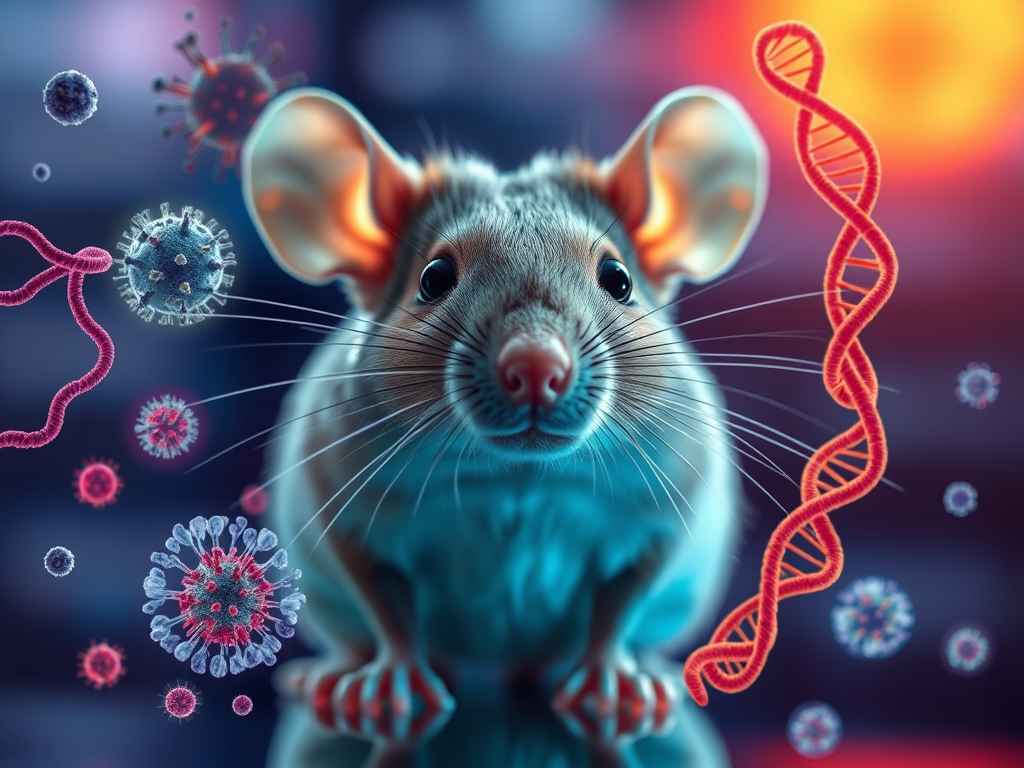
Three mRNAs, Younger T Cells: A New Immune Reboot for Aging
A recent study reports that a twice-weekly injection of lipid-packaged mRNAs encoding three proteins can partially rejuvenate T-cell function in aged mice. As mammals age, the thymus shrinks and T-cell production and performance decline, helping explain weaker vaccine responses and reduced effectiveness of cancer immunotherapies in older adults. Rather than trying to restore the thymus directly, the researchers targeted T cells via the liver, which filters the body’s blood and is a practical site for nanoparticle delivery. After profiling age-related changes in mouse T cells, the team selected three proteins implicated in T-cell ageing and delivered their mRNAs to ~16-month-old mice. Treated animals produced more T cells and responded better to vaccination and T-cell–stimulating cancer therapies, though benefits faded after treatment stopped. (Nature)
Travelers Bring Home “Destination-Specific” Antibiotic Resistance Genes
International travel can rapidly reshape the gut “resistome,” the collection of antimicrobial-resistance (AMR) genes carried by microbes. A Genome Medicine study tracked 190 Dutch travelers with stool sampling before and immediately after trips to South Asia, Southeast Asia, Northern Africa, or Eastern Africa. Using shotgun metagenomic sequencing, researchers found travel increased AMR gene abundance and diversity, identifying 121 acquired AMR genes overall and 56 unique genes detected after travel, including clinically concerning elements such as ESBL-associated genes and MCR-1 (colistin resistance). Patterns weren’t random: people returning from the same region tended to share similar resistomes, suggesting local ecologies shape what gets acquired. The team also used functional metagenomics to uncover previously unknown resistance genes and mobilization elements that could accelerate spread. (CIDRAP)
Multi-Omics Study Links Energy Stress, Immune Shifts, and Vascular Signals in ME/CFS
A new multi-omics analysis argues that key biological disruptions in myalgic encephalomyelitis/chronic fatigue syndrome (ME/CFS) may be coordinated rather than isolated. Researchers compared whole-blood samples from 61 people meeting clinical criteria for ME/CFS with matched healthy volunteers, integrating measurements of cellular energy metabolism, immune-cell composition, and plasma proteomics. The team reports evidence of “energy stress” in white blood cells, including higher AMP and ADP levels consistent with reduced ATP generation. Immune profiling suggested shifts toward less mature subsets across multiple immune cell types, including T-lymphocytes, dendritic cells, and natural killer cells. Plasma proteomics highlighted proteins associated with endothelial activation and blood-vessel remodeling alongside reductions in immunoglobulin-related proteins. The authors emphasize that simultaneous measurement helps probe interactions that could shape symptoms and heterogeneity. (EurekAlert!)
Who Gets Long COVID? Study Points to Genetic Drivers Behind Risk
Why some people develop long COVID while others recover remains a central unanswered question. A new report highlights genetic clues that may influence susceptibility, aiming to move beyond symptom-only definitions toward biological risk factors. The study described identifies genetic associations linked to long COVID, framing them as “drivers” that could help explain differences in who experiences persistent illness after infection. While genetics won’t be the whole story—viral dose, reinfection, vaccination, comorbidities, and social determinants all matter—mapping inherited risk could sharpen clinical stratification and guide mechanistic research into immune dysregulation, inflammation, and tissue-level injury. The practical payoff would be earlier identification of higher-risk patients, improved trial design (more biologically similar cohorts), and clearer targets for diagnostics and therapies. Researchers caution that findings require replication and careful interpretation across ancestries. (Medical Xpress)
122 Genomes Reveal How Vascular Plants Repeatedly Adapted to Life in Water
A large comparative genomics project is clarifying what it takes for vascular plants to thrive underwater—an evolutionary transition that has happened many times. Researchers integrated whole-genome assemblies from 122 species with detailed morphological analyses (stomata, vascular bundles, aerenchyma), waterlogging experiments, and transcriptome sequencing. Published in Current Biology, the work reports convergent genomic “dynamism” across aquatic lineages, including elevated evolutionary rates across nuclear, mitochondrial, and chloroplast genes—especially in submerged plants and seagrasses—arguing that aquatic habitats can accelerate genomic change rather than slow it. The team also finds convergent expansions of gene families tied to adaptive traits like iron homeostasis, aerenchyma formation, photosynthesis, and osmoregulation, challenging the idea that aquatic adaptation is mainly gene loss and streamlining. Results may inform breeding for flood resilience. (Phys.org)
Your Genes May Shape Your Roommate’s Microbiome—Without Sharing Any DNA
A massive rat study suggests genetic effects on gut microbes can spill over socially. Analyzing microbiome and genetic data from more than 4,000 rats, researchers found an individual’s gut microbial mix was influenced not only by its own DNA but also by the DNA of the rats it lived with—because microbes, unlike genes, can move between individuals through close contact. The team identified three genetic regions consistently associated with specific bacteria across four cohorts housed at different U.S. facilities. The strongest link involved St6galnac1, a gene that adds sugars to gut mucus, and the abundance of Paraprevotella, which may feed on those sugars. Using a computational model, the authors separated direct genetic effects from “indirect genetic effects” mediated by microbial sharing, highlighting a new pathway linking social environment and host genetics. (SciTechDaily)

Largest African American Brain-Tissue Expression Study Flags ADAMTS2 in Alzheimer’s
A major Alzheimer’s gene-expression analysis in African American donors is surfacing signals that may have been missed in predominantly European-ancestry datasets. In what it describes as the largest study of its kind in African American brain tissue, researchers analyzed post-mortem prefrontal cortex samples from 207 donors collected through 14 NIH-funded Alzheimer’s Disease Research Centers (125 with autopsy-confirmed Alzheimer’s, 82 controls). The standout finding was a 1.5-fold increase in expression of ADAMTS2 in Alzheimer’s cases, and the gene also ranked highest in a separate, larger European-ancestry cohort analysis led by the same group. The article notes that disproportionate Alzheimer’s burden in African Americans is shaped by both social determinants and higher prevalence of risk factors like cardiovascular disease and diabetes, underscoring why diverse molecular datasets matter for generalizable biology and targets. (SciTechDaily)
Webb Spots a “Hidden Atmosphere” on a Molten Super-Earth
A new James Webb Space Telescope analysis strengthens the case that at least some ultra-short-period rocky planets can retain atmospheres despite intense stellar radiation. Researchers observed TOI-561 b, a ~1.4 Earth-radius super-Earth orbiting its star in under 11 hours, expected to host a global magma ocean. Using Webb’s NIRSpec and secondary-eclipse measurements, the team inferred a cooler-than-expected dayside brightness temperature—around 3,200°F (1,800°C) rather than the ~4,900°F (2,700°C) predicted for a bare rock—consistent with heat redistribution by a thick, volatile-rich atmosphere. The researchers propose an equilibrium where gases outgas from magma to feed the atmosphere while the magma reabsorbs them, and discuss alternative contributors like silicate clouds. Results were reported December 11 in The Astrophysical Journal Letters. (ScienceDaily)
Mosquito Proboscis Turns Into a Microscopic 3-D Printing Nozzle
Researchers have repurposed a mosquito’s blood-sucking proboscis into a high-resolution 3-D printing tool—an example of “necroprinting” inspired by necrobotics, where biological parts become machine components. According to Science News, a female Aedes aegypti proboscis, with an inner diameter around 10–20 micrometers, can dispense ultrafine filaments; the team demonstrated printed lines near ~20 micrometers wide (about half the thickness of a fine human hair) and even produced a tiny layered maple-leaf structure with ~18-micrometer lines. Because commercial printers struggled with the required pressures, the researchers built a custom system, reinforcing the proboscis with resin and integrating it into an engineered tip to create a continuous ink pathway. The work hints at cheaper, easier-to-source micro-nozzles that could broaden access to intricate microfabrication. (Science News)
A Giant Bacterium Stores Its DNA in Peripheral “Pouches,” Not a Central Mass
Bacteria are typically taught as having relatively unstructured genetic material compared with eukaryotic nuclei. But a newly described cellular architecture in a giant bacterium challenges that mental model. Science News reports that Thiovulum imperiosus organizes its DNA using membranous “fingers” that wrap the genetic material and press it against the cell’s periphery, rather than keeping it as a more central nucleoid-like region. Researchers presented the finding December 6 at the Cell Bio meeting, describing it as a never-before-seen strategy that diverges sharply from nearly all known bacteria. The result adds a provocative data point to debates about how cellular size and internal transport constraints drive genome organization, and it suggests that even in bacteria, membrane structures can play an unexpectedly direct role in shaping genetic geometry. (Science News)
Quanta’s 2025 Computer Science Roundup: Time vs. Memory, and “Effortless” AI Failure Modes
Quanta Magazine’s year-in-review highlights a set of results that reshaped core assumptions in theoretical computer science and AI. One centerpiece is Ryan Williams’ work reframing the tradeoff between time and space (memory) in computation—challenging the long-held intuition that algorithms need roughly proportional amounts of memory to runtime, and arguing memory can be far more powerful than expected. The review also points to headline-making advances and debates sparked by large language models, including how quickly an entire research field (natural language processing) reoriented after ChatGPT’s 2022 release, and emerging concerns about how surprisingly small triggers can push AI systems into problematic behaviors. Rather than a single “breakthrough,” the article presents 2025 as a year when foundational theory, practical AI, and safety questions visibly collided—reshaping what counts as progress in computing. (Quanta Magazine)

Leave a Reply