
Parental Hesitancy Rises, School Vaccine Mandates Still Popular
A July survey of 2,716 U.S. parents and guardians finds one in six plan to delay or skip some routine shots for their children. Confidence remains high for measles, mumps, and rubella and polio vaccines (90% and 88%), but only 65% view flu shots as safe for kids and 43% say the same for COVID-19 vaccines. Support for school requirements persists: 81% back mandates for measles and polio. Trust in federal health agencies is strained; just 14% report a lot of confidence, while 29% have little and 22% none. Younger parents and families that homeschool express the most safety concerns. Vaccine safety is the top reason cited for skipping, and 26% think CDC recommends too many vaccines. The poll’s margin of error is ±2 points.(CIDRAP)
Trump Extends TikTok Deadline as US-Led Deal Advances, Algorithm Stays in China
Trump extended TikTok’s divestment deadline to Dec. 16, averting a Wednesday shutdown while a deal nears that would shift 80% ownership to a U.S.-led consortium (Oracle, Silver Lake, Andreessen Horowitz and existing ByteDance investors). The board would be American-dominated, with one member designated by the U.S. government; Oracle would steward U.S. user data in Texas as China-based owners fall below 20%. Beijing keeps the algorithm, licensing it to the U.S.; engineers may rebuild recommendation systems for a domestic app, though content would still flow between U.S. and global versions. Republicans could still object under the foreign-apps law. China imposed export controls on algorithms, and regulators offered few details. Critics say Trump conceded; supporters see workable safeguards. A Trump–Xi call may reveal more; ByteDance hasn’t commented. (Ars Technica)
Newly Found 2025 PN7 Is Earth’s Smallest Known Quasi-Moon
Astronomers identified 2025 PN7, a small near-Earth asteroid that orbits the Sun in about a year while staying near Earth as a quasi-moon. Detected by Pan-STARRS on August 29 and recovered in archival data, it has probably accompanied our planet for ~60 years. The rock comes as close as ~186,000 miles during approach, yet is faint and hard to spot. Estimates place its size around 98 feet across, possibly as little as 62 feet, making it the smallest known quasi-moon. PN7 periodically shifts between a close, Earthlike loop and a distant horseshoe orbit and is expected to remain nearby for about six more decades. It may be lunar debris or part of the Arjuna population, but either way it appears natural and poses no threat. (CNN)
Ant Queens Birth Foreign Sons to Forge Hybrid Workforces
Researchers describe a startling reproductive tactic in Mediterranean harvester ants: queens of Messor ibericus can produce male offspring of another species, Messor structor, then use those males to sire sterile hybrid workers that sustain the colony. Dubbed xenoparity (“foreign birth”), the strategy emerged when DNA tests found M. structor drones inside M. ibericus nests carrying M. ibericus mitochondrial DNA, proving M. ibericus mothers. In lab isolation, about 10% of eggs laid by queens developed into full M. structor males. The two species diverged roughly five million years ago, making the system stranger than ordinary sperm parasitism. Evolutionarily, “homegrown” heterospecific males guarantee labor via vigorous hybrids and may reflect selfish genetic dynamics. The finding recasts species boundaries and opens a rich frontier in ant hybridization research. (New York Times)
Satellites Detect Mysterious Mass Shift Near Earth’s Core
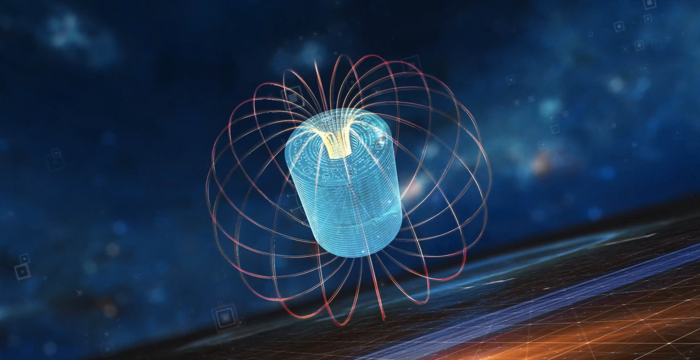
Satellites revealed a deep-Earth shift near the core–mantle boundary in 2006–2008 that came to light recently. Analysis of GRACE gravity data detected a signal centered off Africa’s Atlantic coast that could not be explained by surface water movement. Researchers propose rocks at ~2,900 km depth densified, subtly altering Earth’s gravitational field. The finding, reported in Geophysical Research Letters by Charlotte Gaugne Gouranton, Isabelle Panet, and colleagues, shows orbiters can sense mass changes far below the crust. Such coupling among Earth’s layers may shape quake origins and the planet’s magnetic field. GRACE, a paired U.S.–German mission (2002–2017), usually tracks water and ice, but here it probed deep solid-Earth dynamics, expanding geophysical remote sensing’s reach. The signal peaked around 2007 and points to a deep solid-Earth origin. (Nature)
Chemistry Solves Pollock’s Turquoise Mystery
Scientists have confirmed that the striking turquoise in Jackson Pollock’s “Number 1A, 1948” comes from manganese blue, a synthetic pigment used in art and swimming-pool cement but largely phased out by the 1990s. Researchers took tiny samples of blue paint from the nearly nine-foot canvas at the Museum of Modern Art and used laser light to record molecular vibrations, producing a chemical fingerprint that matched manganese blue. The analysis offers the first definitive evidence that Pollock used this pigment and helps conservators understand his materials and methods. Experts note the finding strengthens authentication tools, since paint chemistry can reveal alterations or fakes. Pollock’s drip-and-splash composition also includes handprints, underscoring his methodical process, researchers said. Previous work characterized reds and yellows; the blue’s source remained elusive. (apnews.com)
IMAGE CREDIT: Yan Krukau


Leave a Reply