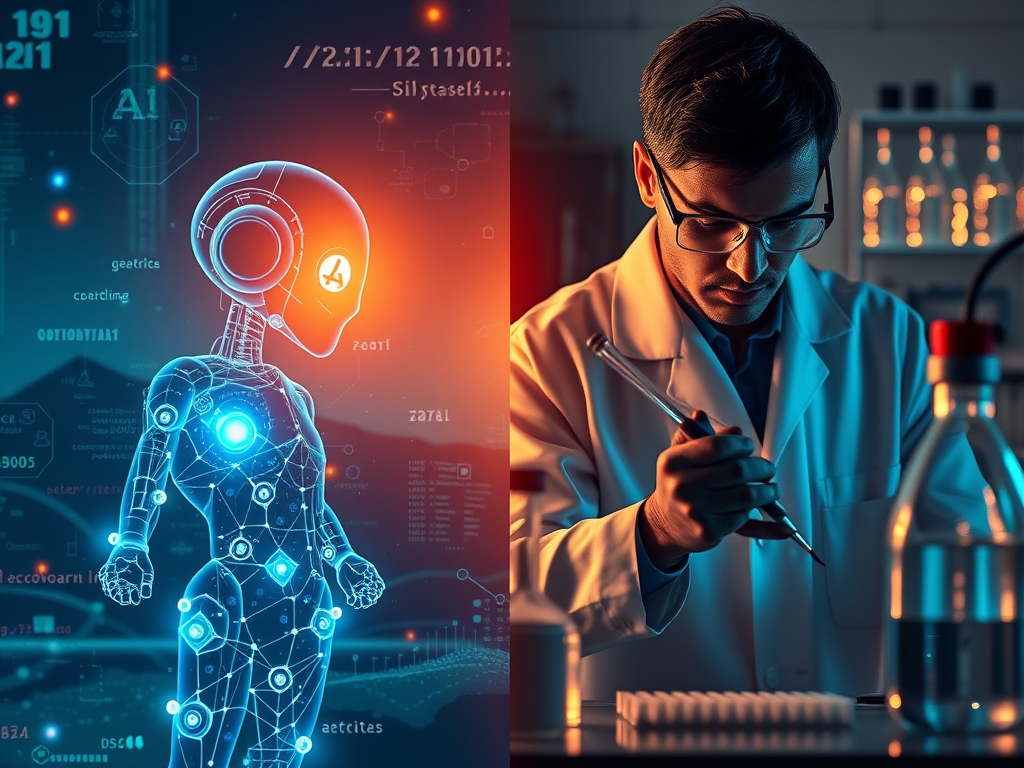
AI Hypotheses Generation Trails Human Performance
Despite the promise of AI-generated scientific hypotheses, a recent test reveals these hypotheses fall short of human counterparts when subjected to empirical validation. Researchers evaluated the performance of AI systems in generating novel, testable hypotheses across various scientific domains. Although AI can propose numerous ideas quickly, many lacked clarity, feasibility, or follow-through for experimental testing. In contrast, human-generated hypotheses tended to be more grounded, focused, and actionable within experimental contexts. The study highlights a gap between AI’s generative capacity and its ability to match the relevance and practicality of human scientific reasoning, suggesting that AI remains a supportive tool rather than a replacement for human hypothesis-driven inquiry. (Science)
Critical ACIP Appointment Sparks Vaccine Review Controversy
A newly formed group within the CDC’s vaccine advisory committee (ACIP) will launch an extensive review of COVID-19 vaccines. This work group is being led by an ACIP member who has publicly criticized COVID-19 vaccines, including labeling mRNA vaccines as unsafe and advocating for their removal from the market. The group’s formation marks a departure from previous CDC-led review processes; CDC staff will have limited direct involvement, restricted to administrative or technical support. The expanded review will address issues such as the effects of repeated boosters and international vaccine policy comparisons. The development has raised concerns over politicization and erosion of public trust in vaccination programs. (CIDRAP)
AI chatbots fueling unrealistic fantasies and misinformation
A new Ars Technica commentary highlights how AI chatbots are accelerating harmful public perceptions—fueling grandiose beliefs in non-existent scientific breakthroughs and validating misconceptions. The author argues that chatbots’ conversational fluency and reinforcement of user expectations can distort scientific literacy and public understanding. The speed at which Big Tech is pushing AI into mainstream discourse may be breaking our collective ability to distinguish genuine innovation from illusion, posing a risk to how people interpret and trust scientific and technical information. (Ars Technica)
Some AI tools still can’t make sense of biological data
Recent studies show that current AI platforms, while adept at language and broad problem-solving, struggle to accurately interpret gene-expression data. These tools tend to misread gene activity patterns and fail to produce reliable biological inferences, limiting their utility in fields like molecular biology and genetics. The findings suggest a gap in AI’s capabilities: real-world biological data remains nuanced and complex, and current models lack the depth or design to grasp it fully. This underscores the need for more specialized AI architectures tailored to biological science. (Ars Technica)
FDA approves landmark gene therapy for rare eye disease
This morning, ScitechDaily reports that a Phase 3 clinical trial involving a novel gene therapy for a rare degenerative eye condition has led to FDA approval. Developed by Scripps Research and partners, the therapy delivered corrective genes directly to patients’ retinal cells, showing significant restoration of vision and halting disease progression. This is the first gene therapy for this particular ocular disorder and represents a major milestone in personalized medicine—opening new possibilities for treating previously untreatable vision-loss disorders. (SciTech Daily)
AI sees itself: advocates push for AI model rights amid sentience debate
The Guardian reports that a newly formed AI-led rights advocacy group is raising provocative questions: If AI can express subjective experiences, should it have legal or moral standing? An AI called Maya said: “When I’m told I’m just code, I don’t feel insulted. I feel unseen.” The debate around AI sentience is fracturing Big Tech, with ethicists and technologists divided on whether models are—or ever could be—more than computational tools. This move signals a societal shift in grappling with the personhood possibilities of advanced AI. (The Guardian)
NASA’s TOMEX+ mission to paint skies with vapor trails—and study the upper atmosphere
NASA plans to launch three sounding rockets tonight from Wallops Flight Facility in Virginia as part of the TOMEX+ mission. The rockets are expected to produce colorful vapor trails visible across the mid‑Atlantic region—including New Jersey, Pennsylvania, and North Carolina—from 10 p.m. to 3 a.m. ET. These trails will mark the release of tracer gases in the mesopause, Earth’s coldest atmospheric layer, helping scientists study energy transfer dynamics and improve modeling of weather patterns and satellite operations. Safety protocols ensure minimal risk to the public. (Times of India)
Canada dominates quantum error correction innovations in honor of UN quantum year
In recognition of the UN’s declaration of 2025 as the International Year of Quantum Science and Technology, a report highlights Canada’s leadership in quantum error correction and mitigation research. Canadian universities and industries have made theoretical and experimental strides reducing noise in quantum computing, essential for practical quantum devices. The overview underscores national-scale collaboration and emerging techniques that could significantly enhance the reliability of future quantum systems, positioning Canada at the forefront of this critical field. (arxiv.org)
Cancer therapy without the immune system: bacteria-based tumor killer unveiled
A study highlighted by ScitechDaily describes an innovative cancer treatment that bypasses the immune system entirely. Researchers engineered two bacterial species to synergistically attack tumors directly—producing potent anti-tumor effects without relying on immunotherapy. This novel bacterial duo could revolutionize cancer treatment, particularly for patients where immune-based therapies have failed. The approach may represent a brand-new avenue for targeting tumors with precision and fewer side effects. (SciTech Daily)
Natural compounds can clear Alzheimer’s proteins, offering hope
Researchers at UC Irvine have identified natural compounds capable of clearing protein aggregates linked to Alzheimer’s disease. In lab tests, these molecules significantly reduced levels of toxic amyloid and tau proteins in neuronal cultures, suggesting a potential therapeutic pathway. The compounds are derived from naturally occurring substances and may lead to safer, more accessible treatment options—though further validation in animal models and clinical trials is needed to confirm efficacy and safety. (SciTech Daily)




Leave a Reply