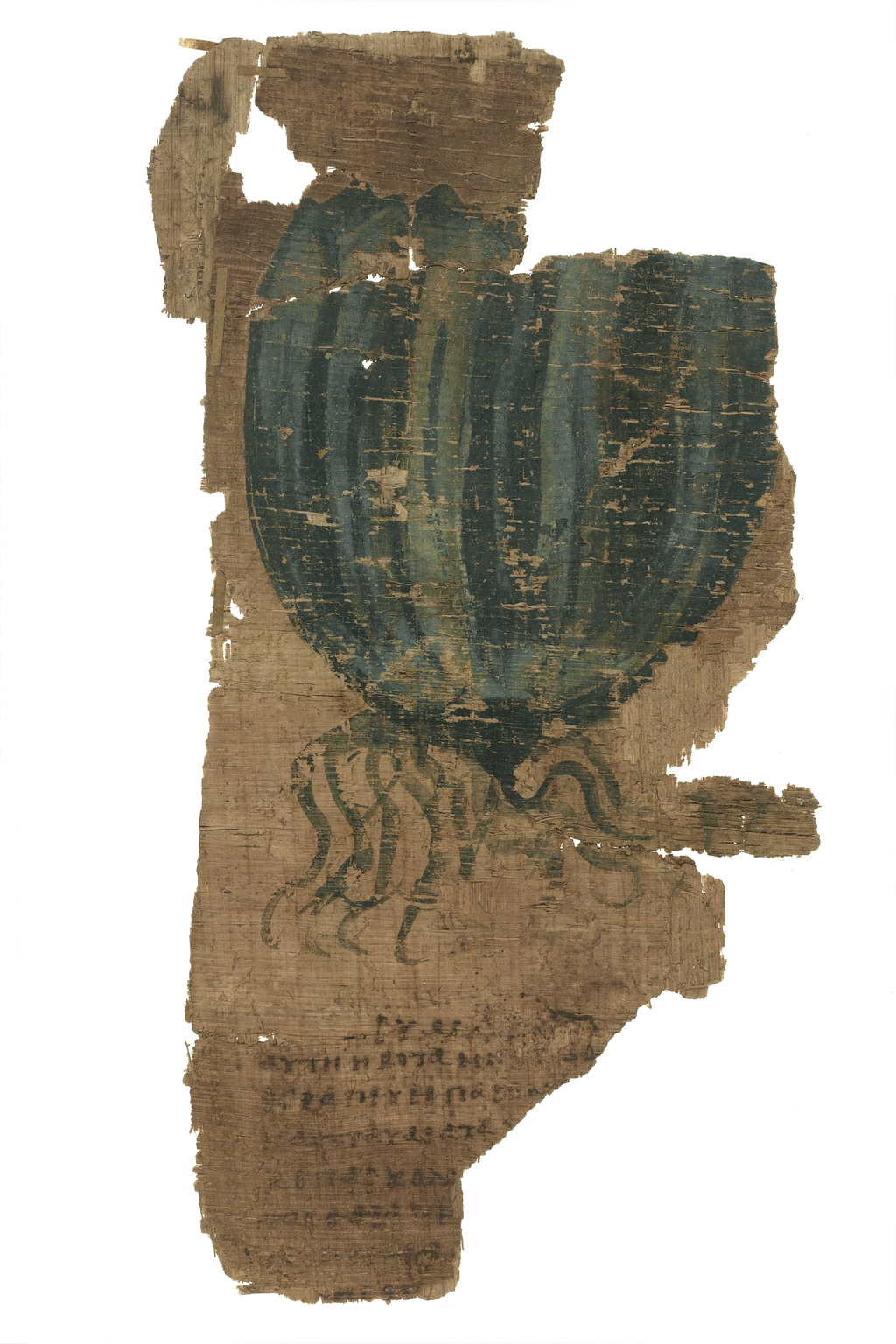

This humble papyrus fragment—known as the Johnson Papyrus—is a rare glimpse into the earliest illustrated medical botany. Dated to the early 5th century, it’s thought to be a copy of illustrations accompanying De materia medica, the foundational herbal text by the ancient Greek physician Dioscorides (1st century AD). As the oldest surviving visual record of medicinal plants, it bridges classical natural history and medieval pharmacology.
On the papyrus, a simple but deliberate sketch of a plant—leafy stem, perhaps berries or flower bud, and a bulbous root—is sketched next to handwritten Greek script. This pairing of image and text was revolutionary for its time: illustrations aided physicians in identifying plant species accurately, reducing errors in prescribing herbal remedies. More than 400 years later, this fragment still communicates that ancient goal of clarity through visual guidance.
In antiquity, herbal remedies were classified by observable traits—leaf shape, root appearance, flower structure—and Greek physicians meticulously described and illustrated these alongside dosage and preparation techniques. Over subsequent centuries, manuscripts like the Vienna Dioscurides elaborated this tradition, translating and extending illustrations across cultures and languages.
The Johnson Papyrus fragment shows the early stage in this evolution. Its minimalist illustration reflects the constraints of papyrus media and ink, but its intent was clear: to depict the essential morphology of the plant. These visuals were critical in a world relying solely on morphology for plant identification—before microscopes, before chemical analysis.
The survival of this piece—through centuries of fragile material decay—underscores its value. For researchers of botanical history, it offers proof that Greek herbal traditions included images as early as the 400s AD, making this fragment a cornerstone in the visual history of medicine. It reminds us how science and art collaborated centuries ago to transmit knowledge through generations—knowledge that shaped herbal pharmacology across the medieval and Renaissance periods.



Leave a Reply