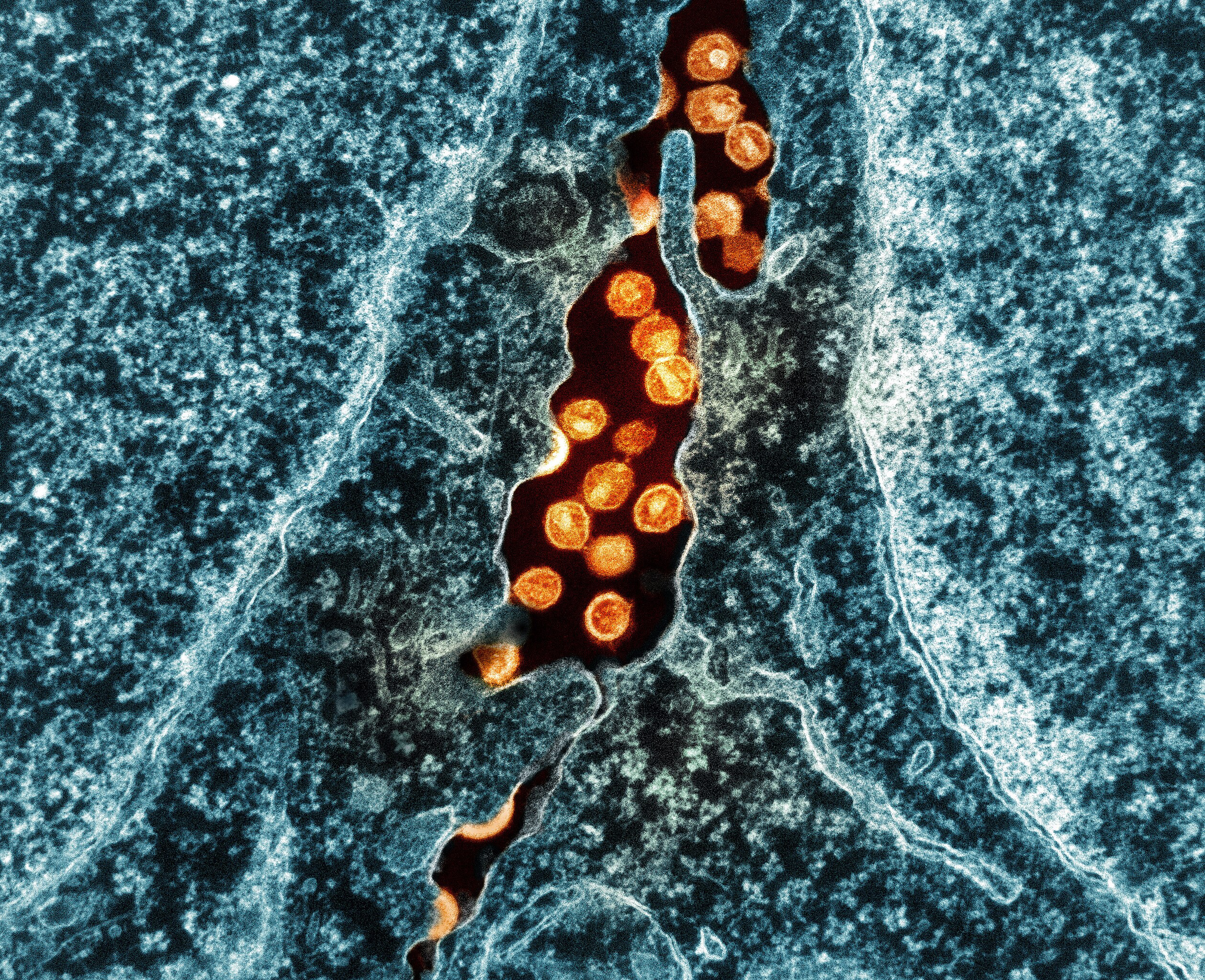
Researchers demonstrate that membrane-anchored HIV vaccines delivered via mRNA platform can trigger potent immune responses, offering new hope for one of medicine’s most elusive goals
After more than four decades since the first reported cases of AIDS, the quest for an effective HIV vaccine has taken a significant step forward. A groundbreaking study published in Science Translational Medicine reveals that mRNA technology—the same platform that enabled rapid COVID-19 vaccine development—can successfully trigger neutralizing antibodies against HIV in human volunteers.
The research, conducted through the phase 1 clinical trial HVTN 302, represents a milestone in HIV vaccine development by demonstrating that membrane-anchored HIV envelope proteins delivered via mRNA can overcome a fundamental obstacle that has plagued previous vaccine attempts.
Solving the “Base Problem”
Traditional HIV vaccine approaches have been stymied by what researchers call the “base problem.” When HIV envelope proteins are produced in a soluble form for vaccines, they expose their base region to the immune system. This creates a misleading target because in actual HIV virions, this base is hidden within the viral membrane and never exposed to immune cells.
“By using mRNA to bypass a common design obstacle with HIV vaccines, the experiments underscore the utility of this platform in the quest for more effective and affordable vaccines for HIV and other diseases,” the research team explained in their findings.
The innovative solution involved engineering mRNA to encode membrane-bound forms of the HIV envelope protein. This approach ensures that when the vaccine recipient’s cells produce the viral protein, it displays naturally on cell membranes, “shifting the immune system’s attention away from the Env base and towards the proper target.”

Remarkable Results in Human Trials
The results were striking. In the study of 108 healthy volunteers, the membrane-anchored vaccine generated neutralizing antibodies in 80% of recipients, compared to only 4% who received the traditional soluble version. This represents a twenty-fold improvement in response rates.
“Three immunizations elicited autologous tier 2 serum neutralizing antibodies in 80% of vaccinees receiving the membrane-anchored trimers, in contrast to only 4% receiving the soluble trimer,” the researchers reported.
Seth Cheetham, Director of the Australian mRNA Cancer Vaccine Centre, emphasized the significance of these findings: “In the early-stage clinical trial, the results were encouraging: 80% of people who received this version of the vaccine produced antibodies that could block the virus in lab tests. That’s a big improvement compared to most earlier vaccine candidates, which were less targeted and rarely triggered these strong immune responses.”
Building on mRNA Success
The speed and adaptability of mRNA technology offers particular advantages for HIV vaccine development. Unlike traditional vaccine production methods that can take months or years, mRNA vaccines can be rapidly modified to address HIV’s notorious ability to mutate and evade immune responses.
“mRNA, the technology behind many of the COVID-19 vaccines, dramatically speeds up the pace of vaccine development. This enables researchers to have more ‘shots on goal’, opening the door to tackling even the most complex viruses like HIV,” Cheetham noted.
Recent advances in mRNA HIV vaccine research have shown promising results across multiple trials. A separate study published in Science in May 2025 demonstrated that “mRNA-encoded nanoparticles drives early maturation of HIV bnAb precursors in humans,” showing clinical proof of concept that heterologous boosting can advance broadly neutralizing antibody development.
Safety Considerations and Challenges
While the immunogenicity results were encouraging, the study identified an unexpected safety signal that requires attention. Seven of the 108 participants (6.5%) developed urticaria (hives) related to the vaccine, with five experiencing chronic symptoms lasting more than six weeks.
“The vaccine also generated strong memory responses, meaning the body would be better prepared to fight off HIV even long after vaccination. While most adverse reactions were mild and treatable, several people experienced a skin reaction (urticaria),” Cheetham explained.
This side effect pattern has been observed across multiple mRNA HIV vaccine trials. According to IAVI, “skin events occurred in 7%-18% of the volunteers who received the investigational products” across multiple trials, though “most of these events were mild or moderate, and managed with simple allergy medications”.
The research team is actively investigating these reactions. “If these side effects can be reduced in next-generation versions and the results hold up in larger real-world studies in the community, mRNA vaccines could be a transformative tool in the fight against HIV,” Cheetham added.
The Broader Context of HIV Vaccine Development
The challenge of developing an HIV vaccine has been described as one of the most difficult problems in biomedical research. Despite significant advancements in understanding HIV biology, “progress has been impeded by factors such as the virus’s genetic diversity, high mutation rates, and its ability to establish latent reservoirs”.
Previous vaccine trials have achieved limited success. Recent approaches “have shown promise. However, the efficacy of these vaccines has been modest, with the best results achieving approximately 30% effectiveness”.
The history of HIV vaccine development is marked by repeated setbacks that have nonetheless advanced scientific understanding. When HIV was identified as the cause of AIDS in 1984, U.S. Health and Human Services Secretary Margaret Heckler optimistically declared that a vaccine would be ready for testing within two years. That prediction proved dramatically premature.
The first HIV vaccine Phase I clinical trial began in 1987, but early candidates, such as the gp160 subunit vaccine, showed no significant efficacy. The initial approach focused on eliciting neutralizing antibodies, following the paradigm that had worked for other viral vaccines.
The late 1990s and early 2000s brought the first large-scale efficacy trials. VaxGen’s AIDSVAX trials – VAX004 in North America and VAX003 in Thailand – both failed to provide protection against HIV infection. These disappointing results from trials involving thousands of volunteers highlighted that simply producing antibodies capable of binding to HIV was insufficient for protection.
The field then shifted toward cellular immunity approaches. In 2007, the STEP and Phambili trials tested a Merck-developed vaccine using modified adenovirus type 5 (Ad5) vector to deliver HIV genes, aiming to stimulate strong CD8+ T cell responses. However, NIAID halted the Phase 2 Step and Phambili studies due to safety concerns, dealing another blow to the field.
The first glimmer of hope came in 2009 with the RV144 trial in Thailand. Results of the Phase 3 Thai Trial (RV144) revealed that the vaccine combination demonstrated a modest preventive effect in humans, with the trial enrolling more than 16,000 volunteers as the first, and to date only, large clinical study to demonstrate efficacy for an investigational HIV vaccine. While the protection was only around 31%, it proved that an HIV vaccine was theoretically possible.
Recent efforts to build on RV144’s success have met with continued challenges. The HVTN 702 (Uhambo) trial in South Africa, which tested a modified version of the RV144 vaccine regimen, was stopped early because interim results showed that it did not prevent HIV infection. Similarly, the Imbokodo and Mosaico trials testing Janssen’s mosaic immunogens were halted after failing to show efficacy.
Previous vaccine trials have achieved limited success. Recent approaches “have shown promise. However, the efficacy of these vaccines has been modest, with the best results achieving approximately 30% effectiveness”.
The global need remains urgent. According to recent data, “approximately 38 million people worldwide are currently living with HIV with 1.2 million in the US. Approximately two million new infections of HIV are acquired worldwide every year and around 690,000 people die annually due to complications from HIV/AIDS”.
The global need remains urgent. According to recent data, “approximately 38 million people worldwide are currently living with HIV with 1.2 million in the US. Approximately two million new infections of HIV are acquired worldwide every year and around 690,000 people die annually due to complications from HIV/AIDS”.
The Path Forward: Broadly Neutralizing Antibodies
The ultimate goal of HIV vaccine research is to induce broadly neutralizing antibodies (bnAbs) that can protect against the diverse strains of HIV circulating globally. As researchers note, “naïve B cell/germline targeting immunogens, followed by boosting with sequential immunogens, will be required to produce a bnAb-based HIV vaccine”.
The current study represents an important step in this direction. While the neutralizing antibodies generated were primarily specific to the vaccine strain rather than broadly neutralizing, the research demonstrates the feasibility of the mRNA platform for HIV vaccine development.
“The results establish clinical proof of concept that heterologous boosting can advance bnAb-precursor maturation and demonstrate bnAb priming in Africa where the HIV burden is highest,” according to recent trial results published in Science.
Advantages and Challenges
Beyond immunogenicity, mRNA vaccines offer significant advantages for global HIV prevention efforts. The technology enables rapid production and modification, potentially allowing for responsive vaccine updates as HIV strains evolve. Additionally, mRNA manufacturing can be more cost-effective and scalable than traditional vaccine production methods.
As researchers note, mRNA vaccines have “several significant benefits compared with conventional vaccines, in terms of safety, efficacy, production and applications”, making them particularly attractive for addressing global health challenges.
Despite the scientific progress, HIV vaccine research faces significant political and funding challenges. Recent reports indicate that the Trump administration has terminated major NIH-funded HIV vaccine programs, with researchers warning that “advances will stall out” and questioning whether “anyone’s going to step into the breach”.
This funding uncertainty comes at a critical time when multiple promising approaches are showing clinical proof of concept. As one researcher noted, “After many years of frustration and negative results we now believe that there is a pathway to develop an efficacious HIV vaccine. It’s really disappointing at this time to have the foundation kicked out from underneath you”.
Looking Ahead
The HVTN 302 study results represent a significant milestone in HIV vaccine development, demonstrating that mRNA technology can overcome longstanding challenges in eliciting HIV-specific immune responses. While important questions remain about safety optimization and achieving broadly neutralizing responses, the research provides a clear path forward.
“With demonstration of more favorable safety, mRNA-encoded membrane-anchored HIV envelope trimers represent a promising platform for HIV vaccine clinical development,” the research team concluded.
The next phase of research will focus on sequential immunization strategies designed to guide the immune system through the complex process of developing broadly neutralizing antibodies. These approaches, building on the proof of concept established in current trials, may finally deliver the effective HIV vaccine that has eluded researchers for decades.
As the scientific community continues to advance these promising approaches, the integration of mRNA technology with sophisticated immunogen design offers renewed hope for achieving one of public health’s most important goals: ending the HIV pandemic through vaccination.
IMAGE CREDIT: NIAID.




Leave a Reply