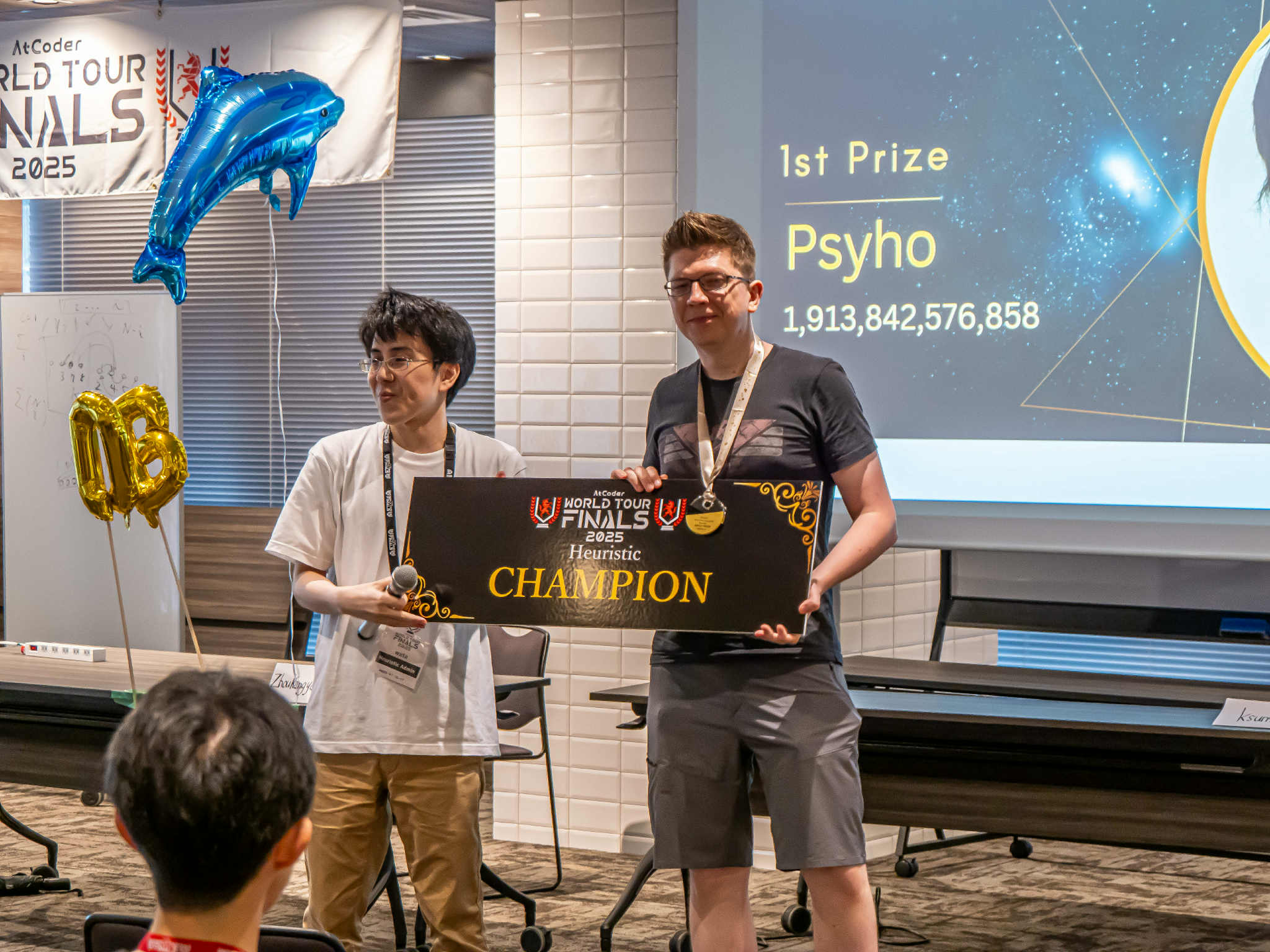
Underdog Coder Beats AI in Global Programming Showdown
In a surprising upset at the World Coding Championship, a fatigued but determined human coder edged out a powerful AI model in the final round. The contest, which pitted human intelligence against machine efficiency, highlighted the continued edge of human intuition and adaptability under pressure. Despite physical exhaustion and mental fatigue, the programmer identified flaws in the AI’s solutions and delivered a creative workaround that secured the win. The victory was seen as a symbolic moment in the evolving relationship between human coders and artificial intelligence. While AI continues to dominate repetitive and data-heavy tasks, the competition demonstrated the enduring value of human insight and ingenuity in high-stakes, real-time problem-solving. (Ars Technica)
Hospital Mergers Drive Up Costs Without Quality Gains
A sweeping investigation into U.S. hospital and physician group consolidation reveals that mergers often lead to higher healthcare costs without improving patient outcomes. The report draws from Medicare and private insurance data, showing that when hospitals acquire physician practices, prices rise while quality metrics—such as readmission and mortality rates—remain stagnant. Policymakers and experts warn that market concentration is weakening competition, leaving consumers with fewer options and rising bills. The findings challenge the assumption that integration streamlines care and highlights the need for regulatory scrutiny. Proposals include better oversight of vertical mergers and stronger antitrust enforcement to prevent unchecked consolidation in the healthcare sector. (Axios)
New Clues on Planet Formation from Distant Dust Disk
Astronomers studying a distant young star have identified a large, dusty disk in its early formation stage, offering a new window into how planetary systems evolve. The system, known as HH 111, contains dust and gas that show ringed structures—possible precursors to planets. Detected by the Atacama Large Millimeter/submillimeter Array (ALMA), the features support theories that planets begin to form while stars are still developing. The research underscores the importance of observing younger and more chaotic systems to understand our own solar system’s origins. This finding also challenges existing models by suggesting that planet formation may begin earlier and under more turbulent conditions than previously thought. (AP)
Study Reveals Subtle Patterns in Baby Sex Ratios Within Families
A large study of over 58,000 U.S. women found that families with multiple children of the same sex are more likely to continue that trend. For example, families with three boys had a 61% chance of another boy, while three-girl families had a 58% chance of a fourth girl. Contrary to the belief of equal 50:50 odds per pregnancy, maternal age and genetics play roles: women 29 or older at first birth were 13% more likely to have children of the same sex. Genetic variants near NSUN6 and TSHZ1 also influenced sex outcomes. While population-level sex balance remains, these maternal traits subtly affect offspring sex patterns. However, researchers caution that individual prediction remains unreliable. (Nature)
Cat Transmits Rare Offseason Case of Plague to Human
A new case of plague in Oregon has raised concerns after it was traced to a domestic cat, marking an unusual offseason occurrence. The infected person, who recovered after treatment, reportedly had close contact with the pet, which likely contracted the bacterium Yersinia pestis from a rodent. Health officials stressed that while plague remains rare in the U.S., it persists in wildlife reservoirs, particularly in the western states. This case underscores the zoonotic risks pets can pose and the importance of early diagnosis and public awareness. Plague is treatable with antibiotics, but delays in recognition can lead to severe outcomes. Officials are advising pet owners to reduce wildlife exposure and seek prompt care for unexplained fevers. (CIDRAP)
Popular Sugar Substitute Erythritol Linked to Brain Cell Damage and Stroke Risk
University of Colorado Boulder researchers have discovered alarming evidence that erythritol, a widely used artificial sweetener found in sugar-free beverages and keto products, significantly impairs brain blood vessel function. The study exposed human brain cells to erythritol levels equivalent to consuming one sugar-free drink for just three hours, resulting in 75% increased cellular stress, 20% reduced protective nitric oxide production, and complete blocking of natural clot-busting responses. These changes promote blood vessel constriction, clotting, and inflammation—all major stroke risk factors. Previous epidemiological studies found people with higher erythritol levels were significantly more likely to experience heart attacks or strokes within three years. The findings, published in the Journal of Applied Physiology, add to growing concerns about artificial sweeteners once considered safe. Researchers recommend consumers monitor their intake of erythritol-containing products and read labels carefully for “sugar alcohols.” (Science Daily)
Massive Black Hole Collision Creates Record-Breaking 225-Solar-Mass Monster
LIGO gravitational wave detectors have captured the most massive black hole merger ever observed, designated GW231123, involving black holes of approximately 100 and 140 solar masses that collided to create a final black hole 225 times the mass of our sun. Detected on November 23, 2023, this merger is about 50% more massive than the previous record holder and presents a major challenge to current astrophysical models. Both black holes were spinning at nearly the maximum speed allowed by Einstein’s general relativity and fall into a theoretical “mass gap” where conventional stellar evolution suggests they shouldn’t exist. Scientists believe these massive objects may have formed through earlier mergers of smaller black holes rather than direct stellar collapse. The discovery strains both gravitational wave detection technology and theoretical understanding of black hole formation, potentially requiring new models to explain how such cosmic heavyweights arise in the universe. (Science News)
DNA Nanostructures Self-Assemble into Complex 3D Devices Using “Molecular LEGO”
Columbia University and Brookhaven National Laboratory scientists have developed a groundbreaking method for creating intricate 3D nanostructures using DNA as programmable building blocks, essentially enabling “3D printing” at the molecular scale. Their technique uses voxel-like components and an algorithm called MOSES to design nanoscale devices that self-assemble in water without conventional manufacturing tools. Unlike traditional lithography or 3D printing, this DNA-based self-assembly process occurs entirely in parallel, meaning multiple structures form simultaneously, offering significant time and cost savings. Applications range from optical computing components to bio-scaffolds for medical applications. The environmentally friendly fabrication process represents what researchers call “next-generation 3D printing” with massively parallel fabrication capabilities that could revolutionize nanomanufacturing. The platform accommodates various materials with different biological, optical, electrical, and magnetic properties depending on the specific design requirements for each application. (Science Daily)
Quantum Computing Breakthroughs Signal Shift from Development to Practical Deployment
The United Nations has designated 2025 as the International Year of Quantum Science and Technology, marking a pivotal moment as the quantum computing industry shifts from growing quantum bits to stabilizing them for practical applications. Major companies including Google, IBM, and Microsoft achieved key breakthroughs in 2024, including suppression of error rates relative to qubit numbers, development of high-fidelity qubits, and substantial reductions in quantum error correction costs. For the first time since monitoring began, researchers observe a shift from development to deployment, with innovation making quantum technology safer and more secure for mission-critical industries. Government investments accelerated in early 2025 with Japan announcing $7.4 billion and Spain committing $900 million in public financing, bringing total announced public funding to over $10 billion. The quantum computing ecosystem shows unprecedented momentum toward real-world applications across drug discovery, climate modeling, and materials science, signaling quantum computing’s transition from experimental curiosity to practical industrial tool. (McKinsey)
Scientists Discover Revolutionary Magnetic Breakthrough for Ultra-Efficient AI Computing
German scientists have engineered a groundbreaking spin waveguide network that processes information using quantum ripples in magnetic materials called spin waves, potentially making AI hardware 10 times more energy efficient. The innovation represents a fundamental shift from traditional electronic computing to magnetic computing, where information is carried by waves of magnetic spin rather than electrical current. This magnetic breakthrough could dramatically reduce the massive energy consumption of AI data centers, which currently account for significant portions of global electricity usage. The spin wave technology operates at much lower power levels than conventional processors while maintaining high-speed computation capabilities. By harnessing quantum mechanical properties of magnetic materials, the system processes multiple data streams simultaneously through wave interference patterns. The research opens pathways for sustainable AI development as artificial intelligence applications continue expanding globally. Implementation could transform data center operations, making powerful AI computations accessible with dramatically reduced environmental impact and operational costs for the technology industry. (Science Daily)
Maya Archaeology Breakthrough: Tomb Discovery Rewrites Mesoamerican History
University of Houston archaeologists have made a major breakthrough at Caracol, Belize, uncovering the tomb of Te K’ab Chaak—Caracol’s first known ruler—marking the culmination of 40 years of research by Arlen and Diane Chase. The discovery represents one of the most significant Maya archaeological finds in recent decades, providing unprecedented insights into early Maya political structure and royal burial practices. The tomb contains elaborate grave goods and artifacts that illuminate the sophisticated civilization’s governance systems during crucial formative periods. Advanced imaging and analysis techniques revealed details about Maya royal succession, religious practices, and the complex political relationships between city-states. The find challenges existing timelines for Maya development and provides new evidence for the sophistication of early Maya society. Researchers discovered evidence of trade networks, technological innovations, and cultural practices that reshape understanding of Mesoamerican civilization development. The tomb’s contents offer direct links to Maya texts and inscriptions, enabling scholars to better interpret historical records. (Science Daily)
Revolutionary AI Breakthrough: First Machine Teaching Robots Through Visual Learning
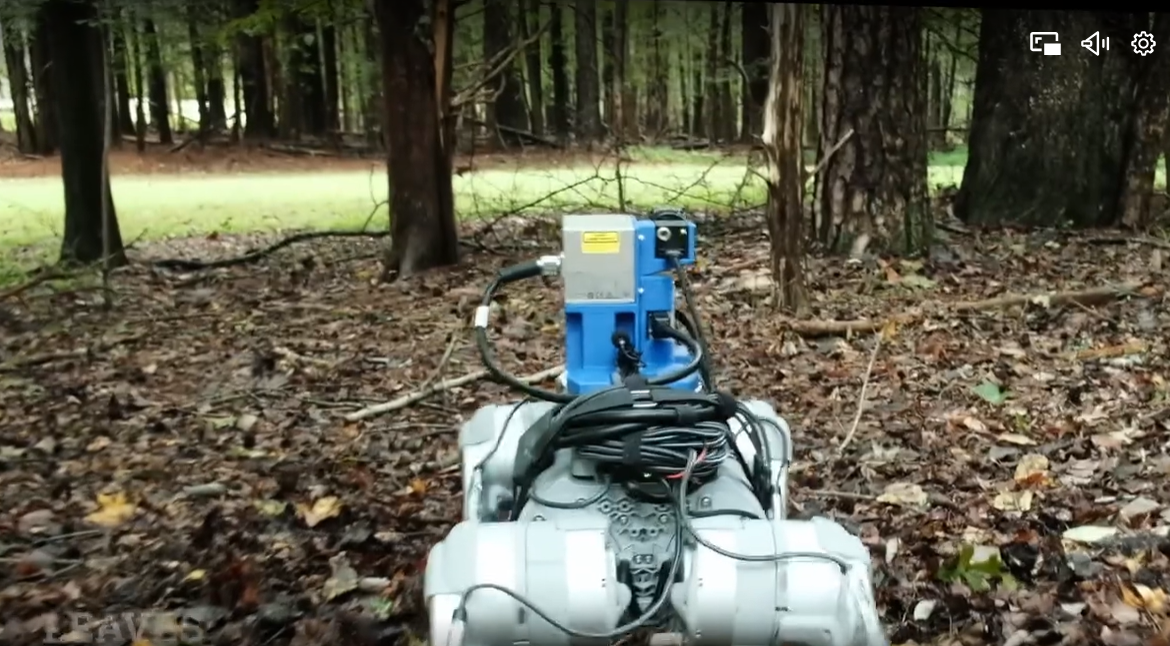
MIT researchers have developed groundbreaking AI technology that can teach robots to control themselves by watching their movements through a single camera, eliminating the need for sensors or onboard control modifications. This revolutionary approach uses visual data exclusively, enabling robots to learn complex tasks through observation rather than traditional programming or sensor feedback systems. The technology represents a paradigm shift in robotics education, making robotic learning more accessible and cost-effective by removing hardware dependencies. The AI system analyzes movement patterns, identifies optimal behaviors, and translates visual observations into control instructions that robots can execute. Applications span manufacturing, healthcare, domestic assistance, and exploration where traditional sensor-based systems prove impractical or expensive. The visual learning approach enables rapid deployment of robotic skills across diverse environments without extensive hardware modifications. This breakthrough democratizes robotic capabilities, potentially accelerating automation adoption in industries previously limited by complex sensor requirements and specialized programming expertise, making advanced robotics accessible to smaller organizations. (Live Science)
IMAGE CREDIT: Przemysław Dębiak.



Leave a Reply