
NASA’s Axiom Mission 4 Set to Launch June 25
NASA, Axiom Space, and SpaceX have confirmed the launch of Axiom Mission 4, the fourth private crewed mission to the ISS. Launching on June 25 at 2:31 a.m. EDT aboard SpaceX’s Falcon 9 from KSC, the Dragon capsule carries private astronaut Shubhanshu Shukla alongside international crew. The spacecraft is scheduled to dock on June 26 at 7 a.m. EDT. Over a planned two‑week stay, the team will conduct scientific experiments, engage in educational outreach, and explore commercial avenues in low Earth orbit. The mission highlights growing global collaboration in commercial spaceflight and advances toward a sustainable space economy. Stringent safety protocols underscore the rigor behind private missions to the ISS. (Times of India)
DARPA Achieves Record 5‑Mile Wireless Power Beaming
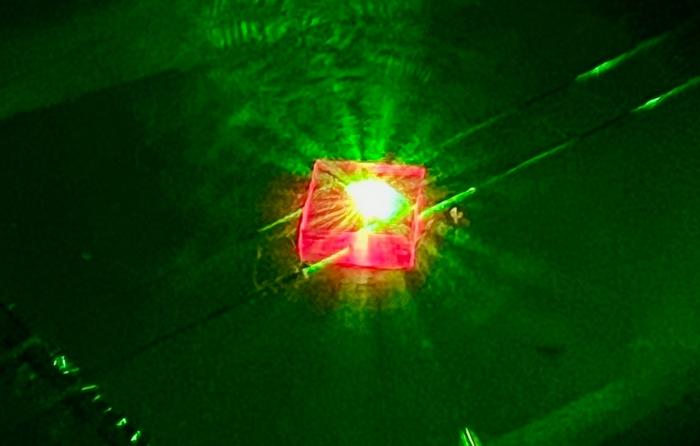
DARPA’s POWER program has hit a milestone: 800 W of laser-delivered power transmitted over 5.3 miles (8.6 km), captured by solar cells and used to pop popcorn, marking the longest and highest-power wireless power relay yet. Tested at White Sands Missile Range, the efficiency was ~20%, a major leap from previous power-over-distance records. The demonstration hearkens back to Nikola Tesla’s vision of wireless energy and is targeted at powering unmanned vehicles or disaster relief systems. DARPA will further refine relay-based and vertical beaming to address atmospheric loss. This proof‑of‑concept pushes the boundaries of power transmission technology, pointing toward future terrestrial and space applications. (Live Science)
Chinese Photonic Chip Transmits 38 Tbps via Light
Researchers at Fudan University unveiled a silicon photonic multiplexer chip capable of transmitting 38 Tbps using light rather than electricity. The chip interfaces with CMOS systems and is currently under review at Nature. Analysts anticipate practical deployment in 3–5 years. Intended for high-speed data transmission—such as large AI models and telecom networks—this advancement marks a crucial step toward post-Moore’s Law photonic computing. While its announcement came via a state media outlet, the innovation underscores China’s acceleration in semiconductor research and could accelerate global competition in optical computing technologies. (Tom’s Hardware)
UK Commits Extra £500M to Quantum Computing
The UK government will invest over £500 million in quantum computing over four years, supplementing a broader £670 million quantum R&D budget for the next decade. This funding emphasizes strengthening national capabilities—supporting the National Quantum Computing Centre and five quantum research hubs (£100 million from 2024). With £2.5 billion already pledged for quantum tech, this injection addresses security and economic resilience amid concerns over foreign takeovers. Targets include secure communications, medical imaging, and materials discovery. Analysts say the move positions the UK at the forefront of the global quantum race. (FT)
AI Tool Finds Hidden Cell Types in Tumors
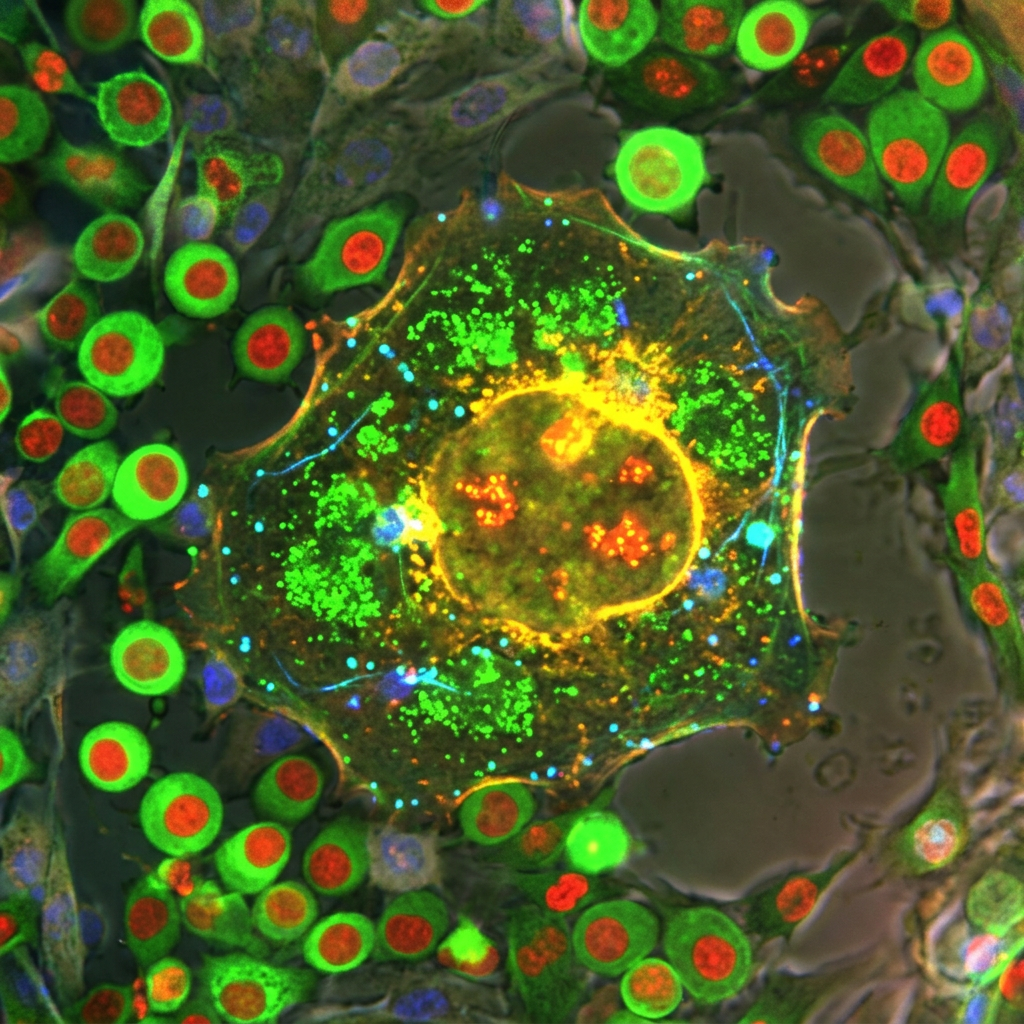
An AI tool dubbed AAnet has identified five previously unrecognized cell types within tumors, reshaping our understanding of tumor diversity. This deeper insight allows more precise targeting in oncology, as the varied microenvironments and cell behaviors are better understood. By cataloging these cell populations, researchers can tailor therapies and predict responses more accurately—potentially paving the way for personalized cancer treatment. The study’s implications highlight AI’s power to uncover hidden structures in biological systems that traditional methods miss. (Science Daily)
Scientists Reprogram Ant Roles via Neuropeptides
Researchers have demonstrated that altering just two neuropeptides can switch roles of leafcutter ants—turning defenders into nurses, gardeners, or harvesters. This molecular-level control highlights how simple chemical signals orchestrate complex social behaviors in eusocial insects. The findings offer profound implications for understanding neurobiology, behavior, and evolution of division of labor. Additionally, they present a compelling model for studying brain-function modulation and could inform future research on neural-behavior links across species. (Science Daily)
Compact Qubit with Built-in Error Correction
Scientists have designed a compact qubit featuring built-in error correction and claim it could scale up to a 1,000-qubit machine small enough for data centers. This breakthrough could enable more practical, error-resistant quantum computing systems. The team anticipates releasing this system by 2031, representing a crucial step toward operational quantum computers with manageable error rates and real-world applications. The innovation boosts optimism for quantum scalability beyond experimental setups. (Live Science)
New Moon June 25 & Mercury Sky Event
Tonight’s new moon (exact at 6:31 a.m. EDT June 25) sets the stage for a skywatching treat: Mercury reaches its highest evening elevation tomorrow, June 26, peaking near 8° altitude around 9:15 p.m. EDT. On June 27 at about 2 a.m., the crescent moon will pass within 3° of Mercury. While the conjunction occurs before dawn, observers can still catch them side by side in the evening sky. Ideal for amateur astronomers, this alignment offers a rare chance to spot Mercury near the young lunar crescent. (space.com)
Canada’s Advances in Quantum Error Correction
A recent review highlights Canadian innovations in quantum error correction and mitigation techniques. Canadian research institutes and firms have made theory and experimental strides to reduce noise effects in quantum information systems. This leadership is especially significant in 2025’s UN-designated International Year of Quantum. The paper outlines breakthroughs in codes, algorithms, and hardware strategies designed to tackle one of quantum computing’s bottlenecks: error resilience. Canada’s contributions reinforce its position as a key player in the global quantum ecosystem. (Arxiv)


Leave a Reply