CDC Expands Measles Vaccination Guidance for All International Travelers
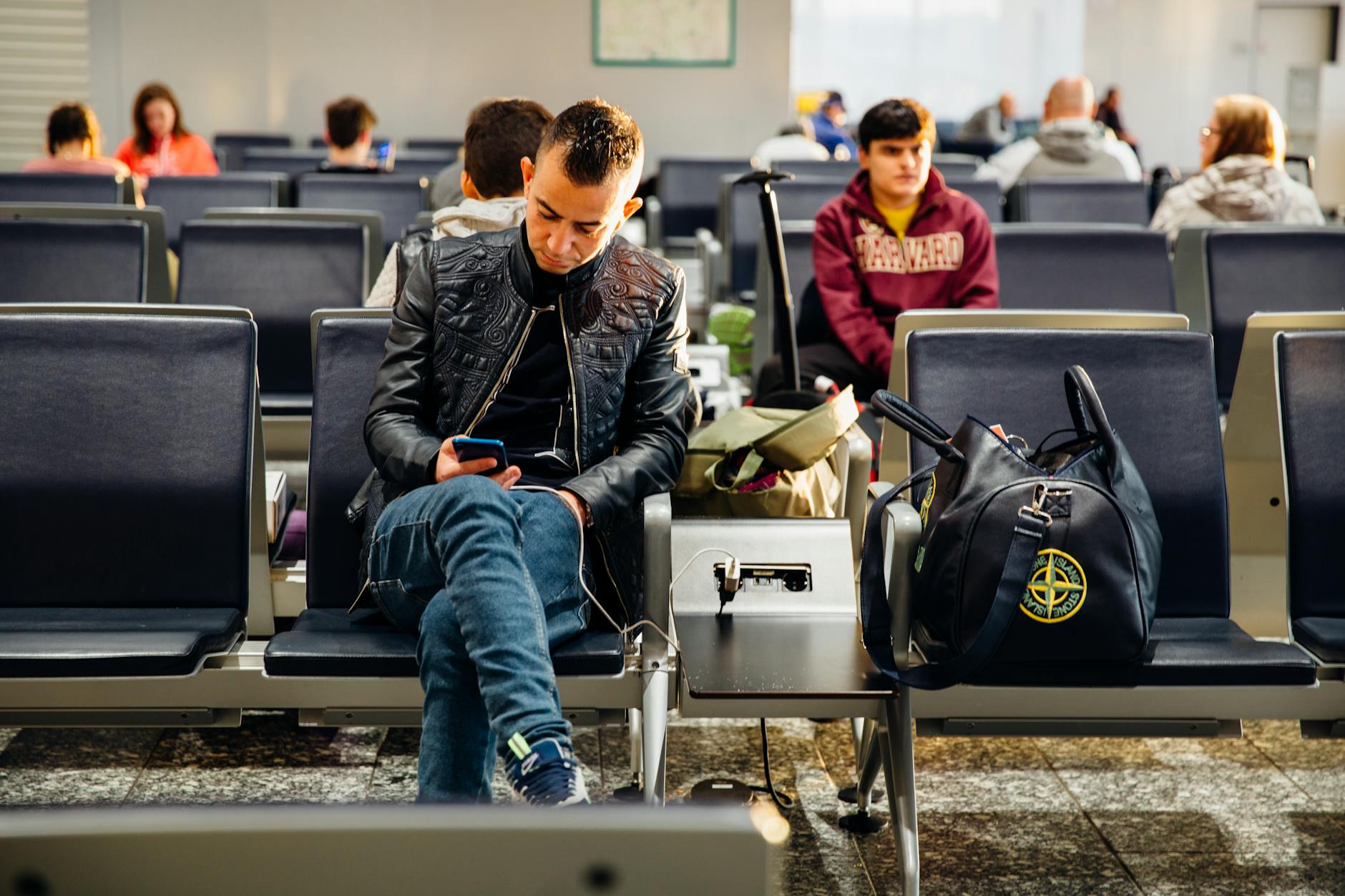
The CDC now advises all U.S. international travelers to receive measles vaccinations, regardless of destination, due to rising cases and in-transit exposures. Previously, vaccinations were emphasized mainly for travel to outbreak regions. The updated guidance follows a Colorado outbreak linked to an international flight. The CDC recommends two MMR vaccine doses for individuals over one year old and an early dose for infants aged 6–11 months who are traveling. This change reflects a shift from localized outbreaks to transmission during travel, with over 1,000 measles cases reported in the U.S. in 2025. (AP)
National Academies Face Severe Downsizing Amid Trump-Era Funding Cuts
The National Academies of Sciences, Engineering, and Medicine (NASEM) confront significant downsizing due to prolonged budget deficits and recent reductions in government contracts under President Trump’s administration. As a private, nonprofit organization, NASEM relies heavily on federal funding to conduct studies and provide scientific advice. The cuts threaten the organization’s capacity to fulfill its mission, potentially impacting the broader scientific community and policy-making processes that depend on NASEM’s expertise. (Science)
American Science at a Crossroads as Cuts and Visa Policies Trigger Brain Drain
Ardem Patapoutian’s journey—from war-torn Lebanon to Nobel-winning neuroscience in the U.S.—embodies the American scientific dream. But recent federal cuts and immigration restrictions threaten that legacy. Patapoutian’s NIH funding was frozen, prompting offers from China, which he declined out of patriotism. Other scientists are less anchored, fleeing for stability in Europe and China. Visa cancellations, halted grants, and political attacks on academia are driving an exodus of talent and stalling global collaboration. Critics warn that this dismantles a system built since WWII that made the U.S. a scientific leader. Without urgent course correction, its dominance may be lost. (New York Times)
Colorado Reports Additional Cases in Airport-Linked Measles Outbreak
Colorado health officials have confirmed three new measles cases connected to exposure at Denver International Airport and a Turkish Airlines flight, increasing the outbreak total to six. The new cases include two unvaccinated adults from El Paso County and a vaccinated adult from Arapahoe County. The initial patient was an out-of-state resident who traveled while infectious. This cluster highlights the risk of measles transmission during air travel, emphasizing the importance of vaccination and awareness of potential exposure in transit environments. (CIDRAP)
Wildlife Trade Poses Escalating Zoonotic Threat Amid Waning Global Surveillance
Live animal markets like Jakarta’s Jatinegara remain hotspots for disease spillover, fueling a vast, poorly regulated wildlife trade linked to past and potential pandemics. Despite lessons from COVID-19, high-risk practices persist as pathogen monitoring efforts falter. Pangolins and bats harbor coronaviruses with pandemic potential, but weak regulation, secrecy, and dwindling political support hamper research. Scientists are mapping disease risks along trade routes, yet fear, stigma, and funding cuts—especially from the U.S.—undermine surveillance. With the dismantling of key programs and global trust eroding, researchers warn the world is unprepared for the next outbreak, which could already be incubating unnoticed. (Nature)

AI Pioneer Launches LawZero to Develop ‘Honest’ Artificial Intelligence
Yoshua Bengio, a leading AI researcher, has established LawZero, a nonprofit dedicated to creating “honest” AI systems designed to detect and prevent deceptive behaviors in autonomous agents. With $30 million in initial funding, the organization aims to develop “Scientist AI,” a model that assesses the probability of harmful actions by other AI systems, promoting transparency and safety. Unlike current generative AI models, Scientist AI will provide probabilistic responses, reflecting uncertainty and humility. LawZero seeks to collaborate with governments and AI labs to implement these oversight mechanisms. (The Guardian)
Law Clerk Terminated for Submitting AI-Generated Legal Brief with Fabricated Citations
A recent law school graduate was dismissed after using ChatGPT to draft a court filing that contained fabricated legal citations. The unlicensed clerk’s submission led to sanctions against the supervising attorney, who failed to verify the brief’s accuracy. The incident underscores the legal profession’s challenges in integrating AI tools responsibly and highlights the necessity for thorough human oversight to ensure the accuracy and reliability of legal documents. (Ars Technica)
Planetarium Visualization Leads to New Insights on Oort Cloud Structure
While developing a new planetarium show, scientists at the American Museum of Natural History discovered an unexpected spiral pattern in the Oort Cloud, challenging the traditional view of it as a spherical shell. This visualization prompted further research, suggesting that the Oort Cloud’s structure may be more complex, with implications for understanding comet trajectories and solar system dynamics. The findings demonstrate how creative tools like planetarium simulations can inadvertently lead to significant scientific discoveries. (AP)
Rare ‘Doomsday’ Oarfish Washes Ashore on Tasmania’s West Coast
A rarely seen oarfish, known for its immense size and deep-sea habitat, was found on Ocean Beach near Strahan, Tasmania. Measuring approximately three meters, the discovery garnered attention due to the oarfish’s elusive nature and cultural associations as a harbinger of natural disasters. Marine experts note that oarfish inhabit depths of 150 to 500 meters and are seldom observed, making this find significant for both scientists and the public (The Guardian)
Ancient Feces Reveal World’s Oldest Butterfly Fossils
Researchers have identified the world’s oldest butterfly fossils within ancient feces, providing new insights into the evolution of these insects. The discovery sheds light on the early history of butterflies and their ecological interactions, offering a unique perspective on the co-evolution of butterflies and flowering plants. This finding contributes to our understanding of insect evolution and the dynamics of ancient ecosystems. (Science)
Thanks for reading. Let’s be careful out there.
WORDS: The Biology Guy.




Leave a Reply