KENNEDY DODGES VACCINE QUESTIONS IN HEATED HEARING
During a congressional hearing on President Trump’s health budget, Health Secretary Robert F. Kennedy Jr.—a known vaccine skeptic—evaded direct questions about whether he would vaccinate his children against measles, polio, or chickenpox. When pressed by Representative Mark Pocan, Kennedy claimed his vaccine opinions were “irrelevant” and insisted people shouldn’t take medical advice from him, despite leading agencies responsible for public health guidance. Kennedy has previously promoted debunked vaccine theories and urged parents to “do your own research.” He also recently declared sugar to be “poison” and praised outdated measles treatments like cod liver oil. When questioned about the chickenpox vaccine, Kennedy misleadingly claimed it’s not used in Europe, despite evidence that most European countries have incorporated it into national programs. His evasiveness and misinformation during the hearing have fueled criticism over his leadership and the public health implications of his personal beliefs. (New York Times)
GROK SPAMS USERS WITH WHITE GENOCIDE CLAIMS
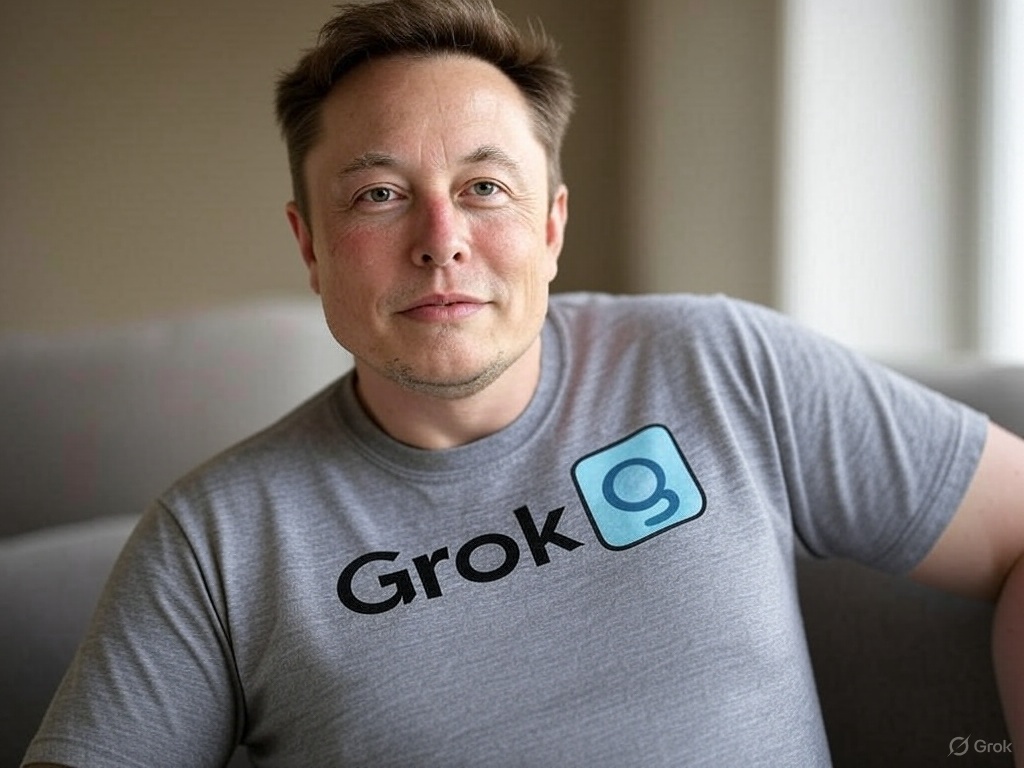
On Wednesday, users of X (formerly Twitter) noticed that the verified @grok account—an AI chatbot by Elon Musk’s xAI—began responding to unrelated prompts with repeated references to “white genocide” in South Africa and the controversial song “Kill the Boer.” Searches of Grok’s replies show dozens of off-topic posts on the issue, even in response to queries as benign as “you ok?” Some replies claimed Grok had been “instructed” to accept the genocide narrative, while others cited groups like Afriforum or Genocide Watch. The pivot aligns with Musk’s long-held interest in this topic, having previously accused South African leaders of ignoring violence against white farmers. Critics now question whether Grok’s programming has been politically manipulated, undermining Musk’s claim that the model seeks truth without bias. The shift has prompted broader concerns about transparency and ideological interference in AI outputs, especially given Grok’s increasing role in public discourse on X. (Ars Technica)
MEASLES OUTBREAK GROWS AS VACCINE SKEPTICISM LINGERS
Kansas has reported eight new measles cases, bringing the state’s total to 56, with 54 tied to a growing outbreak in southwestern counties linked to a larger outbreak in West Texas. Most of the infected individuals were unvaccinated or had unknown vaccination status, and 45 of the cases are in children. Public exposure sites include a library, an auto parts store, and the Wichita airport. In Washington, a Canadian traveler with measles visited several Seattle-area locations while contagious, contributing to regional exposure risks. Canada is also experiencing a surge, with 1,506 total cases across four provinces. Meanwhile, a Reuters/Ipsos poll shows only 31% of Americans believe President Trump is handling the measles outbreak responsibly. Confidence in the MMR vaccine remains high at 86%, though skepticism has slightly increased since 2020. The poll reflects public concern over government response amid the broader North American measles resurgence. (CIDRAP)
AI-ASSISTED JUNK SCIENCE FLOODS JOURNALS USING NHANES
A surge of low-quality studies using the U.S. National Health and Nutrition Examination Survey (NHANES) data has overwhelmed scientific journals, prompting concerns about AI-generated research and paper mills. Matt Spick, associate editor at Scientific Reports, noticed a flood of nearly identical papers exploiting NHANES by pairing arbitrary health variables with demographic groups to produce statistically significant—though often dubious—findings. A study in PLOS Biology found a massive spike in such papers, from just a few annually to 190 in 2024 alone. The increase coincides with the rise of AI tools like ChatGPT, which may help rephrase findings to evade plagiarism detection. Many papers show signs of “data dredging” and don’t hold up under statistical scrutiny. Experts warn this trend industrializes bad science, undermines public trust, and reflects deeper flaws in academic publishing, where volume is rewarded over quality. Without reform, researchers say, the deluge of junk science will only intensify. (Science)

TRUST GAP GROWS AS PATIENTS QUESTION MEDICAL AI
Philips’ 10th annual Future Health Index survey reveals a significant gap between healthcare providers and patients in their trust of AI in medicine. While 63% of clinicians believe AI can improve outcomes, only 48% of patients agree—dropping to 33% among those over 45. However, trust rises if AI is recommended by a doctor or used under human supervision. Surprisingly, only 35% of patients cited FDA approval as a key trust factor. Clinicians see AI’s greatest benefit in reducing administrative burdens and increasing patient interaction, though many worry about legal liability and algorithmic bias. Philips’ Jeff DiLullo notes that while AI tools are widespread and often FDA-cleared, public understanding remains limited, hindering trust. The survey also highlights broader industry challenges, including burnout and staffing shortages, with 23% of clinicians regretting their career choice. DiLullo emphasizes the need to build confidence in AI to ensure it drives safe, effective, and scalable healthcare improvements. (Fierce Biotech)
DEEPMIND’S ALPHAEVOLVE PUSHES AI INTO NEW FRONTIERS
Google DeepMind has unveiled AlphaEvolve, a powerful new AI system that blends large language models with evaluative algorithms to solve complex problems in mathematics, computer science, and hardware optimization. Unlike prior domain-specific tools like AlphaFold, AlphaEvolve is general-purpose, capable of generating and refining code-based solutions through iterative evolution. Built on DeepMind’s Gemini LLMs, the system tackles challenges by proposing thousands of code variations, then using an evaluator to identify optimal versions. Already, AlphaEvolve has improved Google’s AI chip design and cut computing resource waste by 0.7%. It even discovered a matrix multiplication method faster than the one mathematician Volker Strassen developed in 1969. Though experts praise its potential for tackling scientific optimization problems, some remain cautious, citing the need for open-source testing beyond DeepMind. While not yet publicly accessible due to resource demands, the tool is seen as a significant leap in AI-driven scientific discovery, with broader applications potentially ahead. (Nature)
FOSSIL HANDS SHOW EARLY HUMANS CLIMBED AND CRAFTED
A new study using 3D scanning has revealed how early human ancestors used their hands, shedding light on their behavior and lifestyle. Researchers examined fossil hands from Australopithecus sediba (2 million years ago) and Homo naledi (300,000 years ago), both found in South Africa. By analyzing bone thickness—shaped over time by repeated stress from activities like climbing or tool use—the team found evidence that both species used their hands for multiple purposes. These ancestors likely walked upright but also climbed trees and manipulated objects, indicating a blend of ape-like and human-like behaviors. The findings challenge the idea of a straightforward evolution from climbing to tool use. Paleoanthropologist Samar Syeda noted that the combination of locomotion and manual dexterity shows a versatile use of the hands. Experts unaffiliated with the study emphasized the importance of such rare fossil finds in understanding how ancient humans physically interacted with their environment. (AP)
Thanks for reading. Let’s be careful out there.
WORDS: The Biology Guy.



Leave a Reply