GROUPS URGE KENNEDY TO CURB MEAT ANTIBIOTICS
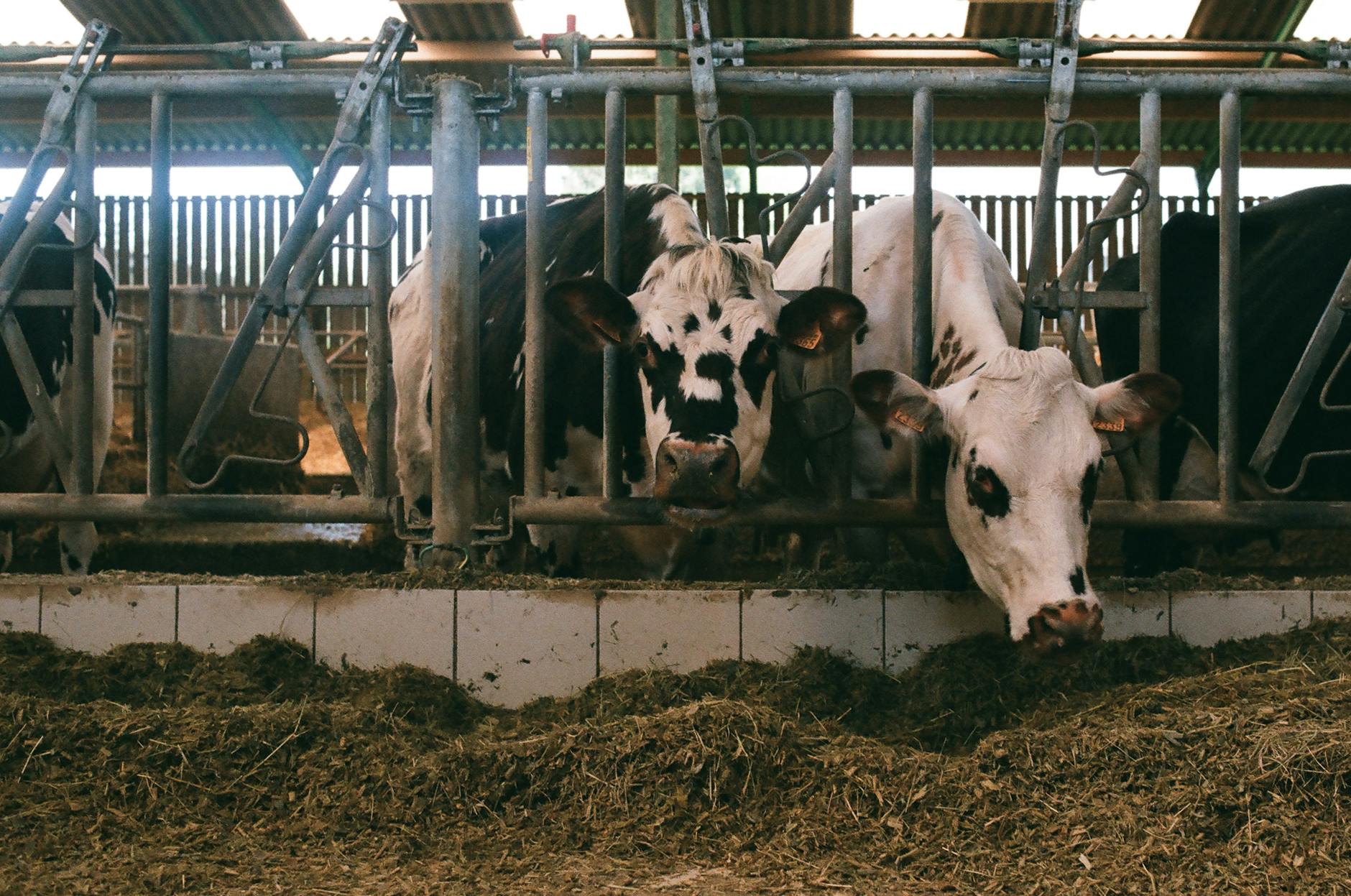
A coalition of 37 public health, food safety, and consumer advocacy groups is urging HHS Secretary Robert F. Kennedy Jr. to crack down on antibiotic overuse in the U.S. meat industry. In a recent letter, the coalition emphasized that nearly two-thirds of medically important antibiotics sold in the U.S. are used in food-animal production—contributing significantly to the rise of antibiotic-resistant “superbugs.” They are calling for a ban on the routine use of antibiotics to prevent disease in livestock without a diagnosed illness, a practice often linked to poor farming conditions. The groups also want Kennedy to set national reduction targets, limit the duration of antibiotic use in animals, and establish a comprehensive monitoring system. While human antibiotic use has declined with improved stewardship, animal use has risen over 10% since 2017. Advocates argue Kennedy has the authority to act now to make the U.S. food system safer and stem the growing resistance crisis. (CIDRAP)
TRUMP ADMINISTRATION FIRES CLIMATE REPORT SCIENTISTS TEAM
The Trump administration has dismissed the entire team of scientists working on the next *National Climate Assessment*, putting the future of the federally mandated report in jeopardy. The assessment, updated every few years since 2000, offers vital insights into how climate change affects health, infrastructure, agriculture, and the economy. Used by local governments and businesses, it guides climate adaptation efforts nationwide. In an email, contributors were told the report’s scope is being “re-evaluated” and their roles terminated. Experts say this could halt or compromise the report entirely. The administration also canceled a key contract supporting the Global Change Research Program, which coordinates the assessment. Critics fear the administration may attempt to rewrite or water down the report’s scientific findings. Without the new assessment, policymakers would be forced to rely on outdated information. Scientists warn that the decision risks silencing critical knowledge just as the impacts of climate change continue to escalate. (New York Times)
ASTRONOMERS DISCOVER GIANT MOLECULAR CLOUD NEAR EARTH
Astronomers have discovered a massive, previously undetected molecular cloud—named Eos—just 300 light-years from Earth, making it the closest known cloud of its kind. If visible to the naked eye, it would span an area 40 times the width of the moon. Weighing approximately 3,400 times the mass of the sun, *Eos* escaped earlier detection because it contains little carbon monoxide, the typical marker used in identifying such clouds. Instead, researchers found it by detecting far-ultraviolet light from hydrogen using data from the Korean satellite STSAT-1. This marks the first molecular cloud discovered using this method. Molecular clouds like *Eos* are stellar nurseries, where dense gas and dust clump together to form stars and planets. Scientists are excited about its proximity, which offers an unprecedented opportunity to study early stages of solar system formation. The discovery challenges assumptions about our galactic neighborhood and demonstrates the value of exploring the cosmos with new techniques. (CNN)
MEASLES CASES SKYROCKET GLOBALLY AMID VACCINE DECLINES
Measles cases have surged dramatically in 2024, with Europe seeing a tenfold increase and the Americas experiencing an elevenfold rise compared to 2023, according to the ECDC and WHO. Europe reported over 35,000 cases, with Romania accounting for 87% and 22 of 23 confirmed measles-related deaths. Most cases involved unvaccinated children under age 5, highlighting post-pandemic declines in vaccination. Only Hungary, Malta, and Portugal maintained 95% coverage for both vaccine doses. The Americas reported 2,318 cases across six countries, with the U.S. experiencing the largest outbreak (900 cases) and all three regional deaths. Travel-related cases are growing, with recent infections in Texas, Colorado, and California linked to domestic and international outbreak areas. Health officials warn that unvaccinated populations, including migrant communities and vaccine-hesitant groups, are especially vulnerable. The resurgence signals a return to pre-pandemic seasonal trends but at dangerously high levels, driven by falling immunization rates and increased global travel. (CIDRAP)
Sign up for the Daily Dose Newsletter and get every morning’s best science news from around the web delivered straight to your inbox? It’s easy like Sunday morning.
INDONESIAN STUDENTS HOSPITALIZED AFTER CONTAMINATED SCHOOL MEALS
More than 170 students in Indonesia have fallen ill in two separate food poisoning outbreaks tied to the government’s free nutritious meal program, a key initiative of President Prabowo Subianto aimed at improving child nutrition and educational outcomes. The most severe case occurred in West Java’s Cianjur regency, where 165 students from two schools were hospitalized after consuming meal packages, with many reporting dizziness, vomiting, and diarrhea. Affected students noted a foul odor from shredded chicken served that day. Authorities declared a state of emergency, suspended meal production, and launched investigations into possible microbial contamination, though lab results are still pending. Concerns have been raised over food handling practices and plastic trays used for packaging. Officials are providing additional training for food handlers and have begun inspecting kitchens, utensils, and water sources. This marks at least the sixth food poisoning incident since the program began in January, raising questions about its safety protocols. (Channel News Asia)
IMMUNOTHERAPY ERASES TUMORS IN GROUNDBREAKING CANCER TRIAL
In a groundbreaking clinical trial at Memorial Sloan Kettering Cancer Center, researchers used the immunotherapy drug dostarlimab to treat 103 cancer patients with mismatch repair-deficient tumors—genetic mutations that make these cancers more responsive to immune system attacks. Unlike standard treatment involving surgery, chemotherapy, or radiation—often with debilitating side effects—patients received only immunotherapy. The results were remarkable: in 49 rectal cancer patients, tumors vanished and haven’t returned after five years; 35 of 54 patients with other cancers (including stomach, liver, and prostate) also saw complete tumor regression. Only five cases recurred, and most responded to additional treatment. Though the drug costs $11,000 per dose and isn’t yet covered for all cancer types, it is approved for uterine cancers and included in some treatment guidelines. The study’s success signals a shift toward non-invasive treatment for certain cancers, offering new hope and fewer long-term effects. However, access and insurance coverage remain key challenges. (New York Times)
JAPAN DEBUTS LARGEST DIRECT AIR CAPTURE FACILITY
Japan has unveiled its largest direct air capture (DAC) facility at the Osaka Kansai Expo, showcasing promising carbon removal technology aimed at reaching carbon neutrality by 2050. Operated by the Research Institute of Innovative Technology for the Earth (RITE), the system uses amine-coated mesh to absorb CO₂ from the air, releasing it through low-temperature steam. The recovered CO₂—over 95% pure—is then converted to methane fuel by Osaka Gas for use at the Expo. While DAC is energy-intensive and currently costly (about $625 per ton of CO₂), it offers a solution for emissions from sectors like aviation where traditional carbon capture isn’t viable. Other Japanese institutions, including Kyushu and Nagoya Universities, are also exhibiting experimental DAC technologies aimed at improving efficiency and accessibility. Critics warn DAC should not replace emissions reduction efforts, but experts emphasize its vital role in offsetting unavoidable emissions. The Expo highlights both current capabilities and the growing importance of DAC. (Asahi Shinbun)
NETHERLANDS OPENS SEAL RESCUE CENTER FOR MARINE CONSERVATION
At the newly opened World Heritage Center (WEC) in Lauwersoog, Netherlands, a rescued 4-month-old gray seal named Witje now swims in one of nine sea-fed tanks designed to mimic his natural environment. Orphaned and injured, Witje is among roughly 200 seals treated annually at the facility, many of them pups separated from their mothers or harmed by marine debris and boat strikes. Seal entanglement in waste, particularly fishing nets, is a growing problem, according to curator Sander van Dijk. The WEC, which replaces the 1971-founded Pieterburen Seal Center, features 12 intensive care units and treats up to 70 seals at a time. Costing over €40 million, the center is also an educational hub focused on the Wadden Sea, a UNESCO World Heritage Site. With tanks overlooking the sea and natural saltwater aiding recovery, the facility aims to return rehabilitated seals like Witje back to the wild, highlighting marine conservation efforts. (AP)
VIETNAM WAR STUDY LINKS CHILDHOOD TRAUMA TO LIFELONG ILLNESS
Nguyen Minh spent his childhood amid the violence of the Vietnam War, fleeing bombings and losing classmates and loved ones. Decades later, as a retired sociologist, he is helping lead the Vietnam Health and Aging Study (VHAS), launched in 2018, to understand how early-life war exposure affects older Vietnamese adults. The study, a collaboration with University of Utah sociologist Kim Korinek, surveys over 2,400 people from war-affected regions, collecting data on their trauma exposure, physical and mental health, and biological markers like cortisol and DNA methylation. Findings show that younger children during the war report more stress-related illnesses later in life, while women—often overlooked despite vital war contributions—exhibit higher rates of heart disease than male veterans. VHAS challenges U.S.-centric war narratives and highlights long-term trauma in the Global South. Researchers hope future funding will allow them to study the war’s indirect effects on the next generation, including children of survivors. (Science)


Leave a Reply