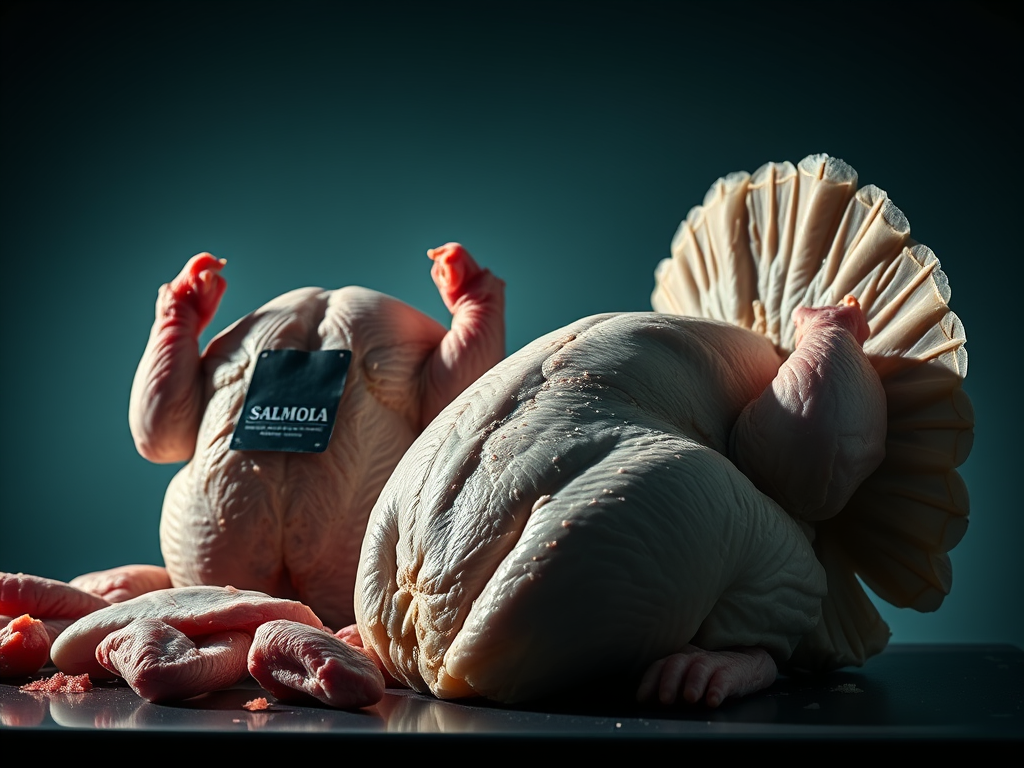
The recent decision by the U.S. Department of Agriculture (USDA) to withdraw the proposed Salmonella Framework for Raw Poultry Products defies logic, public health science, and common sense. This inexplicable move underscores a disturbing trend in recent regulatory rollbacks that jeopardize American public health, a concern validated by the latest Centers for Disease Control and Prevention (CDC) study highlighting Salmonella as one of the leading causes of foodborne illness in the United States.
According to the USDA’s own data, approximately 167,000 Salmonella infections annually are directly linked to chicken and turkey products. The withdrawn framework aimed to label poultry products with Salmonella levels higher than 10 colony-forming units per gram or those containing highly virulent serotypes as “adulterated.” This categorization would have prevented contaminated products from entering grocery stores and restaurants, significantly curbing the transmission of this harmful pathogen.
Yet, the USDA cited concerns about legal authority, economic impact, and the scientific validity underpinning the proposed rule. The National Chicken Council celebrated the move, claiming the withdrawn rule was legally questionable and scientifically flawed. Ashley Peterson, NCC’s senior vice president, argued that the framework “would have had no meaningful impact on public health.”
However, these claims starkly contradict evidence presented by the CDC’s recent extensive study on foodborne illnesses. Published data explicitly positions nontyphoidal Salmonella among the top pathogens responsible for severe illnesses, hospitalizations, and fatalities. Specifically, the CDC reports approximately 1.3 million annual Salmonella-related illnesses, resulting in 12,500 hospitalizations and 238 deaths. Clearly, the public health implications are far from trivial.
The CDC study further emphasizes the underreporting and underdiagnosis of Salmonella infections, highlighting the urgency of regulatory interventions precisely like the withdrawn USDA framework. “We estimated the number of illnesses caused by foodborne pathogens by adjusting for undercounts in surveillance data,” the CDC authors note. This means the documented figures represent only a fraction of the actual public health burden.
The CDC highlights the disproportionate severity of certain Salmonella serotypes, such as Enteritidis, Newport, and Typhimurium, each causing tens of thousands of illnesses annually. By ignoring such crucial differentiation and withdrawing the framework, the USDA essentially disregards potent scientific evidence identifying precisely where intervention could significantly reduce public health risks.
Consumer advocates are rightfully dismayed. Brian Ronholm, director of food policy at Consumer Reports, notes, “The USDA’s decision is disappointing and troubling given the large number of poultry plants that pose higher risks.” Similarly, Sarah Sorscher from the Center for Science in the Public Interest underscores a grim prediction: “Make no mistake: Shipping more Salmonella to restaurants and grocery stores is certain to make Americans sicker.”
This withdrawal is not an isolated incident but part of a troubling broader trend of slashing food safety measures. Earlier this year, the Trump administration eliminated the USDA’s National Advisory Committee on Microbiological Criteria for Foods and delayed Food and Drug Administration rules aimed at tracing contaminated foods through supply chains. These successive cuts cumulatively endanger public health by systematically dismantling preventive measures and oversight designed explicitly to protect consumers.
Economic considerations cited by the USDA to justify withdrawal also lack foresight. The USDA states the Biden-era proposal “would have imposed significant financial and operational burdens on American businesses and consumers.” Yet, the economic costs associated with foodborne illnesses—hospitalizations, lost productivity, and long-term health implications—far outweigh preventive regulatory costs. This shortsighted prioritization of immediate industry convenience over long-term public health and economic stability is deeply misguided.
Furthermore, the argument regarding scientific validity and data underpinning the proposed rule appears deliberately misleading. The CDC’s rigorous analysis, utilizing advanced diagnostic methodologies and active surveillance, provides robust and comprehensive evidence of Salmonella’s extensive public health impacts. The USDA’s suggestion that further study is needed amounts to an evasive tactic rather than a commitment to evidence-based policymaking.
Rather than capitulate to industry pressures or unfounded economic fears, the USDA should heed the overwhelming scientific consensus clearly presented by the CDC. Regulatory measures must prioritize public health above transient economic inconveniences, particularly when such inconveniences pale in comparison to the profound human and economic costs associated with preventable foodborne diseases.
So time for Real Talk… The USDA’s contradictory stance, particularly in light of unequivocal data from the CDC, is not merely puzzling—it is profoundly irresponsible. Americans deserve better protections from preventable foodborne pathogens. Restoring this withdrawn rule and maintaining vigilant oversight must be immediate priorities to prevent unnecessary illness and death. Anything less represents an unacceptable compromise of public safety.
WORDS: brice.



Leave a Reply