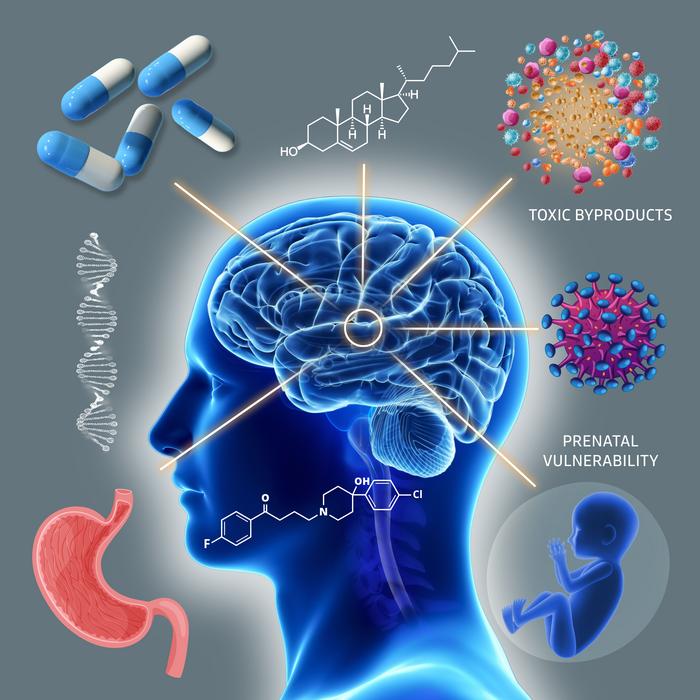
A powerful editorial published today in Brain Medicine raises alarm about a previously overlooked threat to brain development and public health: the disruption of sterol biosynthesis by common prescription medications.
The editorial, authored by Brain Medicine Editor-in-Chief Julio Licinio, responds to a recent article by Korade and Mirnics (https://doi.org/10.61373/bm025p.0011) that identified over 30 FDA-approved drugs—including widely prescribed psychiatric medications such as aripiprazole, trazodone, haloperidol, and cariprazine—that inhibit DHCR7, a critical enzyme in cholesterol synthesis.
“This inhibition raises the levels of 7-dehydrocholesterol (7-DHC), suppresses cholesterol synthesis, and generates a sterol profile indistinguishable from that seen in congenital metabolic disorders,” Dr. Licinio explains in the editorial. “This is not a hypothetical concern—it is empirically validated in cell lines, rodent models, and human blood samples.”
The editorial highlights that these disruptions are particularly concerning during pregnancy and other developmental stages, but may have been systematically overlooked in drug safety evaluations. Even more alarming is that combinations of these medications—a common reality in clinical settings—can produce synergistic effects, elevating toxic metabolites to levels 15 times above normal.
“What Korade and Mirnics reveal is especially disturbing in this context,” notes Dr. Licinio. “If individual drugs can mimic a metabolic disorder, what are we to make of their interactions? We are prescribing molecular cocktails with no empirical knowledge of how they alter developmental neurochemistry.”
Sign up for the Daily Dose Newsletter and get every morning’s best science news from around the web delivered straight to your inbox? It’s easy like Sunday morning.
The editorial points out that approximately 1-3% of the general population carries single-allele DHCR7 mutations that may make them particularly vulnerable to these medications. A single prescription could potentially tip their biochemical balance, with two or more medications sending them into a state resembling Smith-Lemli-Opitz Syndrome, a serious developmental disorder.
Key Implications
- Widely used psychiatric medications and other drugs may disrupt sterol biosynthesis, potentially causing developmental harm
- Current drug approval processes fail to account for polypharmacy effects, despite their prevalence
- Genetic vulnerability in a significant portion of the population increases risk
- Developmental vulnerability extends beyond pregnancy to include infancy, childhood, and adolescence
- Regulatory changes and clinical practice adjustments are urgently needed
Recommendations for Action
The editorial issues specific recommendations for immediate changes in clinical practice:
- Pregnant women with DHCR7± genotype should avoid medications with 7-DHC-elevating side effects
- Genetic testing should be considered for women of childbearing age who require these medications
- Polypharmacy involving drugs that disrupt sterol synthesis should be avoided during pregnancy
- Patients with Smith-Lemli-Opitz Syndrome should never receive medications with 7-DHC-elevating effects
For regulatory bodies and the pharmaceutical industry, Dr. Licinio calls for mandatory sterol biosynthesis screening in developmental safety assessments, abandoning “the fiction of monotherapy testing,” and developing evaluation methods that reflect real-world prescribing patterns.
“This is a call to action. Not someday. Now,” concludes Dr. Licinio.
IMAGE CREDIT: Julio Licinio




Leave a Reply