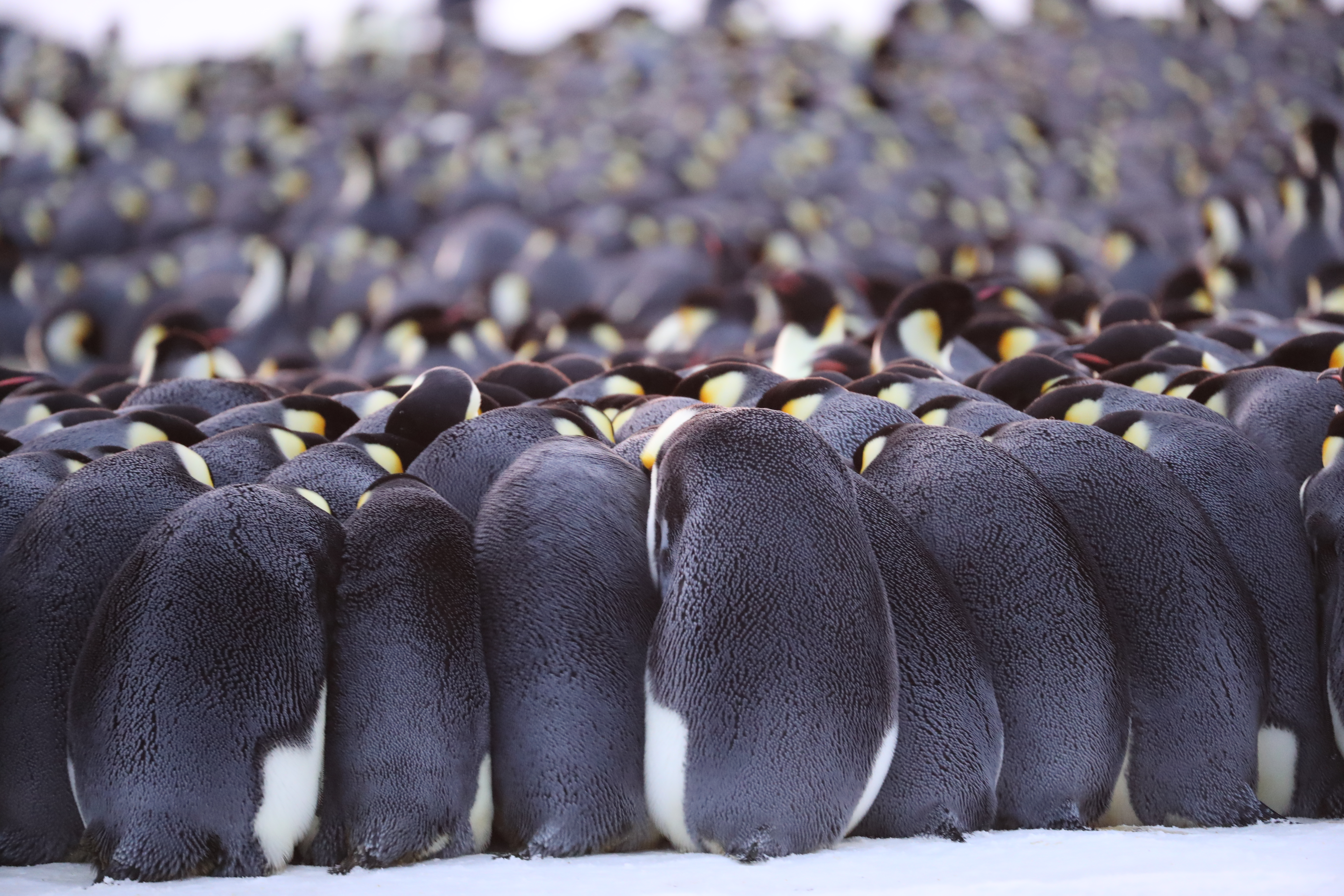
Best known for his immersive wildlife storytelling and astonishing close-up encounters with the natural world, National Geographic explorer and filmmaker Bertie Gregory has taken audiences into the heart of the wild with cameras rolling. In his latest series which premiers tonight, Secrets of the Penguins, Gregory dives beak-first into the lives of one of the world’s most beloved birds—challenging our assumptions, capturing never-before-seen behaviors, and uncovering surprising emotional depth along the way.
From the ice-locked colonies of Antarctica to the cactus-studded cliffs of the Galápagos, Gregory and his team spent months in often unforgiving environments to bring viewers closer to penguins than ever before. In this conversation, we talk about the origins of the series, the surprises that unfolded during filming, and why, when it comes to penguins, nothing ever goes exactly as planned.
While I’m getting this ready—I really enjoyed it, obviously. Secrets of the Penguins was fantastic. I’ll jump right in, because I know you’ve got a thousand things going on. So, where did the idea for this come from? From the beginning?
Yeah, I think the Secrets of franchise is one of National Geographic’s most well-known wildlife series. They’ve covered a lot of large, intelligent, social mammals—elephants, whales—and then went a bit quirkier with octopuses. So, where do you go next? Penguins came up, and they approached me—since I’ve filmed penguins a lot—asking, “What do you think?”
And honestly, I was a bit worried. When you call something Secrets of the Penguins, you set the bar really high. I knew from firsthand experience that penguins live in incredibly difficult places to film, and there have already been a lot of penguin documentaries—March of the Penguins being one of the iconic ones. So I thought I knew penguins going into this project. I was wrong.
Every shoot we went on, just when I thought they’d hit their limit, they’d level up and do something totally unexpected. I had my mind blown. And I hope the viewers will have their minds blown too.
When you say you thought you knew them beforehand—because that was going to be my next question—how do you prepare for a project like this? Whether you’re already familiar with penguins or not, what does that process look like when you’re going to be that close to them? Do you study their behavior in advance? Watch how they act in certain situations?
Yeah, there’s a huge research phase. While the teams in the field are small, more than 100 people worked on the series overall. You’re scouting for clues, figuring out, “Okay, is there a secret here?” And of course, penguins don’t read the script—which is infuriating. They don’t do what you expect, but they often do something you never could have expected.
All of the most amazing secrets we uncovered weren’t planned. That’s not to say it was all luck—we did get lucky—but in wildlife filmmaking, you make your own luck by spending time. That was key. Tailsmith, the production company, gave us time, and that led to our success.
For the emperor penguin episode—the first episode—we had an extraordinary amount of time. We did two shoots. One of them was two and a half months long. The other was 274 days, one of the longest wildlife shoots ever. And that’s how we captured new behavior: by being there for so long, getting to know the penguins, and trying to predict what they’d do next.
When you shot this, did you do it in a specific order? Like, did you start with the emperors and then move on to the African penguins? Or were you jumping around constantly?
Totally. I mean, people usually think of penguins as living in cold places, on icebergs—but that’s only part of the story. We didn’t do too much hopping around—our first bad penguin pun—because logistically, these places are so hard to get to that once you’re there, you just stay put for a while and then move on to the next location.
In terms of order, I actually did the Galápagos penguin shoot first. That was a terrible way to acclimate to the cold water we faced later in Antarctica. But it was nice to start there because, as you see in the second episode, penguins don’t only live in snowy places. There are 18 species, and many live in really bizarre habitats—like the sides of cactus-covered volcanoes in the Galápagos, right on the equator.
Even within the first 10 minutes of the series, you can tell climate change is going to be an inescapable theme. How has it affected penguin populations globally?
Yeah—big time. But I’ll say this: although climate change has a massive impact on penguins—and on us—it’s not the only threat they face. I bring that up because climate change feels like such a huge, overwhelming issue that it can make people feel helpless. But the other challenges penguins face are often more tangible and solvable.
If someone falls in love with penguins because of this series, I’d say: even though they live far away, you can have a positive impact. That starts by making where you live just a bit wilder. Penguins are indicators of ocean health, and the oceans connect us all. So even planting more native plants in your garden or putting up a bird box contributes.
And of course, every time you spend money, you’re voting with your wallet. Yes, the food you eat, the car you drive, the clothes you wear—these can have negative effects. But you can flip that. Make better choices and you have a positive impact. I think we often focus too much on doom and gloom. That’s not what this series is about. I believe we should celebrate the wins and think positively about the solutions.
I’m always fascinated by the role of fathers in wildlife behavior. Because, let’s be honest, a lot of the time, they’re kind of useless.
[Laughs] Yeah, totally.
But I just saw something about an African alligator that was very hands-on with its eggs and hatchlings. So what about penguins? Are the males involved or more hands-off?
No, male penguins are absolutely vital to chick survival. That’s especially true for emperor penguins. The female lays the egg and then almost immediately hands it over to the male for incubation. That pass-off is incredibly important. Emperor penguins don’t have nests. The egg is kept on the top of the male’s feet. If it’s dropped and sits on the ice for more than a minute, the chick will die.
We actually filmed something never seen before—adult emperor penguins practicing the egg pass with a snowball. It was amazing to witness. After the handoff, the female leaves the colony to replenish her fat reserves, leaving the male to care for the egg during the harshest part of the year—cold, dark, brutal.
But the males huddle together for warmth, and what’s incredible is the timing. The female returns just days after the chick hatches, almost like she has an internal clock. She arrives with food and then the parents take turns raising the chick. It’s a brilliant bit of teamwork.
There are so many compelling scenes in the series. Of course, there’s the emperor penguins jumping off the cliff, but the one that really stuck with me was the Galápagos penguins hunting in packs. They team up to trap fish—it was wild.
Yes! I’m so glad you liked that. That was one of my favorite sequences. It was absolute chaos underwater—penguins and fish everywhere.
What I loved most was how efficient they were at herding the fish together and eating. They were getting so fat they could barely swim. These sleek underwater acrobats started turning into round dumplings.
And that kind of behavior—coordinating and corralling fish—is something we usually associate with intelligent social mammals like dolphins or sea lions. But here we had “bird brains” working together like a well-oiled team.
Did your presence affect their behavior at all? I mean, does filming change how they act?
Great question. That’s something we think about constantly, because revealing their “secrets” means the penguins have to be acting naturally.
What’s amazing is that penguins are a bit different from most wildlife. Usually, if you want to capture personality or emotion in a human character, you don’t hide in a bush with a 600mm lens—you get close. But in most wildlife documentaries, we have to do that because otherwise we’d affect behavior.
But penguins, particularly because many species don’t have land predators, are pretty unfazed by our presence. That allows us to get close with wide lenses, which is why the series feels so intimate, emotional, and raw. It’s like filming a human drama, not a distant nature special.
That’s really interesting.
Last question. You came into this with a lot of penguin experience, and I’m sure you had some expectations. How did the penguins you filmed this time exceed those expectations—if they did at all?
They absolutely did—on every shoot. Just when I thought I’d seen it all, they surprised me.
Whether it was the emperor chicks jumping off cliffs or Galápagos penguins taking advantage of ocean currents—or even following pelicans to find fish—every time I thought they’d hit their limit, they found a way to level up. As I said at the beginning, I thought I knew penguins. I was wrong.
IMAGE CREDIT: National Geographic/Alex Ponniah


Leave a Reply