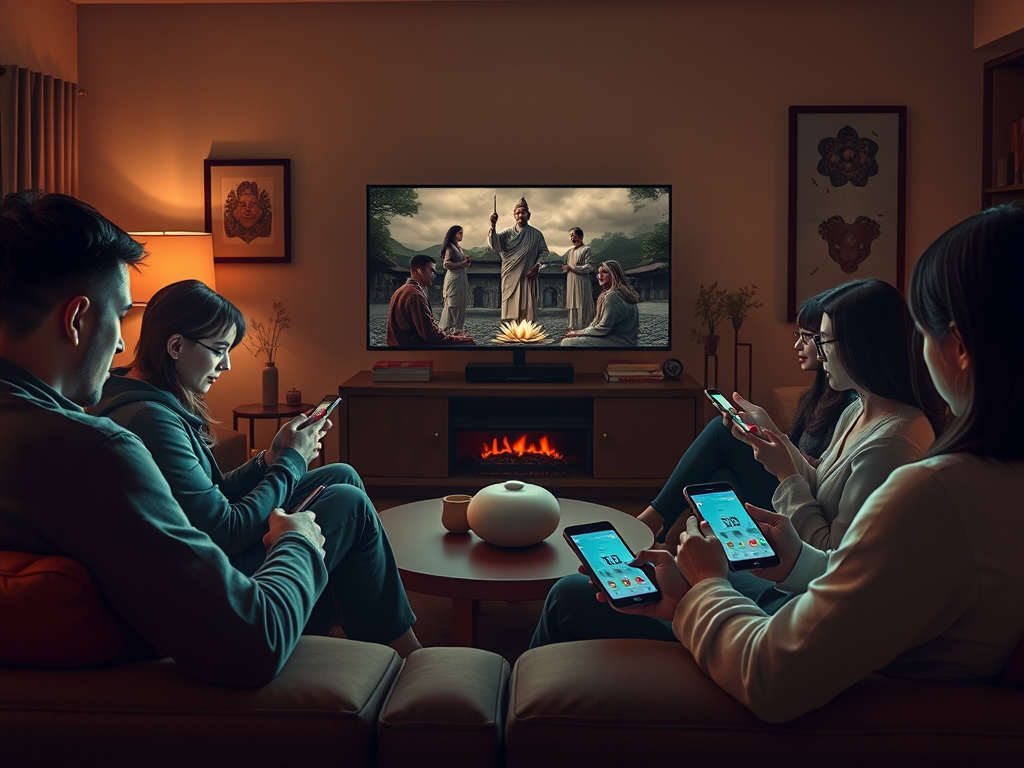
As the latest season of “The White Lotus” unfolds, fans are glued not just to their screens but also to their phones—texting friends about theories, sharing memes and scrolling through social media. It’s a familiar scene: the drama on-screen paired with real-time buzz and reactions.
For years, experts believed second-screening—using a phone, tablet or laptop while watching TV—distracted viewers from fully engaging with content. A new study co-authored by Alix Barasch, associate professor of marketing at the Leeds School of Business, flips that notion on its head.
It turns out, reaching for your phone during “The White Lotus” may actually make the experience better, especially if you’re watching alone. The study, published in January 2025 in the journal Psychology & Marketing, found engaging in “second-screen” activities, like texting friends or scrolling through social media, can create a sense of social connection that boosts your engagement and increases the likelihood you’ll watch the next episode.
“When you’re watching alone, that phone can become your bridge to a wider community,” Barasch said. “It’s not just about multitasking—it’s about deepening the experience by connecting with others in real time.”
Second-screening has grown into an integral part of the modern viewing experience. A recent report found that 83% of TV viewers use a second device while watching, engaging in activities such as texting, browsing social media or commenting on the show in real-time.
Sign up for the Daily Dose Newsletter and get every morning’s best science news from around the web delivered straight to your inbox? It’s easy like Sunday morning.
While past studies have focused on the negative impact of technology on attention and enjoyment, this study suggests that this behavior actually has significant benefits when the viewer is alone.
“It allows us to go through an experience with others, comment on specific things, get other people’s reactions and just feel connected because we are all doing the same thing,” Barasch said.
The research revealed second-screen use enhanced social connection and repeat viewing intentions when viewers were alone, but the effects were reversed if others were present.
“When you’re sharing the experience with friends or family, second-screen use can actually create a disconnect,” Barasch says.



Leave a Reply