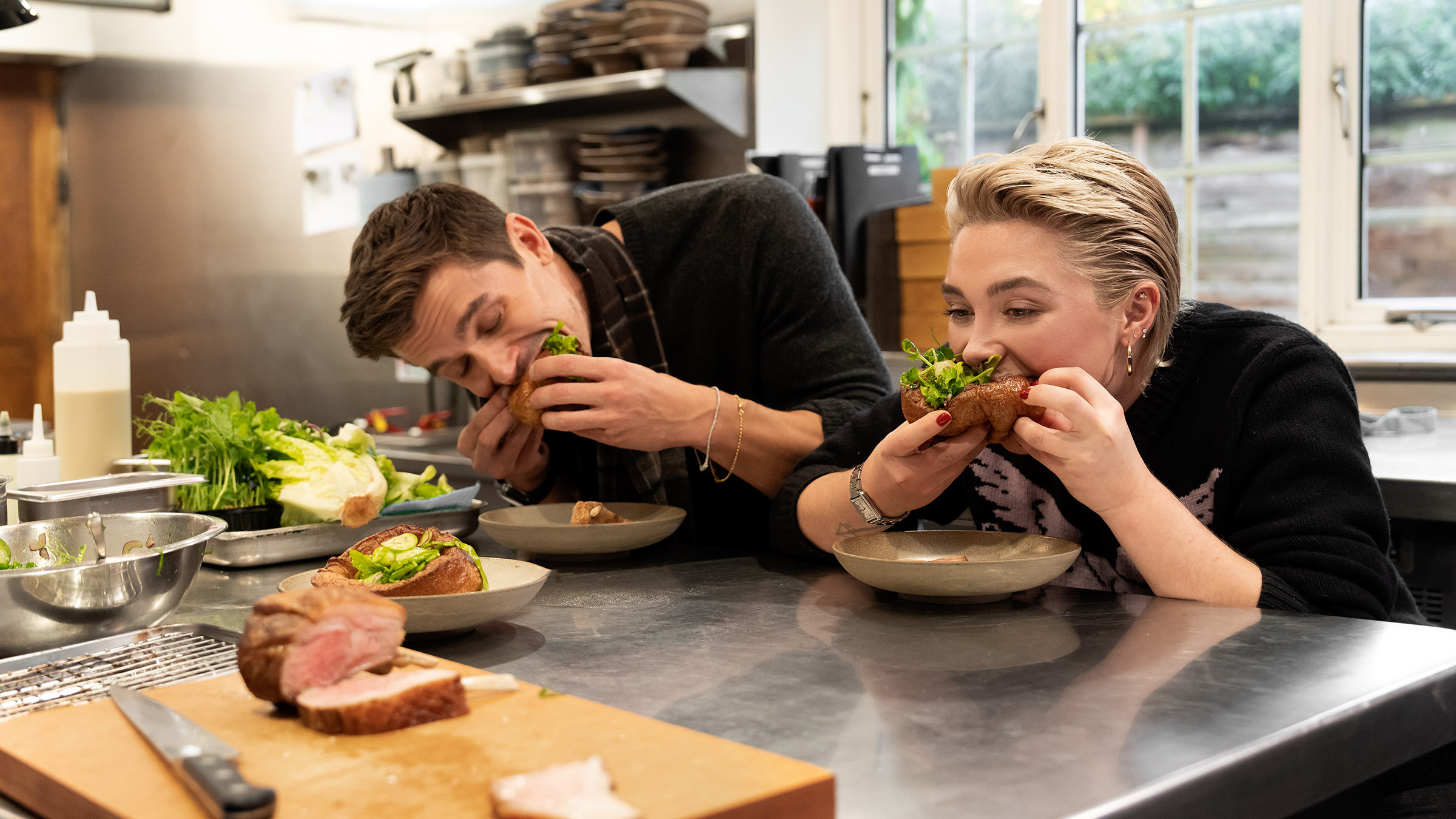
In National Geographic’s exquisite new docuseries No Taste Like Home with Antoni Porowski, food becomes more than sustenance—it transforms into a powerful vehicle for cultural exploration and personal discovery. Premiering tonight, this six-episode journey hosted by Queer Eye star Antoni Porowski delivers a viewing experience that’s as emotionally nourishing as it is visually sumptuous.
Porowski proves himself the ideal companion for these global adventures, bringing warmth, curiosity, and genuine enthusiasm to each interaction. His background as a culinary expert serves him well, but it’s his empathetic ability to connect with both his celebrity guests and the local people they meet that truly elevates the series. As he states in the press materials, “It’s a beautiful adventure to discover our past through the great connector that is food,” and viewers will find themselves agreeing wholeheartedly.
The celebrity lineup—featuring Awkwafina, Henry Golding, James Marsden, Florence Pugh, Issa Rae, and Justin Theroux—might initially seem like a marketing gimmick, but these aren’t superficial celebrity appearances. Each episode features deeply personal journeys as the stars explore their ancestral connections through cuisine.
In James Marsden’s German exploration, for instance, the seemingly humble chicken fried steak from his childhood unlocks revelations about his 18th-century German ancestors who settled in Texas hill country. The moment when Marsden tastes a traditional German gravy that instantly transports him to his mother’s kitchen is television gold—authentic, emotional, and revelatory.

What makes No Taste Like Home extraordinary is how seamlessly it weaves historical context, family narratives, and culinary traditions. Awkwafina’s journey to South Korea becomes a moving tribute to her mother, who passed away when she was just four years old. Through jajangmyeon (black bean noodles) and traditional rice cakes, she connects with her maternal heritage in ways both unexpected and profound. The episode culminates in a deeply emotional meeting with her mother’s childhood friends over seaweed soup, a sequence that will leave viewers reaching for tissues.
Henry Golding’s Malaysian adventure brilliantly explores his mixed heritage and the adaptations his family made when bringing traditional dishes to the UK. The preparation of Iban chicken—with substitutions necessitated by living abroad—becomes a perfect metaphor for the immigrant experience and cultural preservation through adaptation.
Florence Pugh’s English odyssey delightfully unpacks British culinary traditions through something as seemingly ordinary as Shepherd’s pie, revealing how three generations of women in her family each have their own interpretation of this classic dish. Her discovery that her great-great-grandfather was a pub owner famous for his mutton chops adds delicious historical context to her modern appreciation for British cuisine.

Studio Ramsay Global, known for the award-winning “Gordon Ramsay: Uncharted,” brings the same production values to this series. The cinematography is breathtaking—from the communal longhouses of Sarawak, Malaysia to the ancient Korean town of Daeyul-ri. Food preparation sequences are shot with reverence and technical precision, while intimate conversations are captured with warmth and authenticity.
What distinguishes No Taste Like Home from other culinary travel programs is its emotional depth. Food and memory—and by extension, ritual—serve as the key drivers of discovery. The series understands that how we eat is intrinsically linked to who we are and where we come from.

When Awkwafina discovers her aristocratic Korean lineage through an official genealogy book, or when Marsden learns that his ancestor was arrested for his revolutionary politics (which prompted the family’s emigration to America), these moments transcend typical food television. They become profound explorations of identity, migration, and the ways food traditions persist even as families relocate across continents.
No Taste Like Home with Antoni Porowski is that rare television experience that entertains while simultaneously broadening our understanding of the world and ourselves. It reminds us that behind every family recipe lies a story of migration, adaptation, and love—the very ingredients that make up our complex human identities.
National Geographic has delivered a series that, like the best meals, will leave viewers feeling both satisfied and eager for more. It premiers tonight, make sure you have a seat at this extraordinary table.
IMAGE CREDITS: National Geographic




Leave a Reply