
NEW AVIAN FLU TRANSMISSION ROUTE IDENTIFIED THROUGH DAIRY WORKERS
An investigation into two severe H5N1 cases in indoor cats found that they may have been exposed by dairy workers, highlighting a new route of avian flu transmission. The cats had respiratory and neurological symptoms and carried the B3.13 genotype found in infected cattle. Both dairy workers, one handling unpasteurized milk, showed symptoms before the cats, suggesting indirect exposure. The findings call for veterinarians in affected states to gather occupational information from pet owners, wear protective gear, and report suspected cases to health officials. Meanwhile, Ohio’s Mercer and Darke counties, hit hardest by avian flu outbreaks, are requesting more state and federal support, including resources for biosecurity and financial aid for poultry producers. Other states are taking measures to address the egg shortage, such as suspending restrictions in Nevada and implementing new poultry testing requirements in New York to curb the spread of the virus. (CIDRAP)
TRUMP ADMINISTRATION HALTS NIH GRANT REVIEWS AND FUNDING
A month after Donald Trump became president, most grant-review meetings at the US National Institutes of Health (NIH) were suspended, halting the distribution of its $47 billion annual budget. The Trump administration blocked the NIH from posting notices for these meetings, exploiting a loophole in the funding process, which has delayed research funding and left scientists facing difficult decisions. Legal experts argue this tactic is unconstitutional, as only Congress has the power to allocate funds. The suspension has led to a backlog of applications, impacting the NIH’s ability to fund research before the fiscal year ends. Additionally, the Trump administration laid off over 1,100 NIH employees, worsening the situation. The halt in grant reviews also accompanied attempts to slash NIH spending, including cuts to research overhead costs, affecting researchers’ ability to operate labs, hire staff, or proceed with their work. Many researchers are now making staff reductions or suspending their projects. (Nature)
TEXAS ABORTION BAN LINKED TO RISE IN MATERNAL DEATHS
After Texas banned abortion in 2021, pregnancy complications, especially sepsis, became more common for women losing pregnancies in the second trimester. ProPublica’s analysis of hospital discharge data revealed a 50% rise in sepsis cases among these women, particularly those whose fetuses still had a heartbeat when they arrived at the hospital. Delays in evacuating the uterus, often due to the state’s abortion law, increased the risk of infection. This has led to more maternal deaths in Texas, with a significant rise in 2022 and 2023, despite a national decline. Doctors faced uncertainty over when they could intervene, as the law restricts actions unless the fetus is confirmed dead or the mother’s life is at risk. The findings raise concerns that other states with similar bans may be experiencing the same dangers. Some Texas legislators are now considering amendments to clarify when abortion procedures are allowed to protect women’s health. (CNN)
UNEXPLAINED ILLNESS CLUSTERS IN DRC RULE OUT EBOLA MARBURG
Testing has ruled out Ebola and Marburg viruses in two unexplained illness clusters in Equateur Province, Democratic Republic of the Congo (DRC), where investigations continue. The most recent cluster, reported on February 9 in Bromate Villega, Basankusu Health Zone, initially involved 32 cases and 20 deaths. By February 15, the numbers rose to 419 suspected cases and 45 deaths, with half occurring within two days of symptom onset. Symptoms include fever, headache, cough, and gastrointestinal issues. Specimens from 13 patients tested negative for Ebola and Marburg. Investigations are focusing on potential causes such as malaria, viral hemorrhagic fever, food or water poisoning, typhoid fever, and meningitis. A previous cluster in Boloko Village, reported on January 21, involved children who had consumed bat carcasses and showed hemorrhagic symptoms before dying. Testing also ruled out Ebola and Marburg in this case, with no clear link between the two outbreaks yet established. (CIDRAP)

EVIDENCE LINKS RACCOON DOGS TO COVID-19 ORIGIN IN WUHAN
Five years after the COVID-19 pandemic began, evidence increasingly points to raccoon dogs as a potential source of the virus. Studies suggest the virus may have jumped from wild animals to humans at the Huanan Seafood Market in Wuhan, China, where raccoon dogs were sold. These animals are suspected due to their previous involvement in spreading related viruses, like SARS, and their susceptibility to SARS-CoV-2. Raccoon dogs were common at the market, and genetic evidence from environmental samples taken after the market shut down showed traces of their DNA alongside SARS-CoV-2. Despite this, other animals, such as bamboo rats and Malayan porcupines, were also present and could have been involved. The virus is believed to have originated in bats from southern China, but how it reached Wuhan remains unclear. The lack of early investigations, compounded by political factors, has hindered the search for definitive answers about the virus’s origin. (Nature)
TRUMP ADMINISTRATION REDUCES SUPPORT FOR CLIMATE SCIENCE RESEARCH
Under the Trump administration, support for scientific research in the US and abroad has been drastically reduced, particularly for projects mentioning “climate.” The administration’s focus on stripping references to climate change, diversity, equity, and inclusion (DEI) has led to the withdrawal of grants, with researchers reporting that they must remove “climate” from their project titles to maintain funding. For example, a researcher in the US was required to retitle a climate-adaptation grant to keep it. The administration’s policies also affected international programs like Fulbright, where descriptions were altered to remove terms like “climate change” and “equitable society.” At the National Science Foundation (NSF), grants for scientific work have been frozen, and projects are being reviewed for compliance with these new directives. Critics argue these actions are politically motivated, hindering critical research in climate science and other fields, and could deter future generations from pursuing scientific careers in the US. (The Guardian)
PALEONTOLOGICAL RESEARCH INSTITUTION FACES CLOSURE DUE TO FINANCIAL WOES
The Paleontological Research Institution (PRI) in Ithaca, New York, home to one of North America’s largest invertebrate fossil collections, faces imminent closure due to financial struggles. Founded in 1932, PRI houses over 7 million specimens, including the most complete mastodon and extensive invertebrate collections. However, a critical $30 million pledge from its primary donor remains unpaid, leaving the institution unable to cover a $3 million mortgage. Since fall 2023, PRI has cut its staff by more than half. PRI has been integral in training women paleontologists and preserving orphaned collections, making its closure a significant blow to the scientific community. Efforts to save PRI are underway, with donations from paleontologists and local communities, but Cornell University, despite its reliance on PRI’s resources, has not offered financial assistance. Without intervention, PRI’s valuable collections and research mission may be lost, potentially disrupting scientific progress in paleontology. (Science)
NEW RESEARCH REVEALS SOFTER SIDE OF DINOSAURS AND COURTSHIP
In recent years, research has revealed a softer side to dinosaurs, including insights into their mating behaviors. Smithsonian writer Riley Black discusses how new evidence is shedding light on dinosaur sex, including the discovery of dinosaur cloacas, the role of horns and spikes in social signaling, and the evolutionary significance of dinosaur courtship. While horns were once thought to be primarily for defense, new theories suggest they were used to attract mates, with different species showing off unique “horn fashions.” Black also explores the surprising complexity of dinosaur reproduction, with evidence showing that dinosaurs likely had sex before reaching full adulthood. This behavior contrasts with modern animals like birds and crocodiles, and sheds light on the rapid reproductive success of dinosaurs. Black also highlights the emerging understanding that dinosaurs, like modern animals, exhibited tender behaviors such as parental care, providing a more nuanced view of these ancient creatures beyond the typical narrative of aggression and dominance. (Smithsonian)
ARCHAEOLOGISTS DISCOVER TOMB OF PHARAOH THUTMOSE II NEAR LUXOR
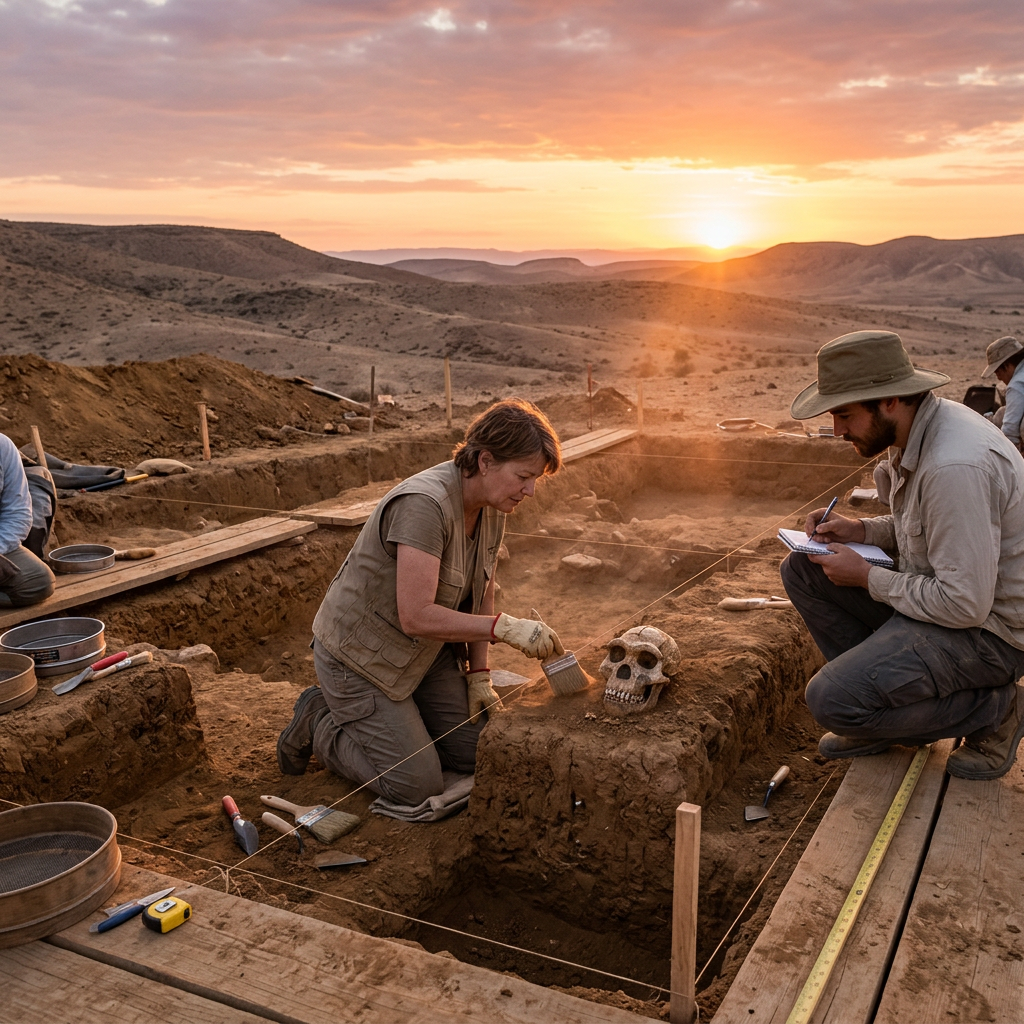
Archaeologists have discovered the tomb of Pharaoh Thutmose II in the Egyptian valley west of Luxor, marking the first royal tomb excavation since the discovery of Tutankhamun’s tomb over 100 years ago. The tomb, found in 2022, was initially thought to belong to a royal consort due to its location near the tombs of royal wives and Hatshepsut, a queen who ruled after Thutmose II’s death. However, fragments of alabaster jars and inscriptions confirming Thutmose II as the “deceased king” were found inside. The tomb, though severely damaged by flooding, contains restored plaster with intricate designs and religious motifs. Thutmose II’s reign, part of the imperialistic 18th Dynasty, has long been overshadowed by the more prominent figures of his family. This discovery, though lacking the treasure-filled chambers of Tutankhamun’s tomb, is seen as a significant find, providing valuable insights into this era of Egyptian history. (New York Times)
Thanks for reading. Let’s be careful out there.
WORDS: The Biology Guy.

Leave a Reply