
US, UK Reject Paris AI Summit Declaration on Sustainability
The US and the UK chose not to sign the Paris AI summit’s declaration on “inclusive and sustainable” artificial intelligence, joining countries like China, India, and Canada in endorsing the document. Both nations did not immediately provide reasons, but the UK emphasized that it would only support initiatives in line with its national interests, despite backing other summit initiatives like the Coalition for Sustainable AI. Meanwhile, US Vice-President JD Vance criticized Europe’s stringent AI regulations, warning that excessive regulation could stifle innovation. Vance also cautioned against collaborating with authoritarian regimes, notably China, emphasizing the risks of such partnerships. He additionally expressed concerns about previous global summits, suggesting that the focus on AI safety could hinder progress. While some countries might later sign the declaration, the absence of the US and UK highlighted their dissatisfaction with the current global approach to AI development and regulation. (The Guardian)
Scientists Monitor Asteroid 2024 YR4 for Potential Impact
The scientific community is urgently monitoring asteroid 2024 YR4, which currently has over a 2% chance of impacting Earth on December 22, 2032. As it moves away from Earth, telescopes are becoming less effective in tracking it. By March, only larger telescopes will be able to detect it. The James Webb Space Telescope will provide the final observation opportunity in early May. If the impact risk is not ruled out, further monitoring will be necessary during its next orbit in 2028. The asteroid’s size is uncertain, ranging between 40 and 90 meters, and its composition includes rock and metal. If a collision occurs, it could cause significant damage, similar to past asteroid impacts. The United Nations’ planetary defense bodies are actively engaged, and potential deflection strategies, like launching an impact probe, are being considered. Current predictions indicate a 98% chance of no impact, but efforts to understand its trajectory continue. (El Pais)
Nevada Confirms First Human H5N1 Infection in Worker
The Central Nevada Health District (CNHD) has confirmed Nevada’s first human infection of H5N1 avian flu in a worker exposed to sick cows at a dairy farm in Churchill County. The worker, who only exhibited conjunctivitis, is recovering. While the public health risk remains low, those working with birds, poultry, or cows are at higher risk. Close contacts of the worker are being monitored and given protective equipment and antivirals. The H5N1 strain involved is the D1.1 genotype, recently identified in dairy cattle in Nevada, which differs from previous strains. This genotype, linked to wild migratory birds, has caused some human illnesses. The CDC has added the Nevada case to its list of 68 confirmed human cases since 2024. The U.S. Department of Agriculture also reported new H5N1 detections in dairy cows, with ongoing monitoring to prevent further spread. Investigations have found a mutation in the virus linked to mammalian adaptation. (CIDRAP)
Musician Shares Healing Power of Music in Healthcare
In a reflective story, a musician recalls playing her violin for her father, who was suffering from Alzheimer’s and Parkinson’s disease in a nursing home in Hamburg. Despite his stoic demeanor, her playing, especially Bach’s “Chaconne,” brought an emotional response, including a rare “thank you.” This personal experience led her to share the healing power of music in healthcare settings during a visit to Johns Hopkins Hospital, where music is being integrated into patient care. The Peabody Institute’s “music as care” program, which contrasts with music therapy, focuses on addressing the whole person, not just medical needs. Musicians in hospitals now perform personalized music for patients, helping reduce anxiety and enhance emotional well-being. These arts programs, growing across the U.S., emphasize improvisation and responsiveness to patients’ preferences, demonstrating the profound impact music can have on patient care and staff morale, especially in emotionally charged environments. (New York Times)

Archaeologists Discover Evidence of Cannibalism in Prehistoric Poland
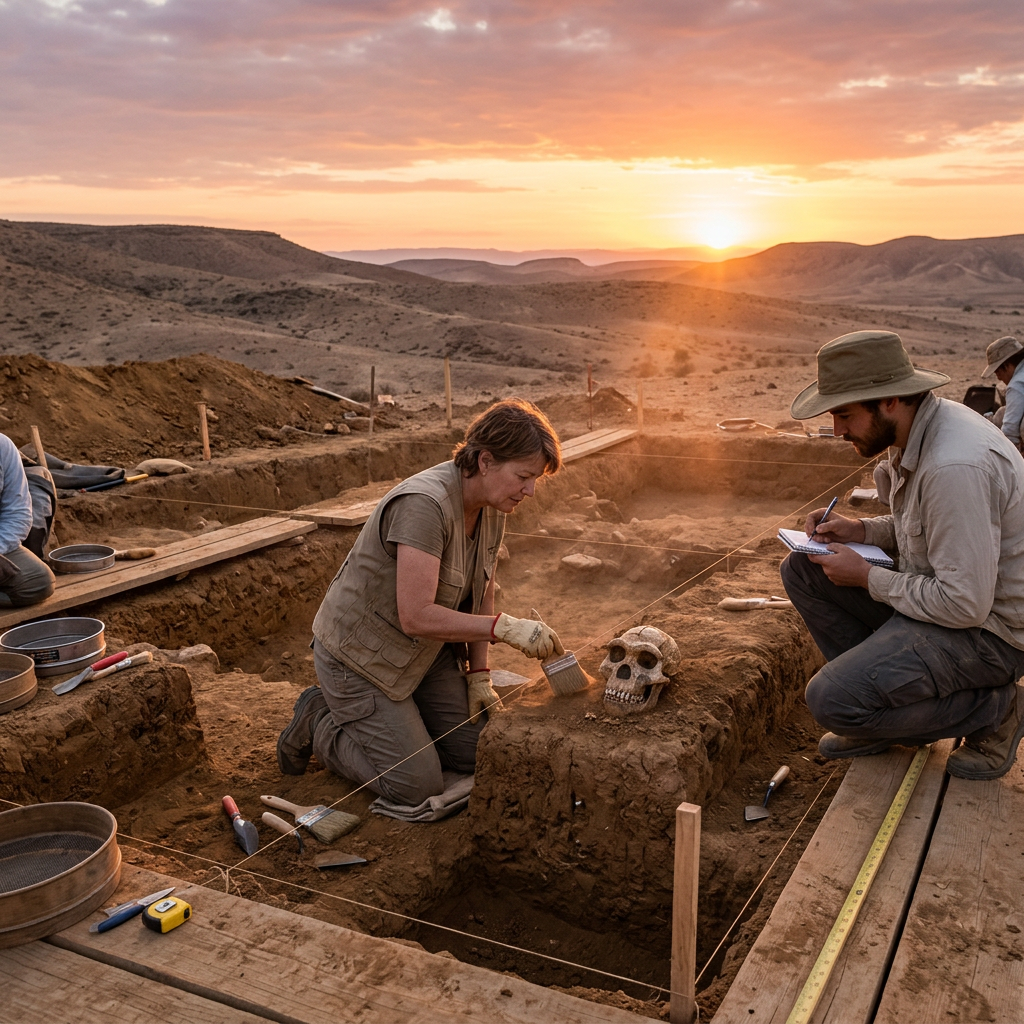
Archaeologists in Poland have uncovered evidence of cannibalism among prehistoric humans in Maszycka Cave, near Krakow, dating back 18,000 years. The study, published in *Scientific Reports*, reveals that 68% of 63 bone samples from the Magdalenian period show signs of human manipulation, such as cut marks and scratches consistent with practices like extracting muscles, bone marrow, and brain matter. These findings suggest the group, which migrated from Western Europe, engaged in cannibalism during a time of mass migration across Europe. The evidence aligns with similar discoveries at other European sites, such as Gough’s Cave in England. While the exact motivation remains unclear, the bones’ manipulation indicates the cannibalism was likely for nutritional purposes, though it could also involve funerary or ritualistic practices. Researchers propose that it may have been a form of warfare cannibalism, with defeated enemies consumed as a form of humiliation. The chaotic burial of the remains hints at violence and dehumanization. (Smithsonian)
68-Million-Year-Old Bird Skull Identifies Earliest Modern Bird
A nearly complete 68-million-year-old bird skull fossil found in Antarctica has identified Vegavis iaai as the oldest known modern bird, closely related to contemporary waterfowl like ducks. The fossil, discovered in 2011 and analyzed in a recent study, belongs to a species that lived during the late Cretaceous period, just before the asteroid impact that caused the extinction of the dinosaurs. Unlike earlier birds, *Vegavis* had a toothless beak and other modern features, confirming it as a crown bird species. The bird was likely an aquatic pursuit diver, similar in behavior to loons and grebes, using its legs to propel itself underwater and snapping its mouth shut to catch fish. This fossil, which also revealed a brain shape typical of modern birds, provides crucial insights into the evolution of birds, including how some species survived the mass extinction event and adapted in the aftermath. (CNN)
Poaching Losses Highlight Cultural Impact on Chimpanzee Communities
In 2004, poachers killed Marius, one of the last adult male chimpanzees in Ivory Coast’s Taï National Park, leading to the permanent loss of a unique gesture in the chimpanzee community. This gesture, used by males to request sex from females, was specific to their group, highlighting cultural differences between chimp communities. Researchers discovered that different chimpanzee communities use distinct gestures for similar requests, such as the “leaf clip” and “knuckle knock.” Marius’s death marked the disappearance of the “knuckle knock” gesture, once common in the northern community. This loss underscores the impact of poaching and human disturbance on chimpanzee culture and survival. As cultural knowledge is lost, it parallels genetic diversity loss, potentially hindering the chimps’ ability to adapt. The study emphasizes the importance of considering cultural differences in chimpanzee conservation, as preserving diverse communities is crucial for their long-term survival. (Science)
Ben Lamm Leads Efforts to Revive Extinct Species Through Genetic Engineering
Ben Lamm, founder of Colossal Biosciences, is spearheading ambitious projects to revive extinct species, including the woolly mammoth, dodo, and thylacine, with a goal to create living populations in the wild. Using genetic engineering and somatic cell nuclear transfer, Colossal aims to bring these species back by inserting ancient genes into the closest living relatives, such as Asian elephants for mammoths. Lamm, who rejects the dramatic end seen in *Jurassic Park*, points to research showing that restoring keystone species could benefit ecosystems. Colossal’s work also focuses on conservation, aiming to use these de-extinction techniques to protect endangered species. Lamm’s successful background in technology startups, coupled with his collaboration with synthetic biology pioneer George Church, has enabled him to pursue this venture. Beyond scientific innovation, Lamm hopes to inspire future generations of scientists by making synthetic biology more accessible and exciting for the public. (The Guardian)
Thanks for reading. Let’s be careful out there.
WORDS: The Biology Guy.

Leave a Reply